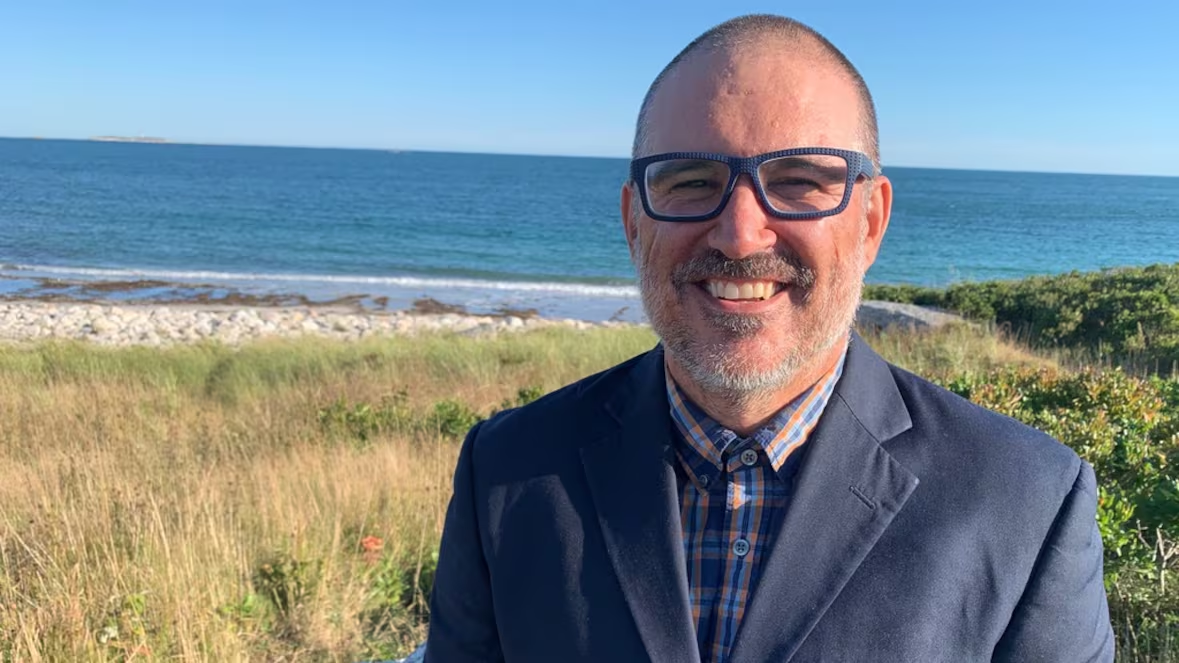
Mahin Shahriar is seen in an undated family photo taken at Lake Louise, Alberta. (Photo courtesy of the Shahriar family/The Canadian Press)
A Bangladeshi refugee applicant who once lived in Canada says he crossed into the United States by accident and now faces detention by the U.S. Immigration and Customs Enforcement (ICE) in Buffalo, New York.
Mahin Shahriar, who has lived in Canada since 2019, told reporters he entered the U.S. on May 12 after what he believes was a human trafficking attempt. He said he never intended to leave Canada and thought he was visiting a friend near Montreal for a few days.
“I wanted to spend some time out of my home, and he said he had a place I could stay,” Shahriar said in a phone interview from ICE custody.
He explained that his friend guided him by phone using GPS, but he later realized the address was close to the U.S. border. “Then I found myself in the U.S. It was not my intention,” he said.
Detained After Seeking Help
Shahriar said that once he realized he had crossed the border, he approached U.S. border patrol officers to explain the situation. Instead of being sent back to Canada, officers detained him.
An email from ICE to Shahriar’s lawyer, Washim Ahmed, confirmed that U.S. officials would not force Canadian authorities to take him back.
“ICE said they tried to send me back to Canada, but Canada denied my entry,” Shahriar said. “After that they didn’t tell me anything.”
ICE has acknowledged that Shahriar could face danger if deported to Bangladesh, but his lawyer says deportation remains a risk.
Legal Battle for Return
Ahmed, who represents Shahriar, said his client faces possible detention and torture if returned to Bangladesh, where he faces charges for helping his mother and sister flee the country.
“Regardless of what status he may have had prior to leaving Canada, he was a resident of Canada,” Ahmed said. “He has family there—his mother and sister—both with valid legal status.”
Ahmed is asking the Federal Court to order the Canada Border Services Agency (CBSA) to accept Shahriar’s return on humanitarian grounds.
The CBSA, however, said it does not intervene in immigration cases handled by other countries. The agency stated that entry to Canada is reviewed on a case-by-case basis at official border examination points.
Family Struggles in Canada
Shahriar’s mother, a recognized refugee, and his younger sister, a student, live in Canada. They have struggled emotionally and financially since his arrest.
“His mother already has been hospitalized a few times because of depression,” Ahmed said. “His sister might have to stop studying because she can’t afford tuition and bills.”
Shahriar worked as an Uber driver to support them before his arrest. His first refugee claim in Canada was rejected after a fraudulent immigration consultant mishandled his application, his lawyer said.
Ahmed has filed a pre-removal risk assessment to prevent Shahriar’s deportation from the U.S. He argues that under the Safe Third Country Agreement, Canada should take him back since he entered the U.S. unintentionally and was detained within 14 days.
For now, Shahriar remains in ICE custody, waiting for a decision that could determine whether he returns to Canada or faces deportation to Bangladesh.