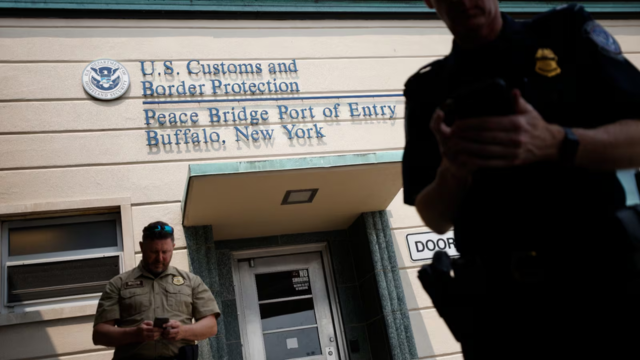
The U.S. Customs and Border Protection office is seen at the Peace Bridge crossing in Buffalo, New York, on May 23, 2023. CTV
Canadians spending more than a month in the United States now face a new border requirement. Travellers planning extended stays must provide fingerprints and complete an alien registration form, according to U.S. Customs and Border Protection (CBP).
The rule took effect last April and applies to visitors staying over 30 days. It includes submitting personal details and biometric data such as fingerprints.
“This measure follows U.S. laws on alien registration and fingerprinting,” a CBP spokesperson said in an email. The agency clarified that the rule does not apply to travellers staying for less than a month or to those enrolled in the NEXUS program, which allows pre-screened travellers faster entry.
Linked to Trump’s Executive Order
The policy stems from an executive order signed by U.S. President Donald Trump in January, titled Protecting the American People Against Invasion. It was one of the first orders issued during his second term.
The order requires anyone over the age of 14 who plans to stay in the U.S. for more than 30 days to register and provide fingerprints. The process applies to all non-U.S. citizens, including Canadian snowbirds, who spend part of the winter in southern states like Florida, Arizona, and California.
Once registered, visitors must carry proof of registration at all times, according to U.S. Citizenship and Immigration Services.
U.S. Officials Defend the Rule
The Department of Homeland Security supports the measure, saying it strengthens national safety. “This rule aligns with the Trump Administration’s ongoing efforts to enhance the safety and security of the United States,” the CBP spokesperson said.
The agency described the new fingerprinting step as part of broader efforts to monitor who is staying in the country for longer periods. The goal, it said, is to ensure proper tracking of foreign visitors, not to target specific groups.
Mixed Reaction from Travellers
While some travellers say the process adds extra time and paperwork, others see it as a minor inconvenience for added security. Many snowbirds have expressed confusion about when the new rule began and whether it applies to them.
The rule is likely to affect thousands of Canadians who spend their winters in the U.S. for more than 30 days. Border officers are advising travellers to check their entry plans and prepare the necessary documents before departure.
Travellers entering the U.S. by air, land, or sea who expect to stay longer than one month should contact U.S. Customs and Border Protection in advance for guidance.
Officials say those with NEXUS cards or shorter trips can continue travelling under existing rules without fingerprinting.