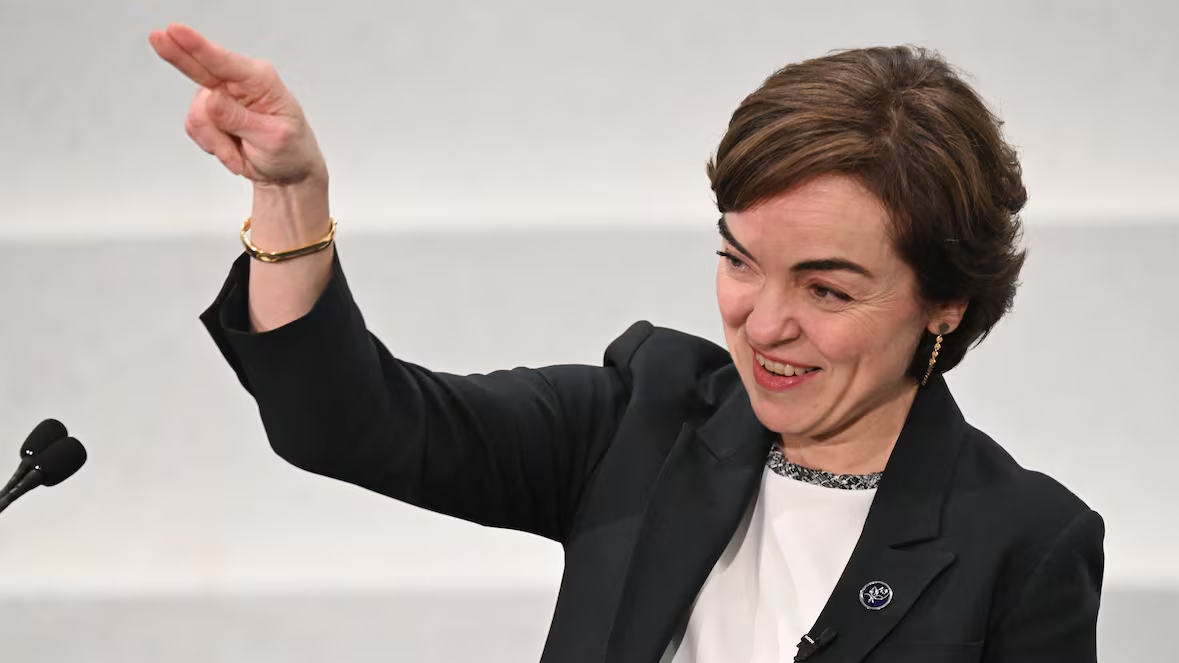
Prime Minister Mark Carney delivered a live address on Wednesday, sharing details of his government’s plan to strengthen the Canadian economy ahead of the 2025 federal budget. The Canadian Press
Prime Minister Mark Carney says Canada must rethink its economy and expand beyond its dependence on the United States. Speaking at the University of Ottawa on Wednesday evening, Carney outlined key goals ahead of his government’s November 4 budget, including plans to double exports to non-U.S. markets over the next decade.
He said the new plan would also cut government spending, refocus climate and immigration policies, and make major investments to drive economic growth. The prime minister warned that the upcoming budget will require “sacrifice” as Canada adapts to a changing global economy.
A Response to U.S. Protectionism
Carney pointed to U.S. President Donald Trump’s protectionist trade policies as a major reason for the shift. “The United States has changed its trade approach,” he said. “Tariffs are now at levels we haven’t seen since the Great Depression.”
He said Canada’s economy must “change dramatically” to stay competitive by building more goods at home and finding new markets abroad. “Our goal is to generate over $300 billion in new trade by doubling non-U.S. exports in the next decade,” Carney added. “We used to build things in this country. We can build again.”
Deficits and Investments Ahead
Economists predict the new budget will include larger deficits than those projected during the last election campaign. Carney hinted at this, saying the government must act boldly now. “Our government has the fiscal capacity to act decisively,” he said. “We must use our strengths to spark unprecedented investments over the next five years.”
The upcoming budget will feature a climate competitiveness plan, a new immigration strategy, and expanded support for apprenticeships, training, and innovation. The immigration plan will match newcomer levels to “Canada’s needs and capacity.”
Carney also promised a Buy Canadian policy to boost demand for homegrown steel, lumber, aluminum, and technology in government-backed projects.
Balancing Cuts and Priorities
The prime minister acknowledged that some spending cuts are coming but offered few details. “We’ll have to do less of some things we want to do,” he said, “so we can do more of what we must.” He promised that essential social programs will remain protected.
Labour Groups Raise Concerns
Canadian Labour Congress president Bea Bruske criticized Carney’s hints at spending cuts, saying that workers should not bear the cost of new investments. “You don’t build resilience by hollowing out the very systems that help people in hard times,” she said.
Political Tension Ahead of the Budget
Carney met with Conservative Leader Pierre Poilievre and Bloc Québécois Leader Yves-François Blanchet earlier in the day to discuss their budget demands. With a minority government, Carney needs support from at least one opposition party to pass the budget and avoid an election.
Poilievre called for strict limits on the deficit and cuts to taxes on income, fuel, and construction materials. Carney’s team dismissed those demands as unrealistic. Blanchet said the Bloc’s support depends on ending subsidies for oil and gas.
Debt Concerns Growing
Analysts warn that the federal deficit could rise above $70 billion, possibly even $90 billion, this year. The debt-to-GDP ratio, a key measure of fiscal health, could also climb, threatening Canada’s AAA credit rating if borrowing continues to grow.
Still, Carney insists the plan will strengthen the economy in the long run. “We’ll use the deficit to grow this economy like never before,” he told Parliament.