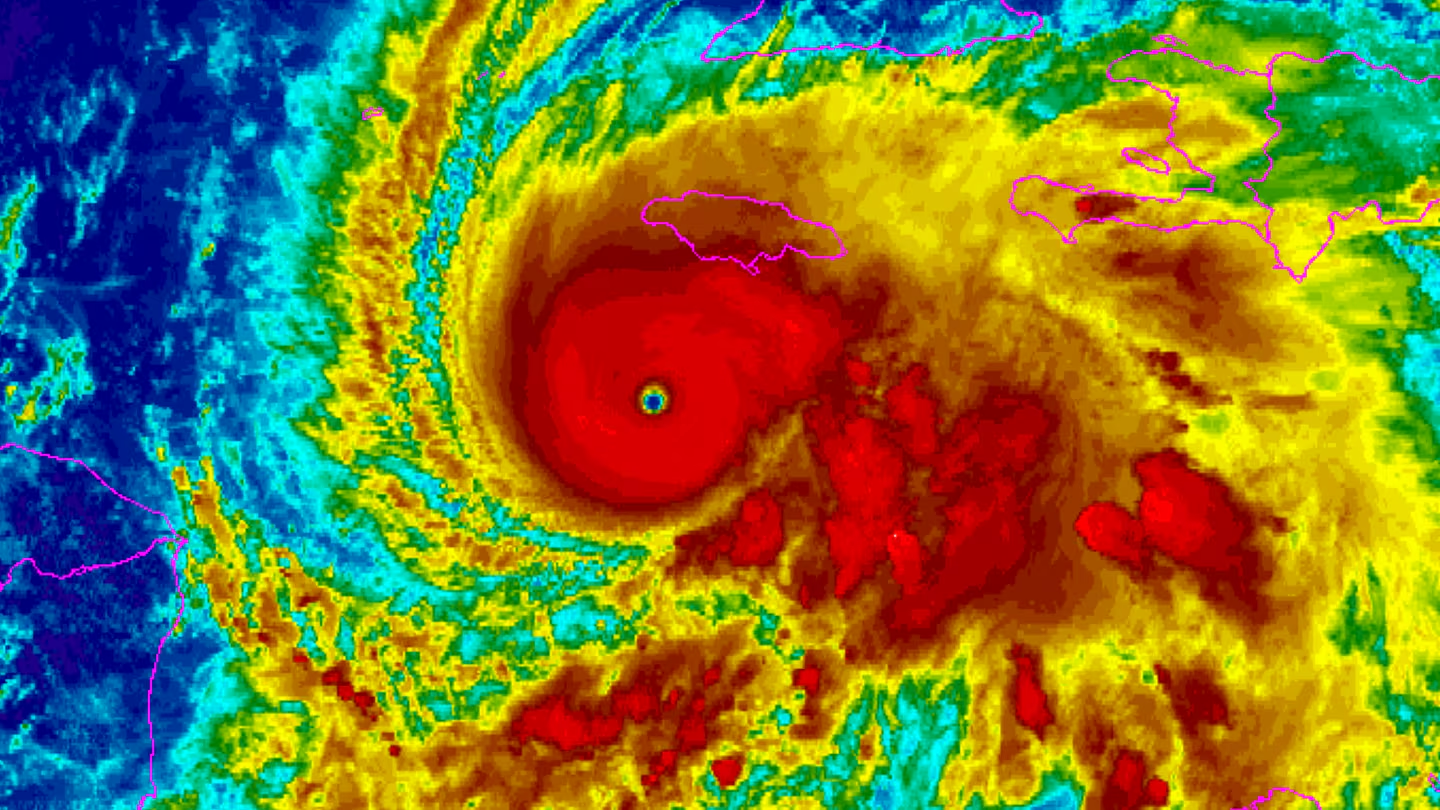
This satellite image from NOAA GOES East, taken at 12:40 p.m. ET on Monday, Oct. 27, 2025, shows Hurricane Melissa swirling across the Caribbean. AP
Hurricane Melissa strengthened into a Category 5 storm on Monday, threatening Jamaica with destructive winds, flooding, and landslides. Meteorologists warned that the storm could become the most powerful ever to strike the island since records began in 1851.
The hurricane has already killed seven people across the northern Caribbean as it moves toward Jamaica. Forecasters expect it to hit the island on Tuesday before reaching Cuba later the same day. The storm is not expected to affect the United States.
Jamaican Prime Minister Andrew Holness said he has turned to prayer as the nation prepares for impact. “I have been on my knees in prayer,” he said, acknowledging the severity of the approaching storm.
Communities Prepare for Impact
In Kingston, residents rushed to secure homes and stock up on supplies. Hotel receptionist Hanna McLeod, 23, said she sealed her windows and gathered food, candles, and flashlights. “I’m definitely worried,” she said. “This is the first time I’ll be experiencing a hurricane like this.”
Hurricane Melissa’s winds have reached speeds of 281 km/h, placing it firmly in the Category 5 range—the highest on the Saffir-Simpson scale. Meteorologists warned that storm surges up to four metres could hit Kingston’s coast, threatening key infrastructure like airports and power plants.
Jonathan Porter, a chief meteorologist, said Jamaica could face a “true humanitarian crisis” and may require international aid in the aftermath.
Evacuations Ordered, but Some Stay Behind
Authorities ordered mandatory evacuations in flood-prone areas, but many residents chose to remain. In Old Harbor Bay, 64-year-old fisherman Noel Francis refused to leave. “I can manage myself,” he said. Nearby, Bruce Dawkins decided to stay as well, preparing his boat and sharing a drink with a friend before the storm.
Along the southern coast, power outages began late Monday as winds intensified. Some residents, like 49-year-old Hyacinth White, expressed concern about flooding but said they planned to stay home.
In the western town of Black River, street vendor Sandra Walker continued working just hours before the hurricane. “I have no choice but to be here,” she said. Walker, a single mother, is still rebuilding after Hurricane Beryl destroyed her business last year.
Government officials expressed concern that fewer than 1,000 people had gone to the island’s 880 available shelters. “It’s way below what’s required for a Category 5 hurricane,” said Transport Minister Daryl Vaz.
Storm’s Destruction Spreads Across the Caribbean
Melissa has already claimed several lives in Haiti and the Dominican Republic. Landslides, fallen trees, and widespread power outages have been reported. In Haiti, the storm wiped out crops, worsening hunger for millions.
In eastern Cuba, officials ordered more than 600,000 people to evacuate as heavy rain and storm surges loomed. The Bahamas and Turks and Caicos also issued hurricane and tropical storm warnings.
Evan Thompson from Jamaica’s meteorological service warned that recovery would be slow. “Landslides and flooding will delay cleanup and assessment,” he said.
A storm this powerful has not struck Jamaica directly in 174 years. The last major hit came from Hurricane Gilbert in 1988, which reached Category 3 strength.