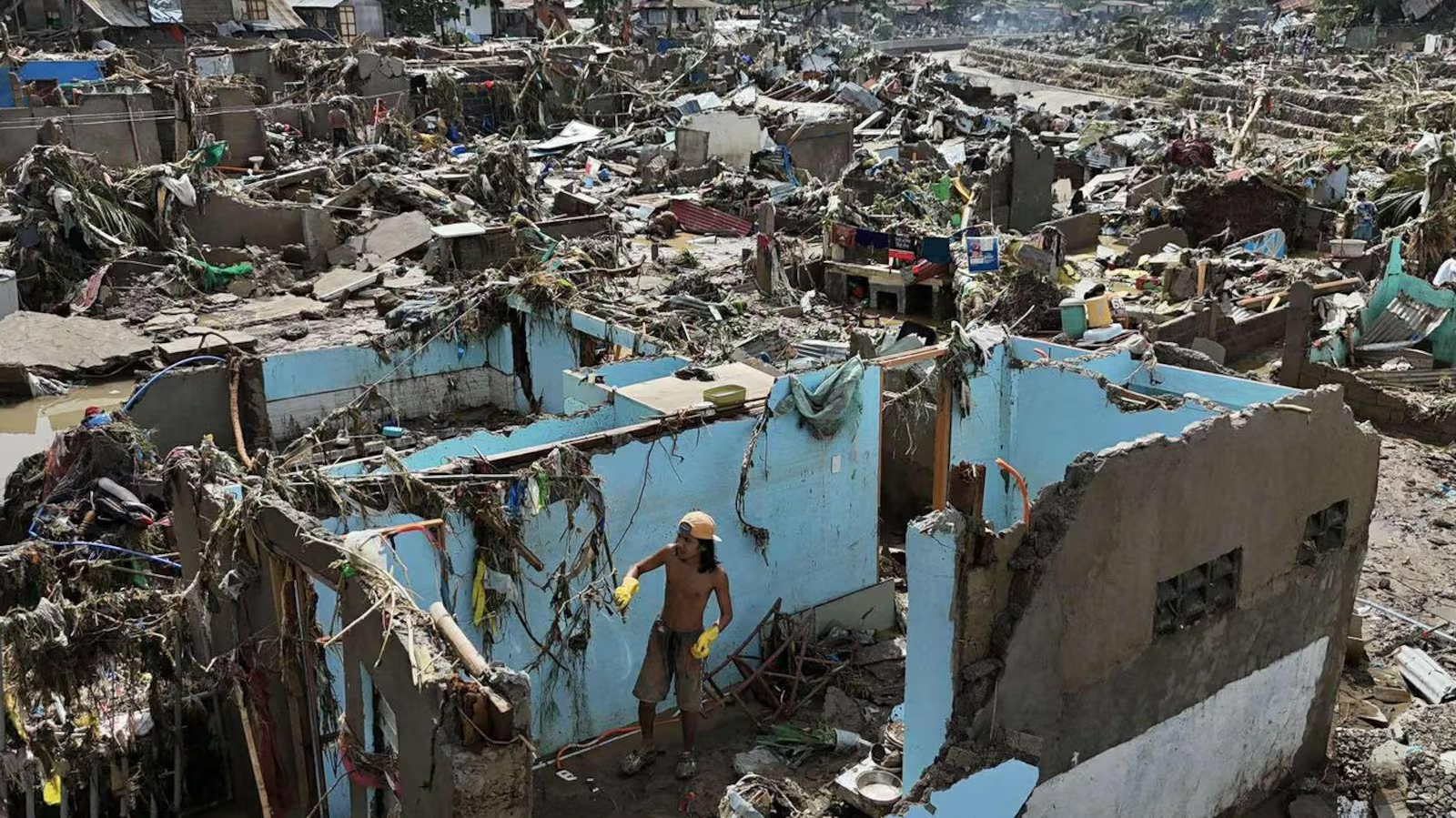
A local resident walks through the wreckage of their home after Typhoon Kalmaegi swept through communities along the Mananga River in Talisay City, Cebu province, on Wednesday, November 5, 2025. AP Photo
Philippine officials confirmed Wednesday that at least 114 people have died and 127 remain missing after Typhoon Kalmaegi swept through the country’s central region, bringing severe floods and destruction. Many of the victims were from Cebu province, which was still recovering from a deadly earthquake when the storm hit.
Bernardo Rafaelito Alejandro IV, deputy administrator of the Office of Civil Defense, said Kalmaegi unleashed flash floods that caused rivers to overflow, submerging neighbourhoods and washing away homes.
The storm moved away from the Philippines by midday Wednesday, heading toward Vietnam through the South China Sea, but the devastation it left behind was widespread.
Cebu Suffers Worst Damage
Cebu was the hardest-hit area, with 71 deaths, mostly from drowning. Another 65 people remain missing, and 69 were injured, according to government officials. In Negros Occidental, a nearby province, 62 people are also missing.
Residents described terrifying scenes as water levels rose within minutes. Many climbed to rooftops or upper floors to escape the flood. “We did everything we could,” said Cebu Governor Pamela Baricuatro, “but flash floods can come so fast.”
Rescue worker Caloy Ramirez said he had never seen such chaos. “What I saw yesterday was the worst,” he said. “People were trapped on rooftops, waving for help. Their faces lit up when we reached them.”
Floodwaters destroyed cars, tore through houses, and left parts of Cebu city looking unrecognizable.
Air Force Helicopter Crashes
Among the dead were six air force members whose helicopter crashed Tuesday in Agusan del Sur province while delivering humanitarian aid to typhoon-hit areas. The cause of the crash is still under investigation.
Flood Control Failures Under Scrutiny
Governor Baricuatro said uncontrolled quarrying and poor-quality flood control projects worsened the disaster. Many rivers overflowed due to clogged channels and weak defences.
A recent corruption scandal over substandard flood prevention works has sparked anger across the Philippines, with citizens demanding accountability for failed infrastructure.
Cebu, home to over 2.4 million people, declared a state of calamity to speed up the release of emergency funds. The province was already struggling to recover from a 6.9 magnitude earthquake in September that killed 79 people and left thousands homeless.
Fortunately, most earthquake survivors in northern Cebu had been moved to safer shelters before Kalmaegi arrived, preventing further tragedy.
Thousands Evacuated Before Storm Hit
Before the typhoon made landfall, officials evacuated 387,000 people from at-risk areas in the eastern and central regions. The coast guard halted ferries and fishing boats as rough seas stranded more than 3,500 passengers in almost 100 ports. At least 186 domestic flights were canceled.
The Philippines faces about 20 major storms each year, along with frequent earthquakes and volcanic eruptions, making it one of the most disaster-prone nations in the world.
Meanwhile, Vietnam and Thailand are preparing for Kalmaegi’s arrival, as the storm moves west with heavy rain and strong winds. Coastal regions are securing shelters and stocking emergency supplies as fishing boats return to port.