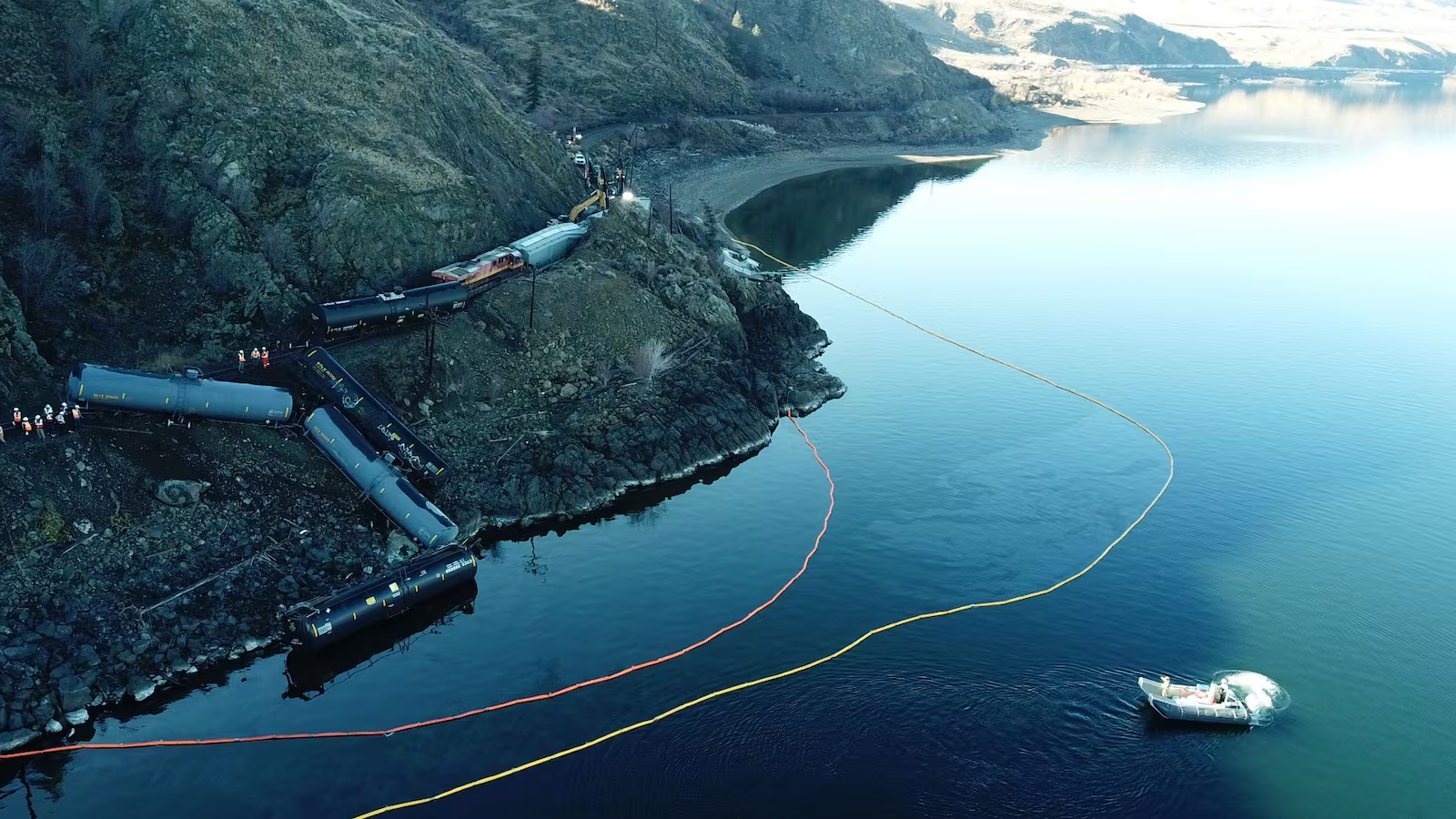
The B.C. Environment Ministry released a photo showing the scene of a train derailment near Kamloops on November 2. CTV
Crews continue cleaning up a train derailment near Kamloops, British Columbia, where roughly 12,700 litres of aviation fuel spilled into the environment last weekend.
The 17-car train, operated by Canadian Pacific Kansas City, was hauling aviation fuel and gypsum when it went off the tracks Saturday, sending several cars tumbling down a steep slope into Kamloops Lake, according to the B.C. Environment Ministry.
Fuel Cars Damaged in the Crash
Officials said that containment booms were placed around the site immediately after the derailment to limit the spread of the fuel.
“One rail car loaded with aviation fuel has been removed,” the ministry said in a weekend update. “Two fuel cars remain on the slope, with only minor drips contained.”
An empty rail car with gasoline residue was found in the lake, and another slid partway down the slope, stopping at the water’s edge. One gypsum car also remains partially submerged along the shoreline.
Crews are focusing on removing damaged cars while preventing further fuel from entering the lake.
Reinforced Containment and Surface Cleanup
By Monday, cleanup teams reinforced containment barriers after spotting a thin sheen of fuel escaping the area. Workers began skimming the water’s surface and spreading peat moss, which acts as a natural absorbent to soak up fuel.
On Tuesday, crews successfully emptied one of the damaged fuel cars, allowing officials to estimate the total spill at about 12,700 litres. Teams plan to inspect the second car next, once it is deemed safe to access.
Water samples from Kamloops Lake are being tested, though results have not yet been released.
No Injuries Reported
Authorities confirmed that no one was hurt in the derailment. The cause of the crash remains under investigation.
Photos released by the province show cleanup crews working along the lake’s edge, with fuel containment booms floating in the water and workers collecting surface residue.
Officials said they would continue monitoring the area closely and adjust cleanup efforts as needed to protect local wildlife and water quality.
Environmental Response Ongoing
The B.C. Environment Ministry said the next phase of the response involves safely removing remaining cars, collecting contaminated soil, and conducting long-term monitoring to assess environmental impacts.
While containment measures appear to be working, crews remain cautious due to the steep terrain and proximity to the lake. The ministry said its top priority is minimizing the environmental impact while ensuring worker safety during recovery operations.
Cleanup is expected to continue for several days as investigators look into what caused the train to leave the tracks.