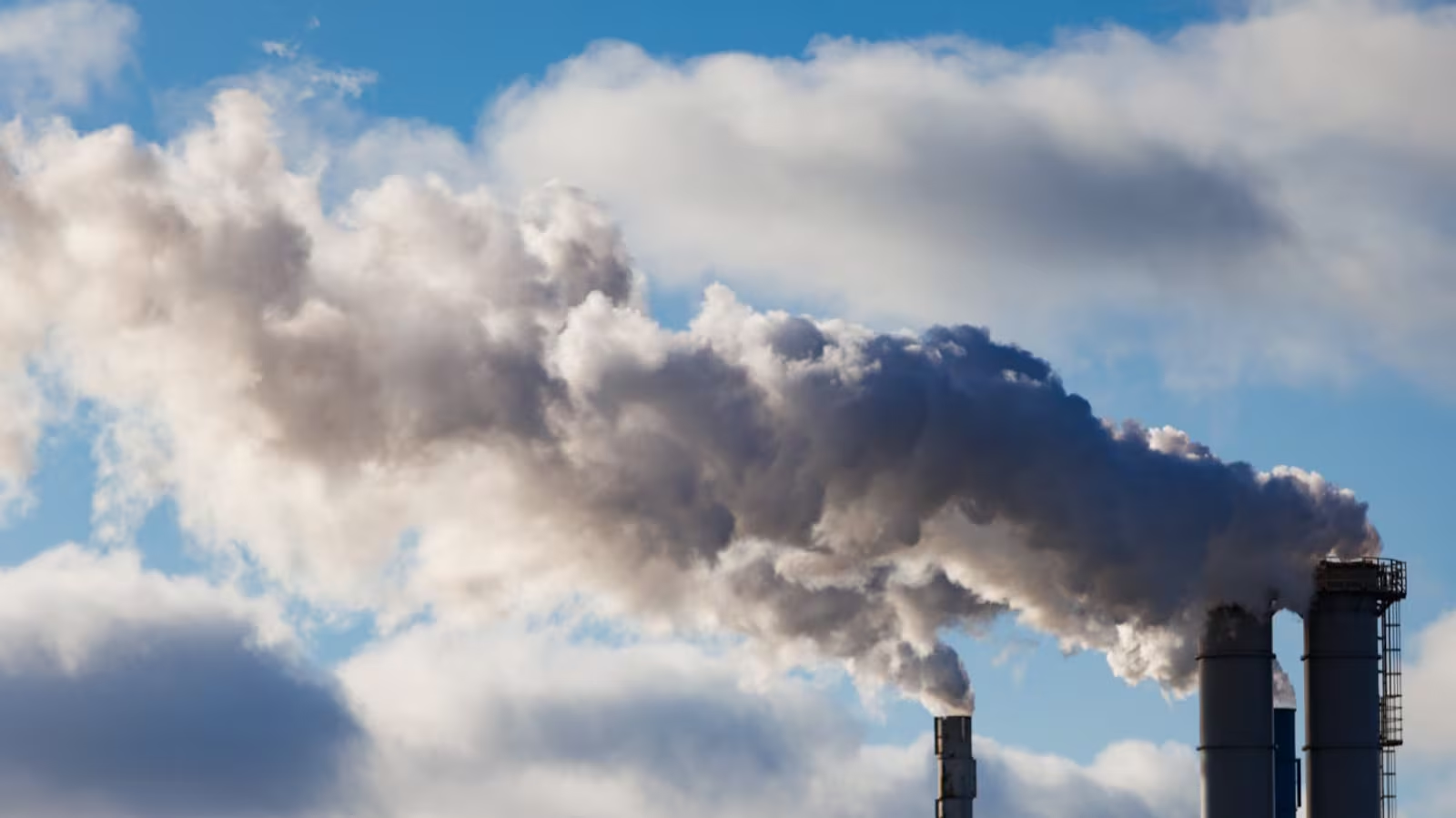
Thick smoke rises from a factory’s chimneys in Toronto on Wednesday, January 8, 2025. (The Canadian Press)
The Ontario government plans to eliminate key parts of its climate legislation that require setting greenhouse gas reduction targets and updating climate plans. The proposal, included quietly at the end of Thursday’s fall economic statement, would repeal several sections of the 2018 Cap and Trade Cancellation Act.
If passed, the changes would remove Ontario’s obligation to establish an official emissions target, publish a detailed climate plan, and issue regular progress reports. Critics say this move would weaken transparency and make it harder for the public to hold the government accountable for its climate efforts.
Reaction from officials and experts
Finance Minister Peter Bethlenfalvy defended the decision, saying the government would still work to reduce emissions. “We’re not going to relent, but we’re going to focus on outcomes and not targets,” he said Thursday.
The proposal comes shortly after a damning report from the auditor general, which revealed Ontario was on track to fall even further behind its own climate goals. The report also found the province had failed to produce updated progress reports since 2021.
Legal experts say the timing of the repeal raises questions. Nathalie Chalifour, a climate law professor at the University of Ottawa, said the government appears to be acting to avoid legal accountability. “They’re about to be held to account for not doing enough on climate change,” she said. “Instead of defending their target, they’ve essentially removed it.”
Legal case continues
The government faces an ongoing constitutional challenge filed by seven young Ontarians who argue the province’s weak climate plan violates their Charter rights. Lawyer Fraser Thomson, who represents the group, said the latest move shows the government is “further retreating from the climate fight.”
“This government is dangerously fuelling the climate crisis,” Thomson said. “We know the climate crisis poses an unprecedented threat to our Charter-protected rights.”
The case, revived by the Ontario Court of Appeal last year, will return to court in early December. The appeal court previously ruled that the 2018 law created a legal obligation for the province to take meaningful action on climate change.
Auditor general flags poor performance
In her October report, the auditor general criticized Ontario for failing to update its climate plan and for recycling old information in a 2022 online report. The findings suggested a lack of transparency and limited progress in reducing greenhouse gas emissions.
The Environment Ministry declined to explain why the province was pursuing the repeal. A spokesperson instead pointed to investments in transit expansion, energy efficiency, and nuclear power as examples of climate action.
Political and public backlash
Opposition parties condemned the move. Green Party Leader Mike Schreiner accused Premier Doug Ford’s government of giving up on climate leadership. “The government essentially doesn’t have a climate plan,” Schreiner said. “Now they’re making that legal and telling Ontarians they don’t care.”
The Ford government scrapped Ontario’s cap-and-trade system in 2018 and replaced the previous Liberal target—a 37 per cent emissions reduction from 1990 levels—with a weaker goal of 30 per cent below 2005 levels by 2030. Environmental groups say the revised target could add as much as 30 megatonnes of extra carbon emissions, equivalent to millions of gas-powered cars on the road each year.
As critics warn of growing environmental and legal consequences, the government continues to emphasize economic growth and energy development over strict emissions targets.