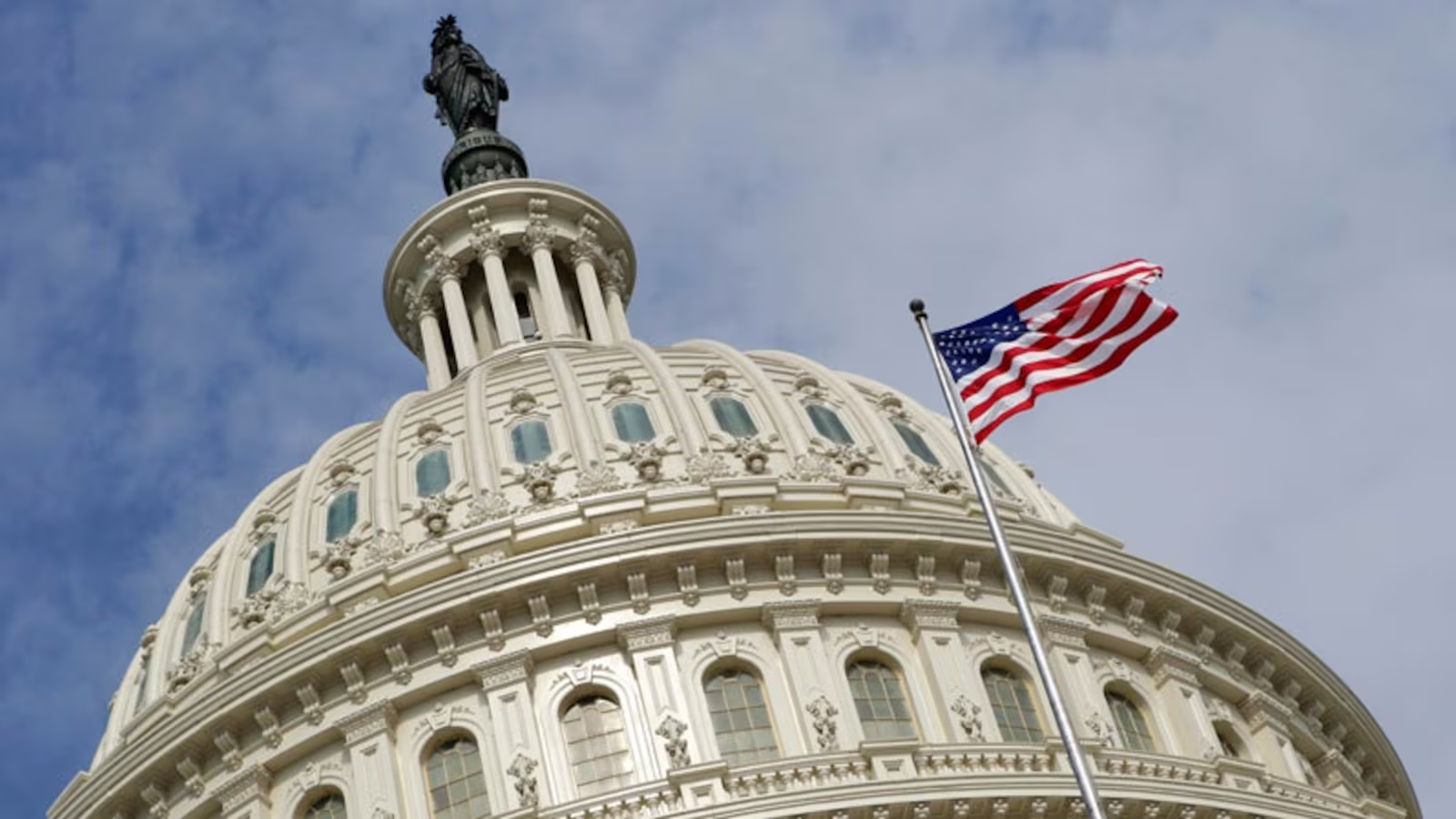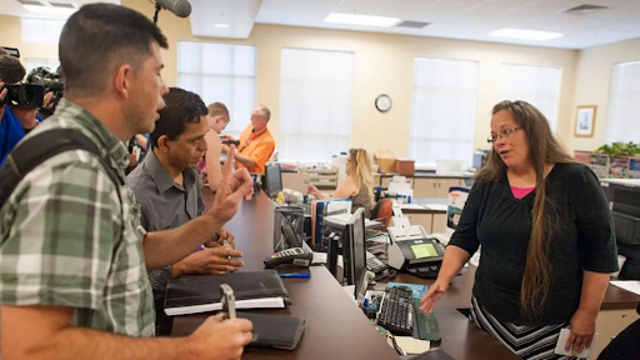
The U.S. Supreme Court has chosen not to reopen its ten-year-old decision that legalized same-sex marriage across the country. BBC
The U.S. Supreme Court has refused to reconsider its landmark 2015 decision that legalized same-sex marriage across the country. The court’s decision on Monday effectively ends the long-running appeal of Kim Davis, a former county clerk from Kentucky who refused to issue marriage licences to same-sex couples, citing her religious beliefs.
Davis, an Apostolic Christian, argued that issuing marriage licences to gay couples conflicted with her faith. Her refusal in 2015 came just months after the Supreme Court’s historic ruling in Obergefell v. Hodges, which guaranteed the right to same-sex marriage under the U.S. Constitution.
Couple Wins Civil Rights Case
Davis’s legal troubles began when she denied a marriage licence to David Ermold and David Moore, a same-sex couple in Kentucky. The pair later filed a civil rights lawsuit, claiming Davis violated their constitutional right to marry.
“For me, this would be an act of disobedience to God,” Davis said at the time, defending her actions.
In 2022, Judge David Bunning ruled that Davis’s personal religious views did not exempt her from performing her duties as an elected official. “Davis cannot use her own constitutional rights as a shield to violate the constitutional rights of others,” the judge wrote.
Davis spent six days in jail for contempt of court and was ordered to pay $360,000 (US) in damages to the couple. The 6th U.S. Circuit Court of Appeals, based in Cincinnati, later upheld that ruling.
Supreme Court Ends the Appeal
Davis appealed to the Supreme Court, arguing that the 2015 ruling was based on a “legal fiction” and violated her right to religious freedom. Her lawyer, Mat Staver of the conservative Liberty Counsel, said Davis now faces “crippling monetary damages based on nothing more than purported hurt feelings.”
The Supreme Court declined to hear the appeal, leaving the lower court rulings in place. The justices gave no written explanation for their decision.
Some conservatives had hoped the court would revisit the same-sex marriage ruling, especially since the current bench holds a 6-3 conservative majority. That hope grew after the court overturned the constitutional right to abortion in 2023.
A Landmark Ruling Remains Intact
The 2015 Obergefell v. Hodges decision remains one of the most significant rulings in U.S. civil rights history. It was authored by then-Justice Anthony Kennedy, who joined four liberal justices to affirm that same-sex couples have the same marriage rights as heterosexual couples.
Kennedy wrote that gay people seeking marriage “are not to be condemned to live in loneliness, excluded from one of civilization’s oldest institutions.” He added, “They ask for equal dignity in the eyes of the law. The Constitution grants them that right.”
Three of the four conservative justices who dissented in 2015 — including Chief Justice John Roberts — still serve on the court. In his dissent, Roberts criticized the ruling, saying, “Five lawyers have ordered every state to change their definition of marriage. Just who do we think we are?”
With the Supreme Court’s decision not to revisit the issue, same-sex marriage rights remain firmly protected under U.S. law, marking another victory for advocates of equality.