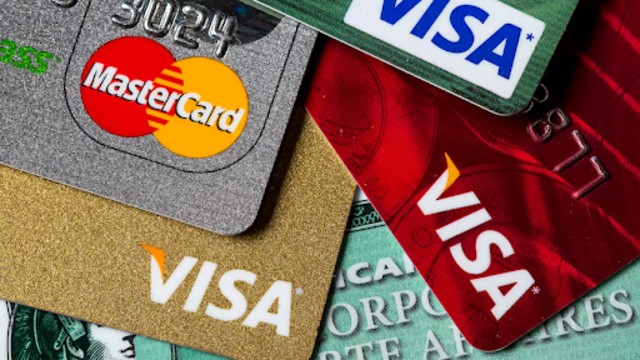
Visa and Mastercard announced a revised settlement with merchants who accused the card networks of charging too much to accept their credit cards. (CBC News)
After two decades of legal wrangling, Visa and Mastercard have reached a revised settlement with U.S. merchants over credit card swipe fees — a dispute that has shaped how Americans pay for their purchases.
The new agreement, announced Monday, comes months after a federal judge rejected an earlier $30-billion proposal, calling it inadequate. The updated settlement, which still requires court approval, is designed to provide merchants with broader flexibility and modest relief from the fees charged each time a customer swipes a credit card.
Lower Fees and More Choices for Merchants
Under the deal, Visa and Mastercard will reduce swipe fees — also known as interchange fees — by 0.1 percentage point for five years. Currently, these fees range between 2% and 2.5% per transaction, often paid by retailers to banks and credit card networks to process payments.
Standard consumer card fees will be capped at 1.25% until the agreement expires. In addition, merchants will gain the option to decide which types of U.S. cards to accept, including commercial cards, premium rewards cards, and standard consumer cards. They will also have more freedom to impose surcharges on credit card payments if they choose to do so.
According to the National Retail Federation, U.S. swipe fees totaled $111.2 billion in 2024 — a sharp increase from $100.8 billion in 2023, and nearly four times the amount recorded in 2009.
Visa said the settlement delivers “meaningful relief” and offers merchants of all sizes greater flexibility in how they handle payments. Mastercard echoed this sentiment, noting that smaller merchants, in particular, would benefit from lower costs and simpler rules.
Both companies emphasized that the deal provides a better payment experience for businesses and consumers alike, while neither admitted any wrongdoing.
A Judge’s Rejection Prompted the New Deal
The fresh settlement follows U.S. District Judge Margo Brodie’s rejection of a previous $30-billion accord in June 2024. That proposal had promised to lower swipe fees by just 0.07 percentage points over five years and to allow limited surcharges on transactions.
Judge Brodie ruled that the earlier plan didn’t go far enough, describing the projected $6 billion in annual savings for merchants as “paltry” compared to the billions Visa and Mastercard could still collect. She also criticized the agreement for maintaining the controversial “Honor All Cards” rule, which forces retailers to accept all Visa and Mastercard cards or none at all.
Merchant Concerns Persist
Despite the revised proposal, merchant groups remain cautious. They argue the deal doesn’t sufficiently reduce costs or curb the power of major card networks.
Doug Kantor, general counsel for the National Association of Convenience Stores, said the new settlement still gives Visa and Mastercard too much freedom to raise rates.
“It doesn’t give banks any reason to lower the fees they charge,” Kantor said. “And merchants can’t just refuse rewards cards, which make up more than 80% of all credit cards. Most businesses simply can’t afford to turn those customers away.”
Critics have also long opposed the card networks’ “anti-steering” rules, which restrict merchants from encouraging customers to use cheaper forms of payment such as cash or debit cards.
Canada’s Swipe Fee Solution
A similar issue was resolved north of the border last year. In 2023, the Canadian government reached an agreement with Visa and Mastercard to cap interchange fees at an average of 0.95%, down from about 1.4%. The government estimated the move would save retailers around $1 billion over five years.
However, some small business owners said the Canadian deal offered limited benefits because it only applied to merchants processing a certain volume of transactions through the two card networks.
That followed a 2022 class-action settlement in Canada allowing businesses to pass on swipe fees to customers through surcharges capped at 2.4%. Visa and Mastercard also agreed to reimburse companies for years of excess charges.
The Road Ahead
If approved, the U.S. settlement could mark the end of one of the country’s longest-running antitrust disputes in the payments industry. Yet with merchant skepticism still high, and billions in fees at stake each year, the debate over who truly benefits from the deal is far from settled.