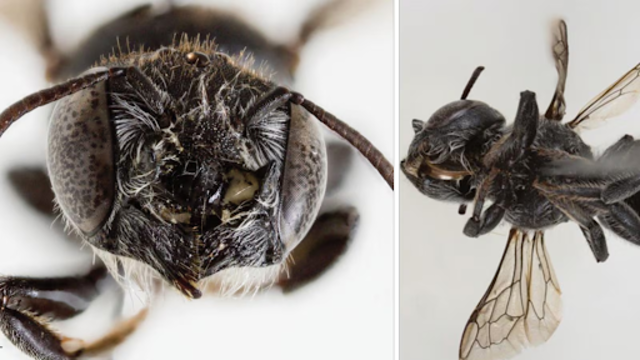
Researchers from Curtin University in Western Australia have identified a new bee species, Megachile (Hackeriapis) lucifer, recognized for the small horn-like structures on its face. CTV
Australia, already famous for its dangerous wildlife, now has a new addition to its list of fascinating creatures — a bee with horn-like features that scientists have named Megachile (Hackeriapis) lucifer.
Researchers from Curtin University in Western Australia announced the discovery this week, confirming that this striking insect is the first newly described member of its bee group in more than two decades.
The Scientist Behind the Find
The discovery was made by Kit Prendergast from Curtin University’s School of Molecular and Life Sciences. She found the unusual-looking bee in 2019 while studying a critically endangered wildflower species.
“The female had these incredible little horns on her face,” Prendergast said. Her attention was immediately caught by the insect’s distinct appearance.
As a fan of the popular TV series Lucifer, she said the name felt fitting for the bee’s “devilish” look.
“It’s the first new member of this bee group to be described in more than 20 years, which really shows how much life we still have to discover,” she explained.
Raising Awareness for Native Species
Prendergast hopes her discovery will encourage greater awareness about the vast number of species that remain undiscovered, especially in regions facing environmental threats.
She expressed concern that mining activity in Western Australia could be damaging ecosystems before scientists even know what species live there.
“Many mining companies still don’t survey for native bees, so we may be missing undescribed species, including those that play crucial roles in supporting threatened plants and ecosystems,” she said.
Her comments highlight a growing issue among environmental researchers — the loss of biodiversity caused by industrial expansion and habitat destruction.
“Without knowing which native bees exist and what plants they depend on, we risk losing both before we even realise they’re there,” Prendergast warned.
Bees and Their Importance
Bees are among the world’s most important pollinators. Almost all flowering plants depend on them for reproduction, making them essential to healthy ecosystems and agriculture.
However, scientists say climate change, habitat loss, and pesticide use are putting many bee populations in danger. Without their pollination, many plant species — including those that sustain food crops — could face severe decline.
The discovery of the “Lucifer” bee offers a reminder of how much remains unknown about Australia’s native insect life. It also emphasizes the need to protect fragile habitats where undiscovered species may live.
More to Discover
For Prendergast and her team, finding Megachile lucifer is both exciting and worrying. It proves that even in regions studied for decades, nature still holds secrets waiting to be uncovered.
“This discovery shows how much there is still to learn,” she said. “We can’t protect what we don’t know exists.”
Her hope is that the little horned bee will not only add to scientific knowledge but also inspire stronger efforts to safeguard Australia’s natural environment.