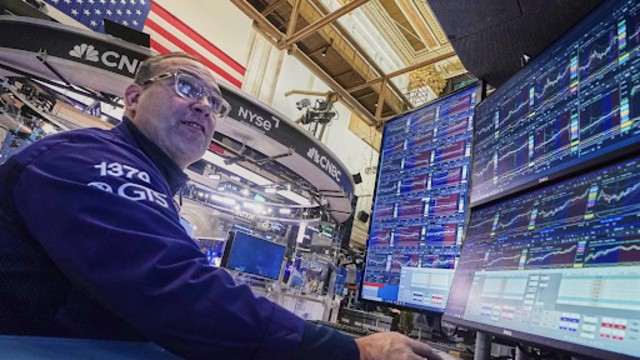
Specialist Anthony Matesic works on the floor of the New York Stock Exchange, Thursday, Nov. 20, 2025. (AP Photo)
Canada’s stock market swung sharply lower on Thursday after a strong start, mirroring a volatile performance across U.S. exchanges. Early optimism faded within hours as major tech stocks reversed course, dragging indexes deep into negative territory.
Markets opened with enthusiasm, lifted by strong momentum from recent weeks. But the tone changed quickly. By the afternoon, the S&P/TSX composite index had dropped 371.86 points to close at 29,906.55, erasing early gains and surprising market watchers.
A Sudden Shift After Morning Optimism
Carol Schleif, chief market strategist at BMO Private Wealth, said the sharp reversal caught her off guard. She noted that the morning rally suggested confidence, making the swift downturn feel more abrupt.
She described the day’s pattern as a classic “whipsaw,” where markets swing dramatically in both directions. Such moves are rare in recent months, she said, which added to the discomfort among investors.
Pullbacks Still Part of Market Rhythm
Despite the turbulence, Schleif emphasized that downturns remain normal, even in strong years. Markets had recently pushed through record highs at the end of September and October, which are typically slower months. That made Thursday’s decline feel like a sharp contrast but not an anomaly.
In the U.S., major indexes also tumbled. The Dow Jones industrial average fell 386.51 points to 45,752.26. The S&P 500 slid 103.40 points to 6,538.76. The Nasdaq dropped 486.18 points to 22,078.05, absorbing the brunt of the tech-driven sell-off.
Algorithms and Year-End Rebalancing Add Pressure
Schleif suggested that algorithmic trading may have amplified the swings, especially as traders move to adjust portfolios before year-end. The TSX decline, she added, was likely influenced by the broader U.S. sell-off, pulling Canadian equities “into the vortex” of global market jitters.
AI-Linked Stocks Hit the Hardest
The downturn hit companies connected to artificial intelligence especially hard. This included metals and mining firms supplying materials for data centres and chip production. Schleif said investors may be stepping back from AI-related bets after months of steep gains.
These second- and third-level effects of the AI trade contributed to the sharp fall across sectors that had previously surged on the promise of rapid technological expansion.
Wall Street Wavers Despite Strong Nvidia Results
Wall Street’s turbulence intensified as big-name tech stocks erased their early momentum. Nvidia, which initially surged five per cent after reporting blockbuster earnings and a strong revenue forecast, ended the day down three per cent.
Its reversal carried added weight because Nvidia is currently the largest company on the U.S. market. Any significant move in its stock tends to shift the S&P 500 more than most others.
Anxiety Over an AI Bubble Deepens
Even Nvidia’s strong results didn’t fully calm fears that markets may be overestimating future gains from AI. Investors remain uneasy about whether huge spending on AI chips and massive data centres will lead to sustained profits or productivity boosts.
These doubts contributed to the broader pullback in tech-heavy sectors, including cryptocurrencies, which have seen volatile trading patterns in recent weeks.
Commodities and Currency Reflect Broader Weakness
The Canadian dollar slipped to 71.02 cents US, down from 71.23 cents the previous day. Commodity prices also softened. The January crude oil contract dipped 25 cents to US$59.00 per barrel. Gold retreated as well, with the December contract falling US$22.80 to settle at US$4,060.00 an ounce.
Overall, Thursday’s market action highlighted growing caution among investors as the year draws to a close, driven by concerns about the sustainability of tech-led growth and heightened sensitivity to rapid market swings.