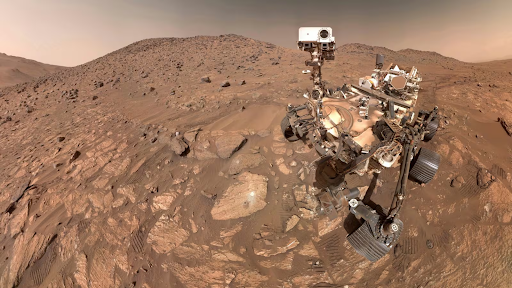
This NASA image shows a selfie taken by the Perseverance rover on July 23, 2024. The photo was created from 62 separate pictures combined into one. NASA
Scientists say they may have caught the first clear sound of lightning on Mars. The finding comes from audio recorded by NASA’s Perseverance rover as it rolled across the planet’s dusty surface. A small microphone on the rover picked up sharp crackling noises mixed with strong winds, leading researchers to believe they heard tiny electrical discharges.
A French-led research team announced the results on Wednesday. They said they listened to dozens of recordings and found 55 moments where these short bursts of sound seemed to match what they call “mini lightning.” The events took place over two Martian years. Most of them happened on windy days during dust storms or as swirling dust devils passed near the rover.
Tiny Sparks in the Dust
The electrical arcs were small, only a few centimetres in size, and took place within two metres of the rover’s microphone. The device sits high on Perseverance’s mast, which also carries cameras and lasers used to examine Martian rocks. The sparks sounded like static electricity, similar to the crackle sometimes heard on Earth during dry, windy weather.
Scientists have searched for signs of lightning on Mars for nearly 50 years. The lead author of the new study, Baptiste Chide from the Institute for Research in Astrophysics and Planetology in Toulouse, said the discovery opens a fresh path for research. “It’s like finding a missing piece of the puzzle,” he said. He believes the bursts of electricity may play a role in chemical reactions in the thin Martian atmosphere.
A Chance to Learn More
Not everyone in the scientific community agrees the sounds confirm lightning. Daniel Mitchard of Cardiff University said the evidence is strong but still based on audio alone. The microphone was designed to record the rover’s own laser blasts, not electrical events in the air. He added that no one has visually observed the sparks. “Until new instruments are sent to verify the findings, I think there will still be a debate,” he said.
Still, Mitchard agrees the discovery is remarkable. He said the recordings likely captured Martian lightning, even if more data is needed to make it certain.
How the Study Worked
Chide and his team listened to 28 hours of audio recorded on Mars. They compared the crackles to known patterns of electrical activity. The bursts created by dust devils lasted only seconds. Those linked to larger storms could continue for up to 30 minutes. Chide said the sounds resembled a very weak thunderstorm, with faint, scattered zaps that the human ear can barely detect. Mars’ atmosphere absorbs sound more than Earth’s, making the signals even harder to hear.
The thin, carbon dioxide-rich air of Mars makes the planet more prone to electrical sparks caused by dust grains rubbing together. Scientists say the lightning would not threaten future astronauts. However, they warn that steady static discharges could interfere with sensitive instruments.
A Rover That Keeps Teaching
Perseverance has already delivered many firsts. People on Earth have listened to the crunch of its wheels and the hum of its helicopter partner, Ingenuity. The rover has been exploring an ancient river delta since 2021, gathering rock samples that may hold clues about past life. Plans to bring those samples to Earth remain on hold while space officials look for cheaper ways to complete the mission.