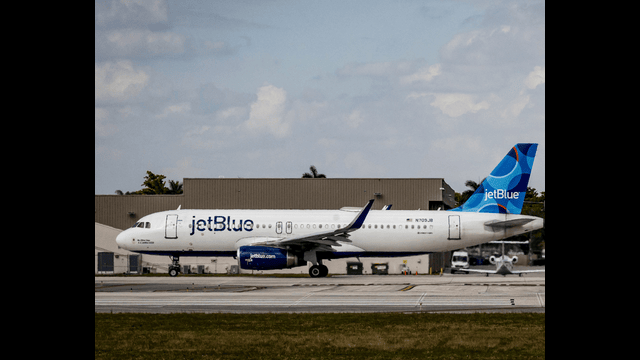
A JetBlue Airbus A320 at Fort Lauderdale, Florida. Airbus said a recent incident involving an A320-family aircraft had revealed that intense solar radiation may corrupt data critical to the functioning of flight controls.
Airlines worldwide faced major disruptions this weekend after Airbus issued an urgent A320 recall, grounding thousands of aircraft for immediate software repairs. The order, covering 6,000 A320-family jets, affects more than half of the global fleet and has triggered widespread delays and cancellations.
One of Airbus’s Biggest Recalls
The European Union Aviation Safety Agency (EASA) issued the directive on Friday as a precautionary action following a recent mid-air incident. Airbus instructed airlines to revert affected aircraft to earlier ELAC software, a fix requiring about two hours per plane.
With more than 3,000 A320 jets airborne at the time the bulletin was issued, airlines scrambled to comply. The scale of the A320 recall is considered one of the largest in Airbus’s 55-year history.
Airlines Brace for Weekend Turbulence
The recall hit during the busy US Thanksgiving travel period. Several major carriers immediately grounded aircraft:
- American Airlines said 340 of its 480 A320s need the update. It expects most fixes to be completed by Saturday.
- Delta reported fewer than 50 affected A321neos.
- United Airlines identified six affected planes and anticipated minimal impact.
- Hawaiian Airlines reported no disruptions.
In the Asia-Pacific region, airlines faced wider challenges.
Australia’s Jetstar cancelled domestic flights. Japan’s ANA Holdings grounded multiple aircraft, cancelling 65 domestic flights on Saturday, with more cancellations expected.
Avianca, Colombia’s largest carrier, said the recall affects over 70% of its fleet and halted ticket sales for travel until 8 December.
Europe Sees Mixed Impact
In Europe, several carriers moved quickly to complete the repairs:
- easyJet expected disruptions Friday but later confirmed normal operations on Saturday after rapid software updates.
- Lufthansa, IndiGo, and others temporarily removed aircraft from service.
- British Airways said only three of its short-haul jets were affected and expects no operational impact.
Airports also issued updates. Gatwick reported minor disruption, while Heathrow saw no impact late Friday.
What Triggered the A320 Recall?
Airbus linked the recall to a recent in-flight incident involving an A320 aircraft, where solar radiation was believed to have corrupted critical flight-control data.
The issue was traced to the ELAC system (Elevator and Aileron Computer), which manages pitch control through pilot commands. The manufacturer, Thales, stated that the computer meets Airbus specifications and that the problem lies outside its software responsibility.
Industry sources say the trigger event was a JetBlue flight from Cancún to Newark on 30 October, which suddenly lost altitude. At least 15 passengers were injured before the aircraft diverted safely to Tampa. The FAA and JetBlue have not commented.
Maintenance Strain Adds Pressure
The Airbus A320 recall arrives amid a global crunch in aircraft maintenance capacity. Airlines are already dealing with a backlog caused by:
- shortages of repair staff
- long waits for engine inspections
- hundreds of Airbus jets grounded for unrelated issues
The latest recall adds more stress to an already stretched aviation repair ecosystem.
UK Impact Appears Limited
UK Transport Secretary Heidi Alexander said the recall’s effect on UK airlines appears “limited,” with only a small number of aircraft needing more complex fixes.
World’s Most Popular Jet Faces Safety Scrutiny
The Airbus A320 family, with 11,300 aircraft in service, is the world’s most widely operated narrow-body jet. The aircraft introduced fly-by-wire controls to commercial aviation in the 1980s and competes with Boeing’s 737 MAX—a model grounded globally after fatal crashes linked to flawed software.
Demand for both jets has surged due to rapid air-travel growth, especially across Asia.
Airlines Race to Resume Normal Operations
Most airlines expect to complete the A320 recall software updates within days. While disruptions continue in some regions, carriers emphasise that safety remains the priority after the mid-air scare.
As Airbus works with global regulators, the aviation industry hopes to quickly restore normal flight schedules and passenger confidence after this unprecedented A320 recall.