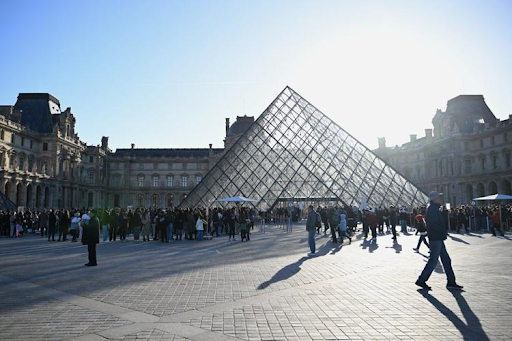
People queue to enter the Louvre Museum, Thursday, Oct. 30, 2025 in Paris. (AP Photo)
The Louvre Museum in Paris is preparing for a major change. Starting January 14, non-EU visitors will face a steep ticket increase as the iconic institution pushes forward with an ambitious modernization plan. The decision follows a worrying security lapse last year that exposed the museum’s urgent need for upgrades.
A Sharp Price Jump to Fund Renovation
The Louvre has approved a 10-euro hike for non-EU nationals, lifting the standard ticket from 22 to 32 euros. Visitors from Iceland, Liechtenstein, and Norway—nations aligned under the European Economic Area—will not be affected.
Museum officials say the additional revenue is essential. The building’s aging infrastructure and the October 19 crown-jewel heist revealed significant vulnerabilities. The theft, valued at 88 million euros, intensified calls for improved security and modernization.
Heist Investigation Moves Forward
French prosecutors confirmed that all four suspects captured on security cameras during the robbery are now in custody. The latest arrest came with preliminary charges, including theft by an organized gang and criminal conspiracy.
Tourists Drive Attendance
The Louvre remains a global attraction. It welcomed 8.7 million visitors in 2024, and 77% came from overseas. Americans make up the largest foreign group, followed by visitors from China and the United Kingdom—all of whom will bear the increased cost.
Louvre director Laurence des Cars recently announced more than 20 emergency measures that are already underway. She noted that the museum’s last major overhaul dates back to the 1980s and can no longer meet today’s demands.
A Multi-Billion-Euro Vision for the Future
The planned “Louvre New Renaissance” project carries an estimated cost of up to 800 million euros. The goal is to strengthen infrastructure, reduce overcrowding, and create a dedicated Mona Lisa gallery by 2031.
Critics warn that higher fees could deter tourists. But others argue that occasional visitors will still be willing to pay for a once-in-a-lifetime experience.
Other French Sites Considering Similar Hikes
The Louvre is not alone in facing soaring renovation costs. Chateau de Chambord, a leading landmark in the Loire Valley, will also raise prices by 10 euros for non-EU guests starting in January. Its director, Pierre Dubreuil, says the money is needed to save the 16th-century royal wing from possible collapse.
The Palace of Versailles may soon follow with a smaller increase of 3 euros.
A Global Trend in Tourism Pricing
Charging international visitors more is not new. The United States recently approved an extra $100 fee for foreign travelers entering major national parks such as Yellowstone and Grand Canyon. The policy aims to offset staff shortages, repair damage from the government shutdown, and recover lost revenue.
The United Kingdom has debated similar measures. Admission to most permanent museum collections remains free, but the government will now allow cities to introduce a “tourist tax” on overnight stays.
Across Africa, differential pricing is standard. Safari destinations and major parks often charge foreigners four to five times more than local visitors. Officials say the revenue supports conservation efforts and local economies. For example, Kruger National Park in South Africa charges $35 for foreigners but $8 for residents, while Kenya’s Masai Mara sets fees at $200 for tourists and $24 for locals.
As France moves to protect its cultural heritage, the Louvre’s new policy signals a broader shift—one that asks global visitors to share more of the financial burden needed to preserve the world’s most celebrated landmarks.