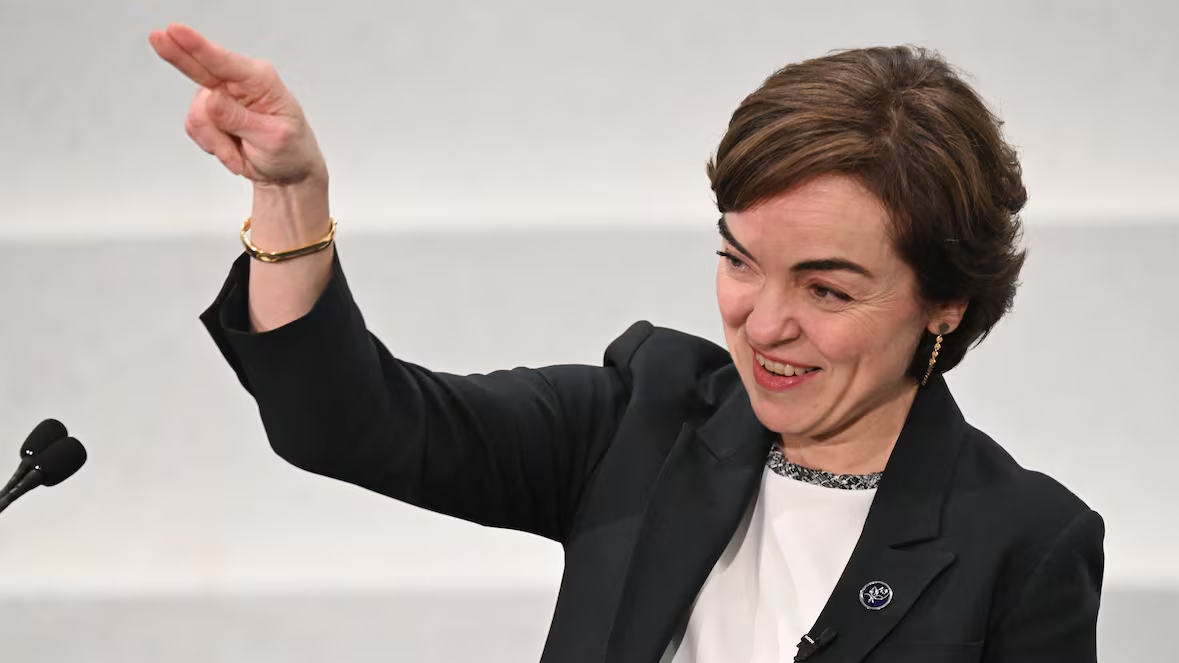
European Commission President Ursula von der Leyen joins Prime Minister Mark Carney at a plenary session on the first day of the G20 Summit at the Nasrec Expo Centre in Johannesburg, South Africa, on Saturday, Nov. 22, 2025. AP
Canada joined a large European defence effort this week and now faces a 10-million-euro bill. The amount equals about $16 million. The European Union set the fee for countries that join the SAFE program. SAFE forms part of a wider push to strengthen Europe’s defence sector and reduce reliance on the United States.
The program carries a value of $245 billion. It aims to grow production, improve supply lines and support modern military equipment. Europe wants stronger local industries and more control over future spending.
Defence Minister David McGuinty shared the news on Monday. He confirmed the deal but did not share the cost. He told reporters that “we’ll have more to say about that in due course.”
The answer arrived a day later in Brussels.
EU Outlines Canada’s Required Payment
EU spokesperson Thomas Regnier shared the fee during a press briefing on Tuesday. “Canada will have to start to pay a one-off contribution of 10 million to the EU budget, and this will then be reassessed,” he said.
Global Affairs Canada later confirmed the same figure. Spokesperson John Babcock said Canada will pay 2.5 million euros in administrative costs and 7.5 million euros for annual participation. He said Canada and the EU reached an agreement in principle. He noted that officials still work on final treaty text.
Babcock said the deal “supports all partners in improving defence readiness and fosters growth in our respective defence industries.”
Regnier explained how the EU set each country’s fee. He said officials look at “potential contracts that (each) third country industry will get.” He added that the EU uses the same method for every outside partner that seeks entry to SAFE.
He also said the fee could change later. “There is a correction mechanism, so this will be reassessed in light of the amounts of contracts that the Canadian industry will get from its participation into SAFE,” he said.
Experts Question Canada’s Expected Gains
The EU asked the United Kingdom to pay between 4 and 6.5 billion euros. Canada faces a far smaller amount. This gap raised new questions at home.
Justin Massie, a professor at Université du Québec à Montréal, questioned the expected returns. He wrote online that Canada should “temper our expectations,” because lower entry costs likely match lower expected benefits.
Foreign Affairs Minister Anita Anand responded on Wednesday. She did not confirm whether that view reflects how to read the numbers. She said she heard strong interest in Canada’s defence technology during talks in Brussels. “Everyone I spoke with was very excited to have Canadian companies be on the same footing as European companies, in order to compete for procurement contracts here,” she said. She added that the agreement “brings Canada into the tent in a very positive way for the domestic Canadian economy.”
Regnier noted another existing agreement between Canada and the EU. It lets European buyers purchase Canadian-made defence goods if at least one-fifth of the parts come from Europe.