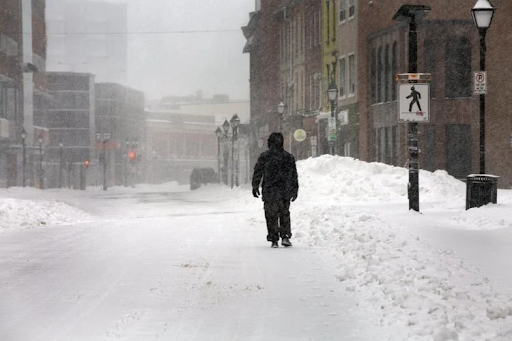
A commuter clears snow from their vehicle during a heavy snowfall in St. John’s on Wednesday, Dec. 3, 2025. The Canadian Press
A strong nor’easter swept into Atlantic Canada on Wednesday. It brought heavy snow, cold rain and fierce winds to several provinces. The wild weather created problems from Nova Scotia to Newfoundland and Labrador.
Winds knocked out power for thousands of homes and businesses in Nova Scotia. Outages stretched from Yarmouth in the southwest to Sydney in the northeast. Crews worked through the day as wind gusts kept hitting coastal areas.
Newfoundland faced its first major blast of winter. Central and eastern regions received enough snow to force a full school shutdown. P.E.I. also closed schools across the province. Nova Scotia saw a mix of closures, as snowfall stayed light along the Atlantic coast. New Brunswick shut schools in its southern and eastern regions.
Officials Urge People to Stay Off Roads
Weather officials welcomed the closures. David Neil, a warning preparedness meteorologist in Gander, said the decision improved safety. “It was definitely a good idea to keep as many people off the roads as possible,” he said. He warned that the evening commute would bring rough driving, especially in Newfoundland and Cape Breton.
Neil explained that the storm formed off the U.S. east coast. It then swept toward the Maritimes before sliding along Nova Scotia’s Atlantic edge. It aimed south of Newfoundland by late Wednesday.
The Halifax region stayed open, as the city saw only light snow and rain in the morning. But conditions grew worse north of the city. Heavy snow and low visibility caused major trouble along the Trans-Canada Highway. Officials closed a long stretch west of Truro and across the Cobequid Mountains. Drivers lost the quickest road link between Nova Scotia and New Brunswick during the storm.
Snowfall Totals Rise Through the Day
Environment Canada issued several snowfall warnings on Tuesday. Yellow zones predicted 20 to 30 centimetres of snow by Wednesday afternoon. Orange zones in northern Cape Breton and central Newfoundland warned of 30 to 50 centimetres.
Neil said most areas would see wet and heavy snow. Some communities along Newfoundland’s south and east coasts faced rain later in the day. He said the shift from snow to rain would create “very slushy driving conditions.”
By mid-afternoon, streets in St. John’s filled with ankle-deep slush. Plows worked to clear main routes as snow mixed with rain. Rural areas farther inland faced colder conditions and deeper snow.
More Snow Expected Overnight
Neil said conditions would grow stronger late Wednesday. “We are expecting things to continue to ramp up, really through Wednesday,” he said. He expected more buildup overnight. Many residents in Newfoundland would wake up to fresh snow on the ground Thursday.
The storm marked one of the season’s first major tests for winter crews. Officials urged drivers to slow down, stay alert and plan for slippery roads across the region.