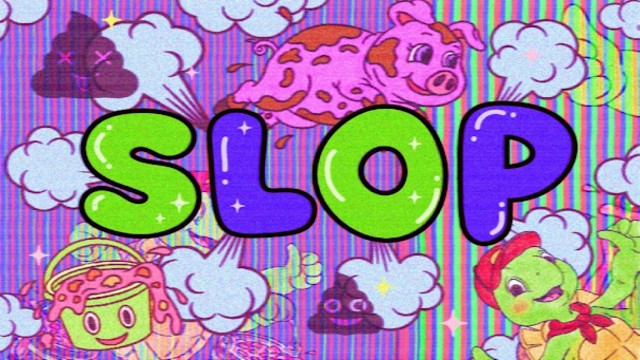
Merriam-Webster Names “Slop” the Word of the Year. AP Illustration
The internet had a word for the unease many felt online this year. Merriam-Webster has named “slop” its 2025 word of the year. The choice reflects growing fatigue with low-quality digital content, much of it fueled by generative artificial intelligence.
Once a term for muddy ground or thin stew, “slop” now carries a sharper meaning. It describes digital material that looks real but feels hollow. Often mass-produced. Often misleading. Sometimes unsettling.
From Mud to Modern Media
“Slop” dates back to the 1700s. It first meant soft mud. Later, it came to describe anything of little value. Today, the dictionary defines it as low-quality digital content, usually produced in bulk using artificial intelligence.
The word gained traction as AI tools became widely available. Anyone can now generate images, videos, and text in seconds. That ease has flooded feeds with strange clips, fake news, and awkward visuals.
Absurd videos. Artificial book covers. Political images stripped of context. Many users now recognize the pattern. They call it slop.
AI’s Double-Edged Moment
AI video generators have impressed audiences with realism and speed. But that same power has raised alarms. Social media now hosts manipulated images of celebrities and deceased figures. Deepfakes blur truth and fiction.
Some content has crossed into politics. Last month, U.S. Defense Secretary Pete Hegseth shared a manipulated cartoon image to defend military actions abroad. A children’s character became a symbol of violence. The moment sparked backlash and renewed concern.
Slop is not new. But scale is. The tools are cheaper. The output is faster. The reach is global.
A Word That Signals Awareness
Merriam-Webster President Greg Barlow sees meaning in the surge of interest. He says people are learning to spot fake or careless content. They are pushing back.
Searches for “slop” rose as users tried to label what they were seeing. The word became a way to reject what felt wrong.
Barlow says the term even carries hope. It suggests a desire for authenticity. For human creativity. For care.
Sometimes, he adds, AI does not seem intelligent at all.
How the Word Was Chosen
Each year, Merriam-Webster tracks which words spike in searches and usage. Editors then debate which term best captures the year’s mood. The goal is reflection, not trend chasing.
Some words always rank high. Editors filter those out. The final choice must explain something deeper.
“Slop” did that in 2025.
Other Words That Shaped the Year
Several other terms also surged in lookups.
“Performative” reflected public weariness with empty gestures. It appeared across politics, influencer culture, and social debates.
“Touch grass” captured a shared craving to unplug. The phrase urges people to step into real life.
“Gerrymander” spiked amid renewed political battles over voting maps. Redistricting debates returned to headlines.
“Conclave” surged after the election of Pope Leo XIV, the first American pope. Searches jumped overnight.
“Tariffs” resurfaced as trade wars returned to public focus. The word carried economic and political weight.
One term stood out for pure curiosity. A famously long lake name from Massachusetts clogged search lists. Gamers encountered it online. Locals still call it Webster Lake.
A Mirror of the Times
Since 2003, Merriam-Webster has named a word of the year. Past picks include “pandemic,” “vaccine,” and “polarization.” Each marked a defining moment.
In 2025, the defining feeling was discernment. People learned to question what they see. They learned to name the mess.
They called it slop.