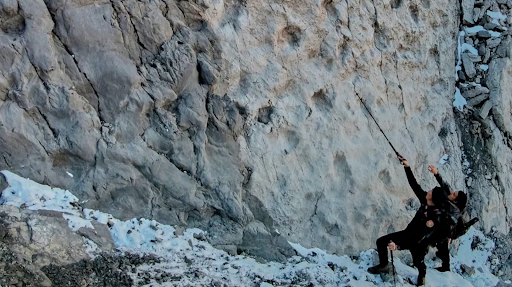
A photo taken in September 2025 shows a police officer and a national park worker examining ancient dinosaur footprints in northern Italy’s Fraele Valley. The image was shared by park officials on December 16, 2025, after the discovery of Late Triassic tracks believed to be millions of years old. AP
A major dinosaur discovery has surfaced high in the Italian Alps. A wildlife photographer found thousands of ancient footprints in a national park. The tracks date back about 210 million years. Officials confirmed the find on Tuesday. Experts say it ranks among the oldest and largest collections ever found.
The discovery took place inside Stelvio National Park. The site sits near Bormio, a town set to host events during the 2026 Winter Olympics. Scientists expressed surprise at both the scale and location of the find.
Thousands of Tracks Across Mountain Slopes
Researchers estimate up to 20,000 footprints spread across five kilometres. The tracks appear near the Swiss border. Experts believe the area once formed part of a prehistoric coastline. Until now, the region had never produced dinosaur evidence.
Cristiano Dal Sasso, a paleontologist from Milan’s Natural History Museum, received the first alert. “This time reality really surpasses fantasy,” he said. He described the discovery as extraordinary.
Clues About Ancient Dinosaurs
Scientists believe long-necked plant-eating dinosaurs made the tracks. These animals likely walked on two legs. They may have reached 10 metres in length. Some weighed up to four tons. Dal Sasso compared them to Plateosaurus species.
Several footprints measure about 40 centimetres wide. Some still show clear claw marks. Experts say the tracks suggest group movement. Dinosaurs appeared to travel in packs. At times, they stopped in circular patterns. Researchers believe this may have offered protection.
“There are very obvious traces of individuals that have walked at a slow, calm, quiet rhythmic pace, without running,” Dal Sasso said during a press conference.
Accidental Find During Wildlife Photography
Elio Della Ferrera made the discovery by chance. He went into the park last September to photograph deer and vultures. While scanning a rock wall through his lens, something unusual caught his attention.
The footprints sit on a steep vertical wall. The wall rises about 600 metres above the nearest road. The site stands between 2,400 and 2,800 metres above sea level. The north-facing slope stays mostly shaded. This made the tracks hard to notice without strong equipment.
Della Ferrera climbed the rock face for a closer look. The effort proved difficult but rewarding. “The huge surprise was not so much in discovering the footprints, but in discovering such a huge quantity,” he said. “There are really tens of thousands of prints up there, more or less well-preserved.”
Olympic Connection Adds Interest
The site lies just two kilometres from Bormio. The town will host men’s alpine skiing events during the Winter Games. Lombardy’s regional governor welcomed the discovery. He called it “a gift for the Olympics.”
Despite excitement, access remains limited. Winter conditions make the site unreachable for now. Officials have not announced public access plans.
A Window Into Prehistoric Life
Scientists say the discovery offers rare insight into early dinosaur behaviour. The tracks show how animals moved together. They also reveal details about their size and pace. Researchers plan further study once conditions allow.
The find adds global interest to the region. It also reminds scientists that major discoveries can still happen by chance.