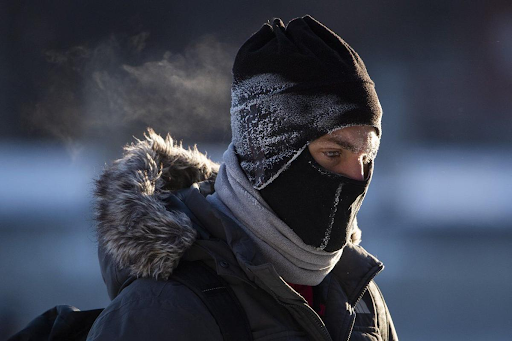
A skater moves along the Rideau Canal in Ottawa with frost covering their face, hat, and balaclava from their breath during the cold on Saturday, Jan. 15, 2022. THE CANADIAN PRESS
A wave of bitter cold has tightened its grip on Yukon, placing heavy strain on the territory’s power system as temperatures continue to fall. The energy minister warns that conditions could worsen as electricity use climbs and cold records keep breaking across the region.
Weather officials issued cold alerts for southern Yukon, parts of the Northwest Territories, and British Columbia. The warnings also extend to northern Prairie regions. Forecasts call for several days of extreme wind chills, ranging from about -20 in parts of British Columbia to as low as -55 in Yukon.
Power Demand Hits Historic High
Yukon Energy Minister Ted Laking said electricity demand reached an unprecedented level earlier this week. On Monday, usage climbed past 123 megawatts, the highest ever recorded in the territory. The power system can produce up to 140 megawatts, but only under ideal conditions.
Laking said the margin between supply and demand leaves little room for error during extreme weather. Earlier this month, a liquefied natural gas plant went briefly offline. He noted that if the Aishihik Hydro Facility had also failed at the same time, residents in Whitehorse could have faced rolling power outages.
Planning for Winter Reliability
The current situation has prompted urgent action from the territorial government. Laking described the strain on the system as a “current reality” and confirmed that he has ordered work to begin on a “winter reliable energy plan” for Yukon. The plan aims to reduce risks during periods of extreme cold, especially as Arctic air continues to hover over the southern part of the territory.
Officials say the plan will focus on strengthening energy supply during winter months when electricity use peaks and equipment faces the greatest stress.
Record Temperatures Fall
The cold snap has already rewritten weather records. On Tuesday, four cold temperature records fell across Yukon. In Faro, the temperature plunged to -52 degrees Celsius. That reading dropped more than six degrees below the previous record of -45.5, which was set on Dec. 22, 1980.
Weather experts say such extreme cold places added pressure on energy systems as residents rely more heavily on electric heating and other power needs.
Some Relief Expected
Forecasts suggest the worst of the cold will begin to ease by Wednesday in Yukon and the Northwest Territories. However, officials say other parts of western Canada may wait longer before temperatures rise even slightly.
Despite the expected improvement, authorities urge residents to remain cautious and prepared.
Call for Conservation and Preparedness
Laking advised Yukoners to keep emergency kits ready in case of power outages. He also asked residents to help reduce strain on the system by cutting back electricity use during peak hours.
“In the meantime, I ask for your continued patience and help by reducing electricity use during peak hours when possible,” Laking said in a statement. “These small actions ease pressure on the grid and help us avoid worse outcomes.”