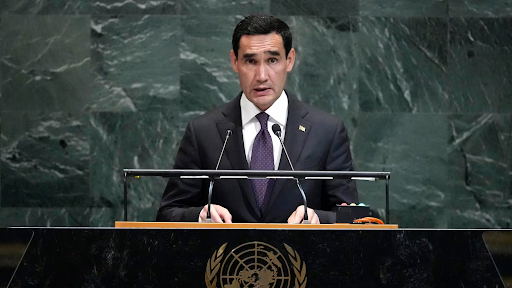
President of Turkmenistan Serdar Berdimuhamedov addresses the 80th session of the United Nations General Assembly, Tuesday, Sept. 23, 2025, at UN headquarters.
Turkmenistan has taken a rare step toward economic reform.
The country has officially legalized cryptocurrency mining and exchanges.
The move signals a cautious opening in one of the world’s most closed nations.
Signed into law by President Serdar Berdimuhamedov on Thursday, the decision reshapes how virtual assets operate inside Turkmenistan.
It also reflects the government’s effort to modernize parts of its tightly controlled economy.
A New Legal Framework for Crypto Assets
The new legislation brings cryptocurrencies under Turkmenistan’s civil law system.
It introduces clear rules for mining and trading digital assets.
For the first time, crypto-related activities now have legal status in the country.
Under the law, cryptocurrency exchanges must obtain official licenses.
The Central Bank of Turkmenistan will oversee these licenses.
This places crypto platforms under direct state supervision.
Despite the change, the government has set firm limits.
Cryptocurrencies will not be treated as legal tender.
They will not function as official currency, securities, or payment instruments.
Internet Controls Still in Place
While Turkmenistan crypto legalization marks progress, restrictions remain strong.
The country’s internet access continues to be heavily regulated.
Online platforms are closely monitored by the state.
This controlled digital environment could limit public participation in crypto markets.
Mining and exchanges may mainly serve institutional or approved operators.
Individual access is likely to remain restricted.
Gas-Driven Economy Seeks Diversification
Turkmenistan’s economy depends largely on natural gas exports.
The country holds some of the world’s largest gas reserves.
Energy sales remain its primary source of revenue.
China is Turkmenistan’s biggest gas buyer.
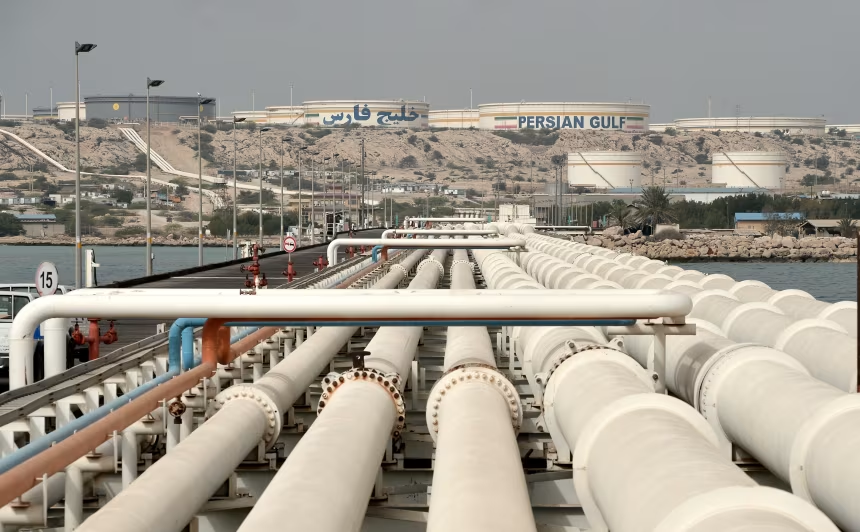
The government is also developing a major regional pipeline.
This project aims to supply gas to Afghanistan, Pakistan, and India.
By legalizing crypto mining, Turkmenistan may be exploring alternative revenue streams.
Energy-intensive mining could align with its gas-rich infrastructure.
Experts see this as a strategic economic experiment.
Central Asia’s Controlled Reform Model
As a former Soviet state, Turkmenistan follows a highly centralized governance model.
Major policy changes are rare and carefully managed.
This makes the crypto legalization decision especially notable.
The law does not signal full market liberalization.
Instead, it reflects a state-led approach to innovation.
Crypto activity will operate within strict government boundaries.
Gradual Opening to the Outside World
Turkmenistan has made other limited reforms in recent years.
In April last year, it introduced an electronic visa system.
The goal was to simplify entry for foreign visitors.
Historically, the country enforced strict visa rules.
Many applications were rejected without explanation.
Tourism and business travel remained extremely limited.
The e-visa system marked a small but symbolic shift.
Combined with Turkmenistan crypto legalization, it suggests cautious engagement with global systems.
What This Means Going Forward
The new crypto law could attract controlled foreign interest.
It may also help the government test digital finance under supervision.
However, broad public adoption remains unlikely in the near term.
Turkmenistan crypto legalization is not a full embrace of decentralization.
It is a calculated move within a tightly regulated framework.
Still, it represents a rare policy shift in a highly isolated nation.
For now, the world will watch how Turkmenistan balances control with innovation.