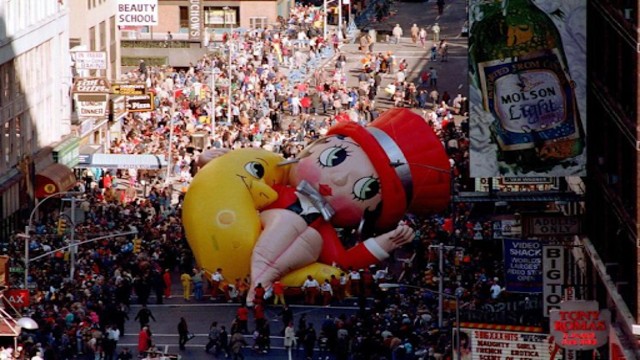
Betty Boop collapses on Broadway near 49th Street as handlers work to raise the deflated helium balloon during the Macy’s Thanksgiving Day Parade in New York. (AP Photo)
A new wave of cultural icons is set to become free for creative use in the United States starting January 1, 2026. Early versions of Betty Boop, the Blondie comic strip, and several legendary literary detectives will officially enter the public domain as their 95-year copyright terms expire.
This annual milestone, known as Public Domain Day, marks the moment when decades-old creative works become available for anyone to adapt, remix or reinterpret without licensing fees. While this year’s class may not rival the headline-grabbing arrivals of Mickey Mouse or Winnie the Pooh, experts say its cultural impact is still significant.
According to Jennifer Jenkins, director of Duke University’s Center for the Study of the Public Domain, the 2026 releases reflect a turbulent era shaped by the Great Depression and the years between two world wars. She calls it a moment when deeply familiar characters begin living new lives in modern storytelling.
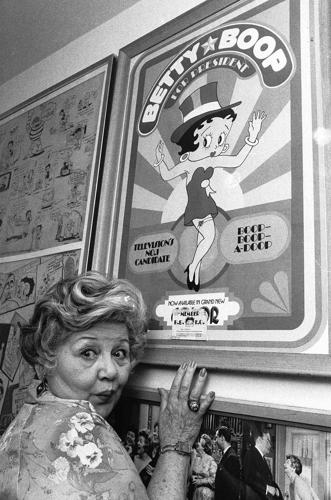
Me Questel, the loopy, child-like voice of cartoon characters Betty Boop and Olive Oyl, poses in this 1978 image with a poster of Betty Boop. (AP Photo)
Betty Boop’s Earliest Form Steps Free
One of the most recognizable figures entering the public domain is Betty Boop, though not quite as audiences remember her. In her earliest appearances, including the 1930 short Dizzy Dishes, Betty was partly canine, complete with poodle ears and a small black nose.
Even then, her flapper style was unmistakable. She had wide eyes, a baby face and a tiny dress, performing a sultry song while singing the now-famous “boop boop a doop.” At the time, she played a supporting role to another character named Bimbo, whom she would soon eclipse.
These early cartoons were created by Fleischer Studios and distributed by Paramount Pictures. While the original animated works become free to use, Betty Boop remains a protected trademark. That means creators can adapt the character in new films or stories, but commercial merchandise remains restricted.
Blondie Before Suburbia
Also entering the public domain is Blondie Boopadoop, the original version of the long-running newspaper comic Blondie. When the strip debuted in 1930, Blondie was portrayed as a carefree young woman navigating modern life with her boyfriend, Dagwood Bumstead.
Only later did the strip evolve into the suburban domestic comedy known for Dagwood’s towering sandwiches. While Blondie began as the star, Dagwood eventually became the breakout character, shifting the tone of the series.
The earliest Blondie strips are now open for reinterpretation, offering creators a chance to revisit the character’s flapper-era roots.
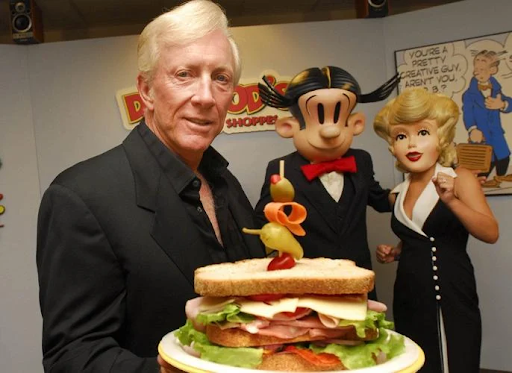
Dean Young showing a Dagwood sandwich at his New Orleans test kitchen Tuesday, May 9, 2006 (AP Photo)
Mickey Mouse Expands Again
The public-domain footprint of Mickey Mouse also grows in 2026. Nine additional cartoons from 1930 are becoming freely available, expanding on the version of Mickey first released in Steamboat Willie.
This year also includes the debut of Pluto, though he initially appeared under the name Rover. As with Betty Boop, Disney still retains trademark protections, limiting commercial uses.
Iconic Detectives Join The Commons
Books entering the public domain in 2026 introduce three of fiction’s most enduring detectives.
Nancy Drew arrives with her first four mysteries, beginning with The Secret of the Old Clock. The teen sleuth was written by Mildred Benson under the pen name Carolyn Keene.
Sam Spade joins her through the full novel release of The Maltese Falcon by Dashiell Hammett, following its earlier magazine serialization.
Miss Marple also enters the public domain through Agatha Christie’s Murder at the Vicarage, marking her first appearance as a solver of village crimes.
These works now offer writers and filmmakers unrestricted access to reimagine classic mystery foundations.
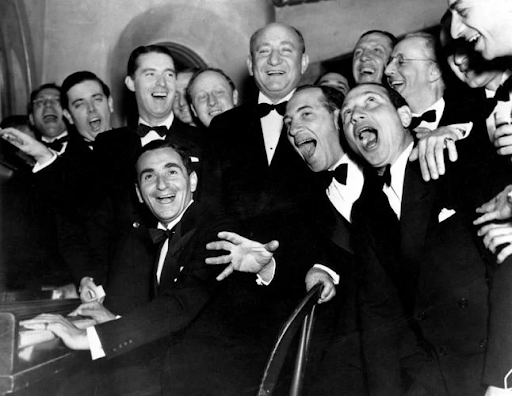
Irving Berlin at the piano as friends celebrate the 25th anniversary of his song “Alexander’s Ragtime Band” at a banquet in his honor in Hollywood, Calif., Jan. 20, 1936. Standing behind Berlin, at right, is film producer Joseph Schenck. In the front row, Marx Brothers Chico and Harpo sing together. (AP Photo)
Films From Hollywood’s Golden Age
Several major films from the early sound era also become public property. The Marx Brothers comedy Animal Crackers joins the public domain, following The Cocoanuts last year.
Other notable titles include The Blue Angel, which cemented Marlene Dietrich’s stardom, and King of Jazz, featuring Bing Crosby’s first screen appearance.
Two early Best Picture winners, All Quiet on the Western Front and Cimarron, are also included. Film historians say the next decade will unlock a flood of Golden Age cinema, with Dracula and Frankenstein expected in 2027.
Timeless Music Opens Up
The 1930 songbook also expands. Four George and Ira Gershwin classics, including I Got Rhythm and Embraceable You, will become free to use as compositions.
Other additions include Georgia on My Mind and Dream a Little Dream of Me. Sound recordings remain governed by separate laws, but many early performances from 1925 also enter the public domain this year.
For creators, educators and artists, 2026 marks another turning point. A century-old cultural legacy is opening its doors, inviting reinvention for a new generation.