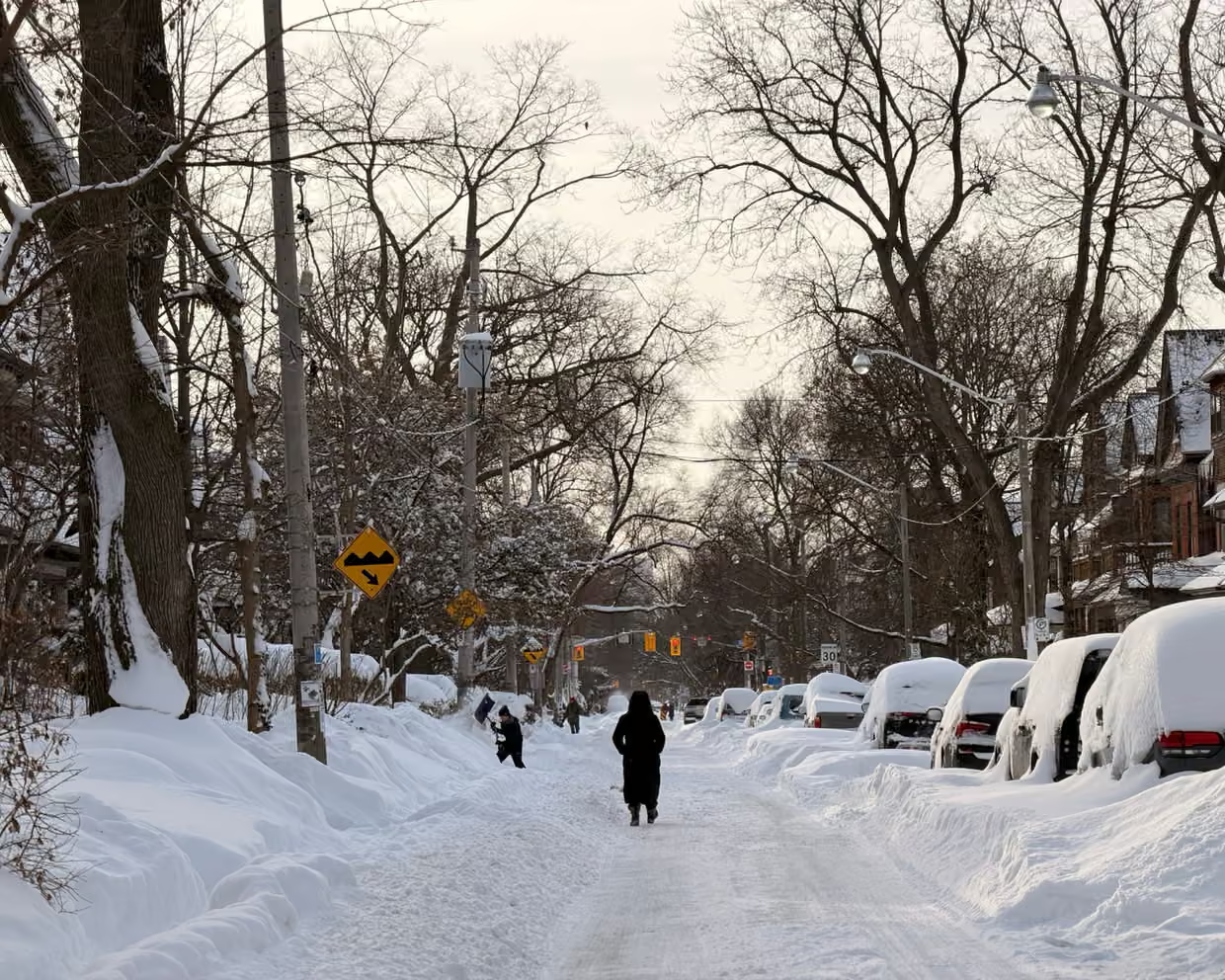
Heavy snow blankets Toronto streets in the aftermath of the powerful winter storm. The Guardian
Toronto has begun the long task of clearing snow after the largest snowfall in the city’s history. City officials say the cleanup will take several days, as some neighborhoods saw close to 60 centimeters of snow fall in a short period.
The storm brought daily life to a standstill across Toronto, closing roads, disrupting transit, and grounding flights. At Toronto Pearson International Airport, more than 500 flights were cancelled on Sunday alone.
Record Month for Snowfall
Snowfall totals at Pearson reached 88.2 centimeters this month, making it the snowiest January and the snowiest single month since record-keeping began in 1937. Airport crews worked around the clock to clear runways, but the volume of snow caused major delays.
The storm formed part of a large weather system that swept across much of North America over the weekend.
Schools Close and Roads Turn Dangerous
Several school boards announced closures Sunday evening, an uncommon move that delighted students who received their second snow day of the month. Families usually learn of closures early in the morning, making the early announcement stand out.
Road conditions quickly worsened. Police reported more than 430 collisions in Toronto and about 200 more in surrounding areas. One fatal crash occurred during the storm.
Officers warned drivers about large snowbanks along roadsides. They said plowed snow could send vehicles into a “launch-type angle,” increasing the risk of cars leaving the roadway. Downtown streets and residential roads remained difficult to navigate well into the next day.
Transit Faces Major Disruptions
Toronto’s transit system, which serves more than one million riders daily, faced widespread delays. Snow forced closures on multiple routes. A streetcar derailed on one major line, and subway trains could not run on above-ground sections where snow piled up.
Transit crews worked to restore service, but officials warned riders to expect delays as cleanup continued.
City Focuses on Main Routes First
Toronto’s city manager said crews would focus first on main roads before moving into neighborhood streets and sidewalks. Snowplows led the effort, supported by workers using shovels in harder-to-reach areas.
“This will be a plowing day, and then we’re going to have to shift into removal time once we get through today and into tomorrow,” said Paul Johnson.
Residents can track plow progress using the city’s PlowTO tool, which shows which streets crews have cleared.
Storm Impacts Felt Beyond Canada
South of the border, the storm caused flight cancellations, power outages, and icy roads. At least 13 weather-related deaths were reported across the United States.
Despite the challenges, many Toronto residents embraced the snowfall. Some residents skied along quiet streets, while children enjoyed sledding and shoveling under clear skies.
Why the Storm Hit So Hard
Meteorologist Bill Coulter said Toronto’s location along Lake Ontario played a major role.
The storm formed when Arctic air collided with warm, moist air from the south. “What a winter wallop for Toronto,” he said.