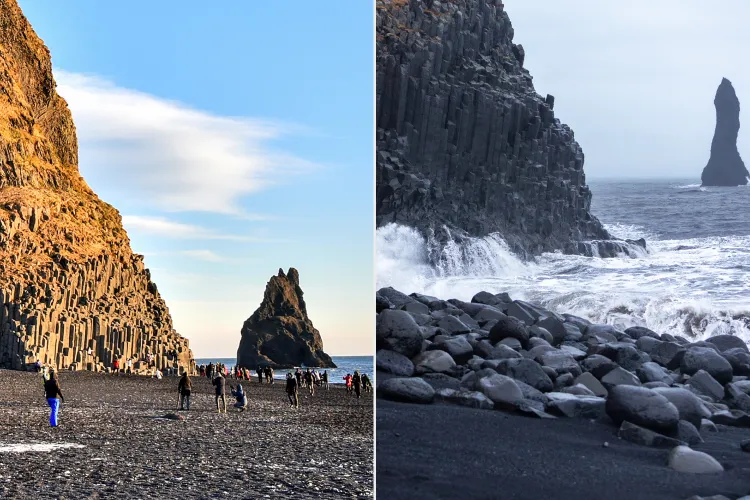
Left: Reynisfjörður Beach in 2018; Right: Reynisfjörður Beach in February 2026. Getty Images/Shutterstock
One of Iceland’s most photographed landmarks has changed dramatically in just a few weeks. Strong winds and powerful sea currents have stripped away much of the black sand at Reynisfjörður Beach, leaving the shoreline much narrower than visitors remember.
Local reports say the erosion has reshaped the coast at a striking pace. An Iceland-based nonprofit that tracks environmental changes described the recent activity as “extensive erosion,” adding that it is “dramatically changing the appearance and accessibility” of the beach.
A Landscape Transformed
Reynisfjörður Beach attracts visitors from around the world for its deep black volcanic sand and towering basalt columns. These rock formations once stood above the beach, where tourists could walk close to them on foot. Now, residents say the sea surrounds much of the area, and the columns rise directly from the North Atlantic.
Guide Snorri Steinn Sigurðsson, who has led tours in the region for a decade, expressed surprise at the rapid change.
“This is incredible to see. The forces of nature have turned the shore so that the place is completely different now than it was,” he said. “I have seen changes in the nature of the country in the ten years I have been guiding. Things have never happened as fast as they are now.”
Safety Concerns Grow
The altered shoreline has drawn curious visitors eager to explore the new terrain. Some tourists have climbed down a steep erosion bank to reach the water’s edge. Sigurðsson warned that this can be dangerous.
“At the moment, the weather is calm and harmless here. If the waves get higher here and tourists get right down to the flood level, they will be in serious trouble if the tide comes in, because it is impossible to climb up the ridge that has formed,” he said.
He urged authorities to increase patrols on the beach while the situation remains uncertain. “I believe this means that increased patrols are needed on the beach, at least while matters are being clarified. I think there is no reason to wait for an accident before increasing preparedness."
Unusual Winds Behind the Erosion
Coastal engineer Sigurður Sigurðarson from the Icelandic Road Administration explained that shifting wind patterns have played a key role. He said strong easterly winds have pushed sand westward along the coast, a reversal of the usual southwest winds.
“Usually the prevailing winds are southwesterly, which carries the sand eastward. But this winter it has been different and easterly winds have been prevailing. Which is unusual,” he said.
He added that the nearby mountain Reynisfjall blocks the movement of sand when winds blow from the southeast. “The thing is that Reynisfjall juts out far into the sea, so when sand is moving west from the southeasterly wind, it stops at Reynisfjall. So the beach at Reynisfjörður doesn't get sand from the east, which is why this is so obvious in this area,” he explained.
What Happens Next?
Experts say future changes depend on wind direction and wave patterns in the coming months. “It all depends on the direction of the waves created by the wind direction. So recently, this fall and winter, the low-pressure systems have crossed the Atlantic quite a bit to the south of us,” Sigurðarson said. “Now there may be little left of the winter so we don't know how this will turn out."
Despite its beauty, Reynisfjörður has long ranked among Iceland’s most dangerous sites due to sudden “Sneaker waves” and falling rocks. Several people have lost their lives after being pulled into the sea, including one visitor in the summer of 2025.
The beach remains a major stop along Iceland’s ring road and gained worldwide fame after appearing in the television series Game of Thrones. For now, visitors continue to arrive, many surprised to see how quickly nature can reshape even the most iconic landscapes.