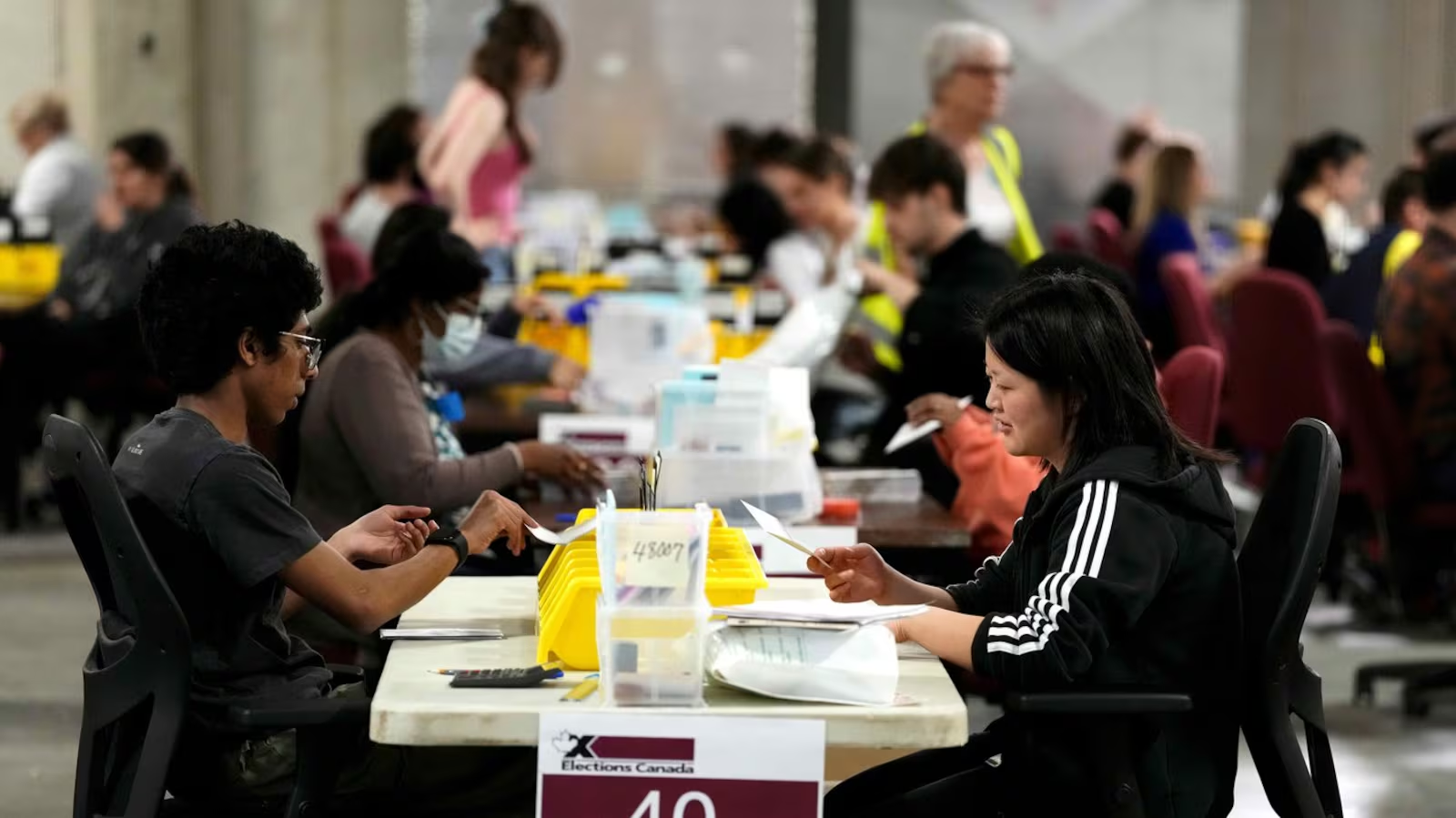
Election staff sort and count special ballots from Canadians voting outside their ridings at the Elections Canada Distribution Centre in Ottawa on federal election day, Monday, April 28, 2025. THE CANADIAN PRESS
Canadians living outside the country want higher voter turnout among overseas citizens. They say current barriers make it harder for them to take part in elections and may even affect results.
Timothy Veale, director of Grits Abroad, said millions of Canadians live beyond the country’s borders. He estimates nearly five million Canadians live abroad, and about 3.5 million qualify to vote.
Despite those numbers, only a small share actually cast ballots in federal elections.
Barriers Limit Voter Turnout
Veale pointed to several reasons for the low turnout. Overseas voters rely on mail-in ballots, which often come with tight deadlines. Many worry about whether their ballots will arrive on time or get lost in transit.
He also noted that political parties rarely reach out to Canadians abroad during campaigns.
Daniel Scuka, who lives in Germany and belongs to Grits Abroad, said political groups must do more.
He said parties need to “wake up” and encourage Canadians living overseas to vote. He also believes election officials should take stronger steps to support these voters.
Push for Modern Voting Options
Veale said political leaders should view overseas voters as an important group.
“I’d like to see a politician ask us for their vote,” he said. “In the last election … I don’t think anybody courted any of the five million people living overseas.”
He called for changes to the current system. He wants Canadians abroad to vote in person at embassies or consulates. He also suggested online voting, noting that other countries already offer that option.
“We have the right to vote and a 37-day election was not designed for people abroad to apply to vote,” he said.
He explained that voters must first apply, then wait for their ballot, and finally send it back through international mail systems. He added that dealing with postal services in more than 200 countries creates further delays.
“We’ve seen how other countries operate and we can do way better than this. It’s just a matter of will, as I see it.”
Data Shows Missed Votes
Recent figures highlight the problem. In the last federal election, officials sent out more than 100,000 voting kits to Canadians abroad. Just over half returned on time and counted.
Thousands of ballots arrived too late, while some failed due to missing details. Many voters never returned their kits at all.
Officials Outline Current Efforts
Election officials say they already provide support. They use social media and online ads to guide voters through registration and deadlines.
Officials also allow Canadians abroad to register at any time. Once registered, voters stay on the list unless they move back or request removal.
A spokesperson said early registration improves success rates. Voters who sign up before an election tend to return their ballots on time more often.
Possible Changes Ahead
Election officials have suggested longer campaign periods to help overseas voters. Current rules limit election periods to between 37 and 51 days.
A longer timeline could give voters abroad more time to receive and return their ballots.
For now, Canadians living overseas continue to push for easier and more reliable ways to vote, hoping their voices will carry equal weight in future elections.