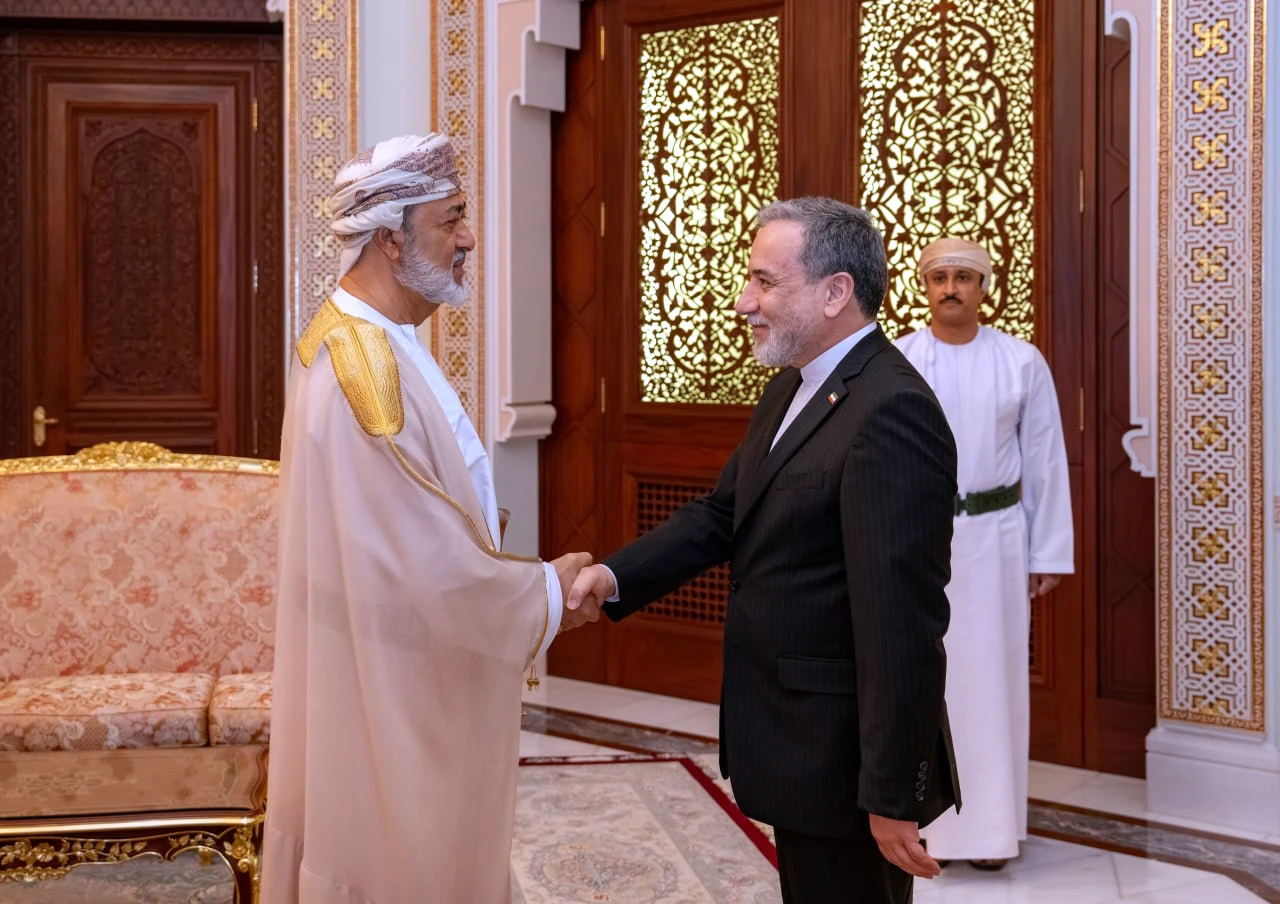
In this photo released by the Iranian Foreign Ministry, Iranian Foreign Minister Abbas Araghchi, right, shakes hands with Oman’s Sultan Haitham bin Tariq during their meeting, in Muscat, Oman, Sunday, April 26, 2026.
Efforts to revive negotiations between Iran and the United States entered another uncertain phase after Iran’s foreign minister briefly returned to Pakistan while President Donald Trump signaled direct contact could happen remotely instead. The latest developments come as fragile ceasefires hold and global markets remain sensitive to the wider conflict.
Iran US Talks Continue Through Indirect Channels
Iranian Foreign Minister Abbas Araghchi made a short visit to Islamabad before traveling onward to Moscow, creating fresh speculation over the future of Iran US talks. His return followed confusion surrounding a planned second round of discussions in Pakistan, where mediators have been trying to narrow differences between both sides.
Pakistani officials indicated that communication between Washington and Tehran was still continuing indirectly. However, those exchanges remain delicate, with no formal breakthrough announced.
Trump said the United States no longer planned to send envoys to Pakistan, citing limited progress. Instead, he publicly suggested that Iran could simply reach out by phone if it wanted to move talks forward.
Strait of Hormuz Remains Central to Negotiations
A major obstacle in Iran US talks continues to be the Strait of Hormuz, one of the world’s most important energy corridors. The narrow route carries a significant share of global oil and gas shipments, making any disruption a serious international concern.
Iran has imposed movement restrictions in the area, while the United States has maintained pressure on Iranian ports. Reports indicate Tehran wants a toll-based mechanism for ships crossing the strait and seeks broader regional support for the proposal.
At the same time, Iran is demanding an end to the U.S. blockade measures before agreeing to another round of formal talks. These unresolved issues have made negotiations more complex and politically sensitive.
Ceasefire Holds but Military Threats Continue
Although diplomatic channels remain open, tensions have not disappeared. The temporary ceasefire agreed earlier this month has largely reduced direct fighting, but both sides continue issuing warnings.
Iranian military officials have warned of a strong response if U.S. actions continue in the region. Meanwhile, Trump has taken a firm stance on maritime security, ordering aggressive enforcement against perceived threats in the waterway.
This mix of diplomacy and military messaging reflects the fragile balance currently shaping Iran US talks. Neither side appears ready for renewed full-scale conflict, yet mistrust remains high.
Nuclear Concerns Still Shape Iran US Talks
The long-running dispute over Iran’s nuclear program remains one of the most sensitive topics in Iran US talks. Trump has repeated that any agreement must ensure Iran does not obtain nuclear weapons capability.
International monitors have previously highlighted Iran’s stockpile of enriched uranium, keeping the issue central to Western concerns. Tehran, however, continues to insist that its nuclear program serves civilian purposes.
Because of this, even progress on ceasefires or trade routes may not be enough without parallel movement on nuclear guarantees.
Oil Markets React to Diplomatic Delays
Energy markets responded quickly after expected Pakistan discussions failed to materialize. Oil prices rose again as traders assessed the possibility of prolonged instability in the Gulf.
Both U.S. and international crude benchmarks have climbed sharply since the conflict began, driven by fears that shipping through the Strait of Hormuz could remain disrupted. Tankers carrying crude have already faced delays, increasing pressure on supply chains.
The economic impact has extended beyond oil, affecting fertilizer, liquefied natural gas, and broader trade flows.
Iran US Talks Enter a Critical Phase
Analysts say the current delay should not automatically be viewed as failure, since indirect diplomacy often moves slowly during major crises. The fact that ceasefire arrangements remain in place suggests both governments still want to avoid wider escalation.
For now, Iran US talks appear to be shifting from formal meetings to backchannel communication. Whether those contacts lead to a durable agreement may depend on resolving disputes over sanctions, maritime access, and nuclear limits.
Until then, the region remains caught between cautious diplomacy and lingering confrontation.