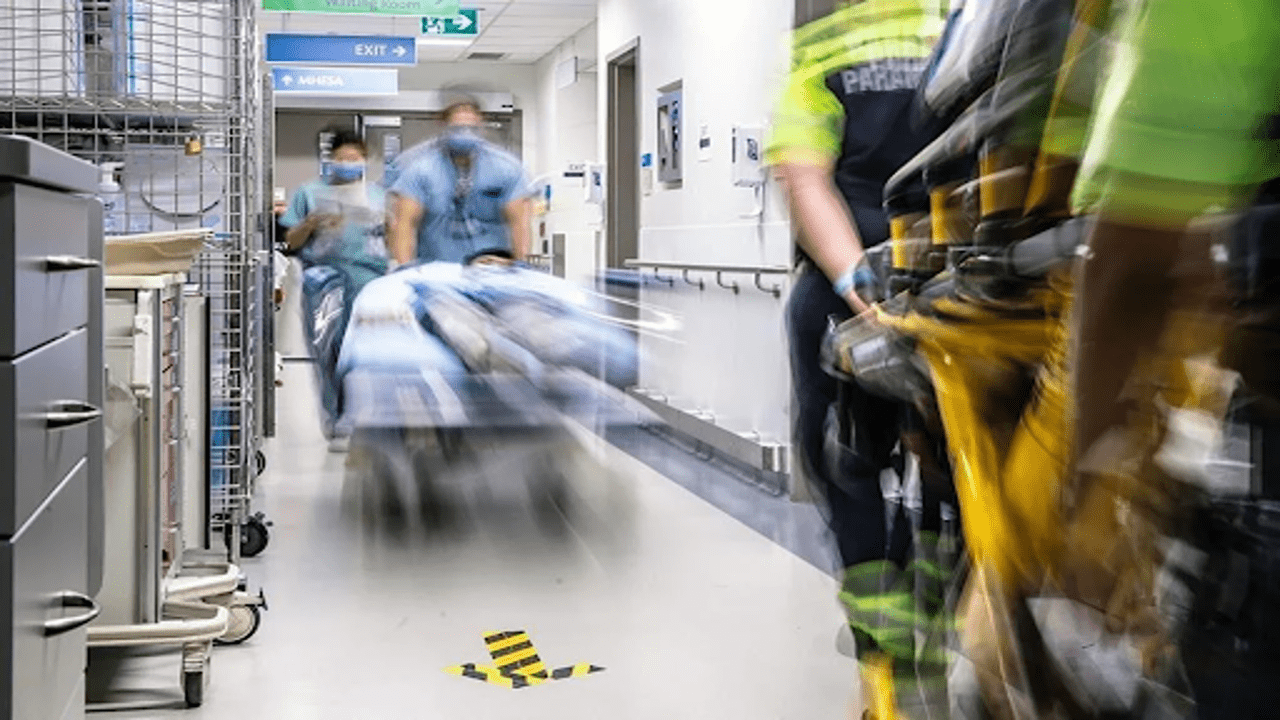
Hospital workers roll patients down a corridor at a hospital in Toronto in this undated photo. An AI early-warning system that predicts which patients are at risk of deteriorating while in hospital was associated with a decrease in unexpected deaths, a new study says. THE CANADIAN PRESS/HO Unity Health Toronto.
A new study reveals that using an AI-powered early-warning system to monitor patients in hospitals has helped reduce unexpected deaths. Published in the Canadian Medical Association Journal, the study observed a 26% reduction in non-palliative deaths among patients in the general internal medicine unit at St. Michael’s Hospital in Toronto.
Lead author Dr. Amol Verma, an internal medicine specialist and scientist at St. Michael’s, explained that while AI tools in medicine are often discussed, they are rarely implemented in real clinical settings. This study marks a significant step forward by demonstrating that an AI system, tested in real-life conditions, can improve patient care.
The AI tool, known as CHARTwatch, continuously monitored over 100 data points from each patient's electronic medical record. These included vital signs, medical history, lab results, and more. When the system detected signs of deterioration, it alerted the medical team, prompting swift intervention.
"The AI doesn’t decide treatments; it simply signals clinicians to pay closer attention to a particular patient," Verma explained. He added that the technology’s strength lies in its ability to process vast amounts of patient data and provide real-time predictions. If the medical team agreed with the AI’s assessment, they could take steps like transferring the patient to intensive care, administering antibiotics for severe infections, or increasing monitoring.
Dr. Muhammad Mamdani, a co-author of the study and vice president of data science at Unity Health Toronto, highlighted the complementary role of AI. He emphasized that clinicians are encouraged to trust their instincts if they believe a patient is critically ill, even if the AI suggests otherwise. However, if the AI flags a patient as being at risk, clinicians are urged to take the warning seriously.
The study compared patient outcomes from November 2020 to June 2022, when CHARTwatch was in use, with outcomes from November 2016 to June 2020, before the system was introduced. During the latter period, the non-palliative death rate was 2.1%, while it dropped to 1.6% after the AI tool’s implementation. The researchers controlled for potential variables, including the COVID-19 pandemic, and used data from other hospital units as a comparison.
While the results are promising, Verma stressed that further research, such as randomized control trials, is necessary to validate the tool's effectiveness. Ross Mitchell, an AI expert at the University of Alberta, also praised the findings, calling for broader testing in more hospitals across Canada.