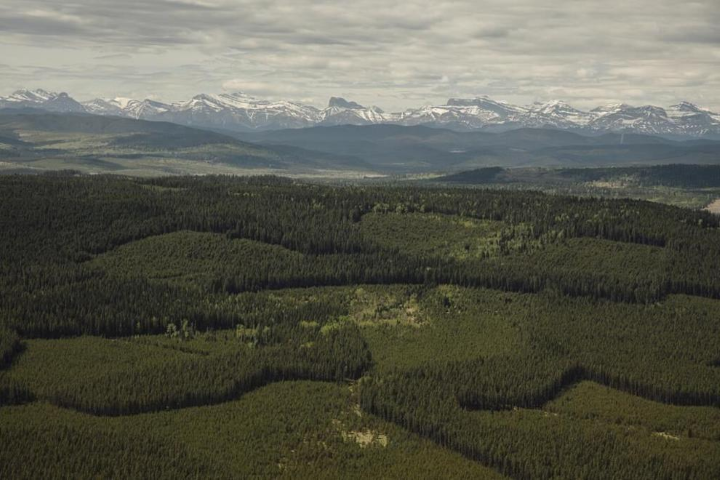
Trees regrow in blocks on the foothills of the Rocky Mountains north of Calgary on June 1, 2021. Alberta is blocking off large sections of the province to renewable power development. THE CANADIAN PRESS/Amber Bracken
The Alberta government has unveiled new restrictions on wind and solar energy development, releasing a map delineating areas where such projects will not be permitted or will face limitations. These measures aim to address concerns about the visual impact of renewable energy infrastructure and its compatibility with agricultural activities.
According to Ashley Stevenson, a spokeswoman for the Ministry of Affordability and Utilities, wind projects will no longer be allowed in specified buffer zones due to their visual footprint. However, development on agricultural lands will still be permitted as long as it can coexist harmoniously with farming activities.
The newly designated "no-go zone" encompasses the entire Rocky Mountains range, extending eastward to Calgary and Highway 2 in the south. Additionally, large areas surrounding natural landmarks such as Cypress Hills, Dinosaur Provincial Park, and Writing-On-Stone Provincial Park will be subject to visual impact reviews before any renewable energy projects are approved. However, the exact process for conducting these reviews has not been defined yet.
These restrictions are expected to affect 57 projects totaling $14 billion in investment, according to Jason Wang, an analyst at the Pembina Institute. Of these projects, 35 will be impacted by the agricultural limitations, while 22 will either require visual impact assessments or fall within the designated no-go zones. Wang notes that many of these projects are situated in areas with optimal wind resources, making them particularly vulnerable to the new regulations.
The decision to implement these restrictions follows a report from the Alberta Utilities Commission, which emphasized the importance of considering the visual impact of renewable energy development. However, there are concerns about the unequal application of these restrictions, as they only target the wind and solar energy sectors.
Evan Wilson of the Canadian Renewable Energy Association questions why the rules are exclusive to wind and solar projects, especially considering the presence of numerous oil and gas facilities and other industrial developments within the restricted zones. He emphasizes the need for clarity regarding how these zones were delineated and how visual impact is defined in a landscape already characterized by various forms of human activity.
Despite these concerns, Wilson acknowledges that the new map is less restrictive than initially feared. However, he emphasizes the need for clarity on the next steps for developers and the criteria used to assess visual impact. Additionally, he suggests that the definition of a "pristine viewscape" should consider the coexistence of different energy sources alongside Alberta's natural beauty.
Ultimately, stakeholders in the renewable energy sector are seeking greater transparency and consistency in the application of these regulations to ensure a fair and balanced approach to energy development in Alberta's landscape.