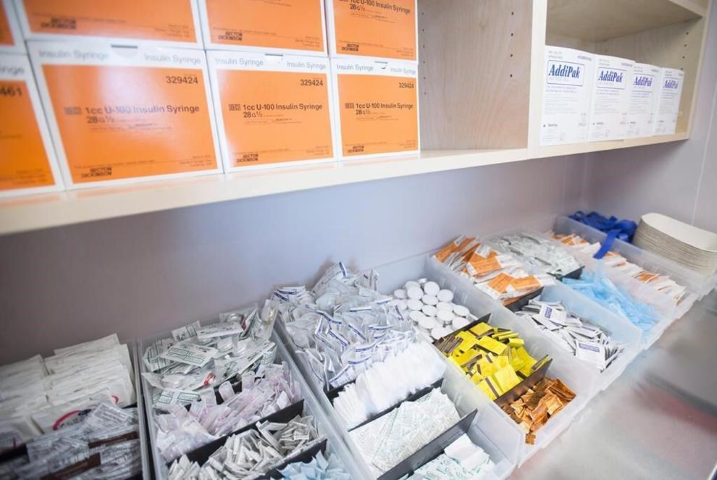
Drug injection supplies are pictured inside the Fraser Health supervised consumption site in Surrey, B.C., Tuesday, June 6, 2017. THE CANADIAN PRESS/Jonathan Hayward
The British Columbia auditor general has published audits on two significant government programs aimed at reducing the death toll from the toxic-drug crisis. One audit assessed the implementation of overdose prevention and supervised consumption services, while the other examined the initial phase of the prescribed safer-supply program.
The audits provided recommendations to B.C.'s Health and Addictions ministries, which oversee the province's response to the toxic-drug emergency. Here are the key points from both reports:
Audit of Implementation of Overdose Prevention and Supervised Consumption Sites:
The report revealed that the ministry:
- Monitored the performance of sites.
- Publicly reported on the implementation of services.
- Adjusted funding as needed.
However, there were some deficiencies identified:
- Operational guidance lacked minimum service standards and didn't always reflect input from health authorities, Indigenous communities, or individuals with lived experience.
- Barriers to province-wide implementation were not addressed.
- There were deficiencies in target setting and evaluation.
The recommendations included:
1. Collaborating with health authorities, service providers, and Indigenous communities to develop minimum-level standards for overdose prevention sites and updating guidance to ensure services meet people's needs.
2. Working with health authorities to develop targets and establish deadlines for province-wide implementation.
3. Evaluating all overdose prevention and supervised consumption sites in collaboration with health authorities, Indigenous communities, and individuals with lived experience.
4. Developing province-wide strategies to address opposition to new sites.
5. Developing guidelines to support the opening of more supervised consumption sites.
The ministries accepted all five recommendations on service standards, target setting, evaluation, and addressing barriers. The auditor general emphasized the importance of harm reduction in the substance use system of care and called for a new province-wide evaluation of overdose prevention and supervised consumption services.
Audit of Initial Implementation of Prescribed Safer Supply:
The audit found that the ministry:
- Developed a data-collection framework.
- Monitored and adjusted funding.
- Initiated an evaluation of prescribed safer supply.
However, there were deficiencies identified:
- The ministries didn't develop or implement strategies to address barriers to implementation, such as rural access to the program and health-care providers' hesitancy over prescribing the drugs.
- There was insufficient public reporting on the performance of prescribed safer supply.
The recommendations included:
1. Developing a plan to address barriers to safer supply, including targeted engagement with rural and remote communities to determine feasibility.
2. Regularly reporting to the public and health sector on the effectiveness of the prescribed safer-supply program.
The ministries accepted both recommendations. Mental Health and Addictions Minister Jennifer Whiteside reiterated the government's commitment to expanding mental health and addictions services across B.C. Auditor General Michael Pickup highlighted the need for better collaboration with health sector partners and improved public reporting for the prescribed safer supply program.