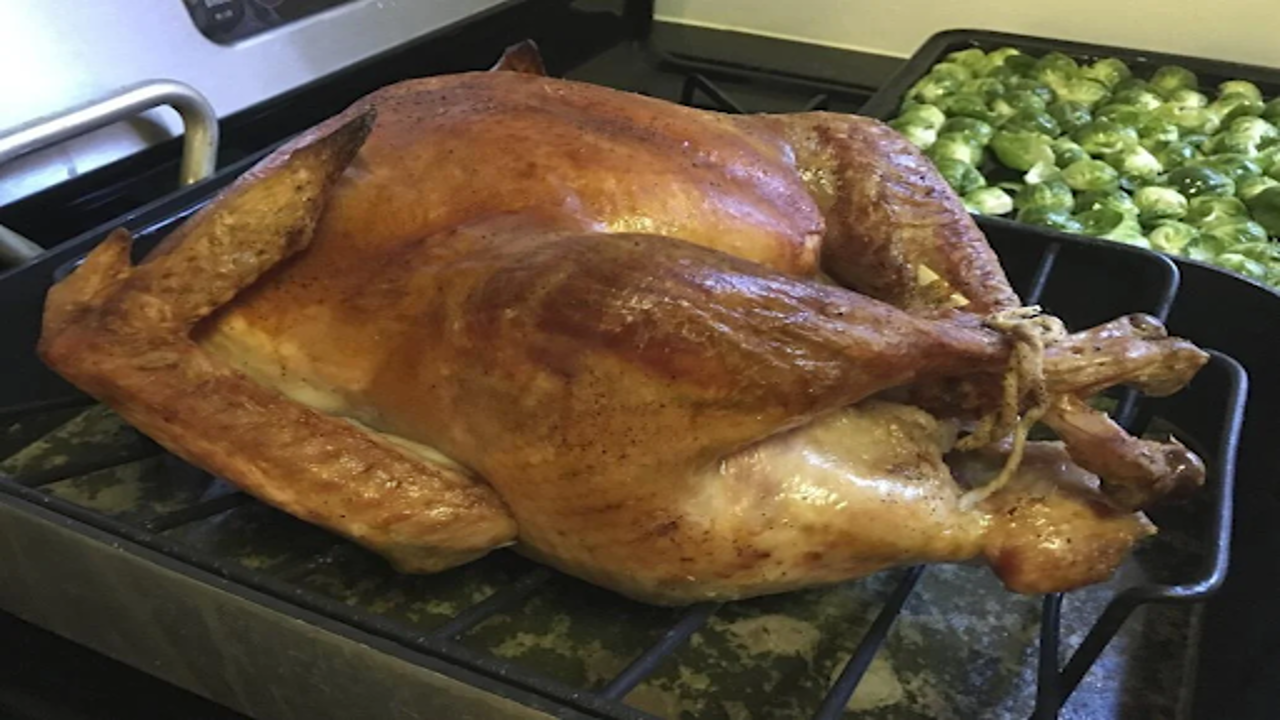
Some of the food from a Thanksgiving dinner from Martha & Marley Spoon in New York, Oct. 14, 2016. (AP Photo/Bree Fowler, File)
The holiday season is officially here, and many Americans are stepping up to the challenge of preparing large, multi-dish meals. For those not used to cooking big feasts, it can be overwhelming. Unfortunately, during the holiday season, food poisoning cases often rise, with the U.S. Centers for Disease Control and Prevention (CDC) noting a higher frequency of outbreaks in November and December. Improperly prepared turkey, undercooked stuffing, and contaminated gravy have all been linked to past illnesses and even fatalities.
For occasional cooks, preparing a safe holiday meal can be tricky. Donald Schaffner, a food safety expert at Rutgers University, explains that cooking large quantities of food requires more time, and cooling them down safely takes longer too. Schaffner, who co-hosts the "Risky or Not?" podcast with food scientist Benjamin Chapman, offers tips to help home cooks avoid common food safety hazards during holiday cooking.
Handling the Turkey
Turkey is a centerpiece of Thanksgiving meals, with nearly 90% of U.S. hosts planning to serve it this year, according to the turkey producer Butterball. However, raw turkey can carry harmful bacteria like salmonella and campylobacter, so it’s essential to handle it carefully to avoid contamination in the kitchen.
To safely thaw a frozen turkey, you can use the refrigerator, microwave, or cold running water. Schaffner warns that each method carries its risks. If using the refrigerator, allow 24 hours for every 4 to 5 pounds of turkey. If using the microwave or water methods, the bird must be cooked immediately. For more guidance, the U.S. Department of Agriculture (USDA) provides thawing and cooking calculators.
Another important tip is to avoid washing the turkey, even though many cooks continue to do so out of habit. Chapman explains that rinsing the bird in the sink can spread bacteria around your kitchen. Instead, gently pat the turkey dry with paper towels, then discard them, or use a kitchen towel that can be washed afterward.
Cooking the Turkey
To ensure the turkey is fully cooked, it should reach an internal temperature of 165°F. The most reliable way to check is by using a digital thermometer inserted into the thickest part of the thigh, avoiding the bone. It’s important not to rely on plastic pop-up thermometers, as they can trigger too early, giving an inaccurate reading. Similarly, don’t judge doneness based on the color of the skin or whether the juices run clear, as these signs are unreliable.
Side Dishes and Leftovers
Just like the turkey, the rest of the meal must be handled carefully. Hot foods should remain hot, and cold foods should stay cold to prevent bacterial growth. The CDC recommends refrigerating leftovers within two hours of serving. Foods like mashed potatoes, cooked turkey, and gravy should be stored in shallow containers to help them cool quickly. Schaffner’s research suggests that food