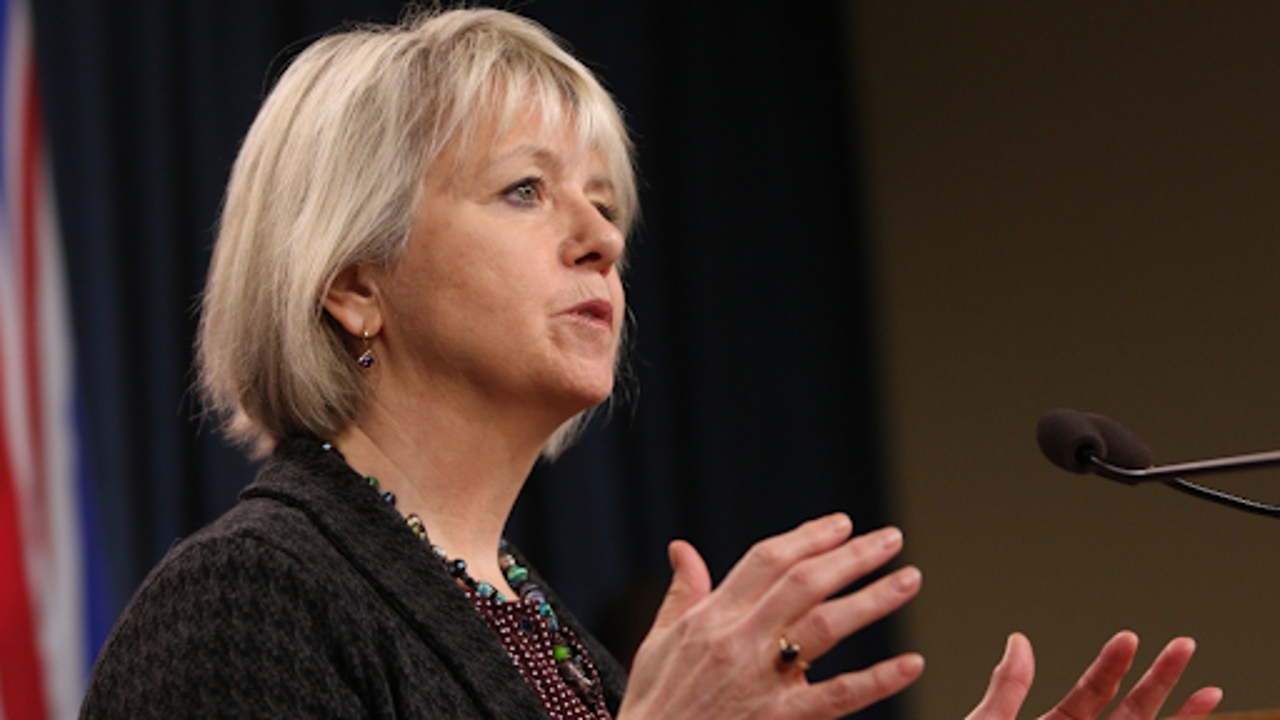
Provincial Health Officer Dr. Bonnie Henry speaks during a press update at the legislature in Victoria, B.C., on Thursday, March 10, 2022.
On Thursday, Dr. Bonnie Henry, British Columbia's Provincial Health Officer, released a report on the safer-supply drug program. She light-heartedly noted that "the earth shook" in reference to a minor earthquake felt on Vancouver Island that morning. However, the real tremor came from her recommendation that the province consider providing access to alternatives to unregulated street drugs without needing a prescription.
This suggestion was quickly dismissed by the government. Opposition parties, including the BC Conservatives and BC United, called for her dismissal, stating that her proposals were unacceptable.
Dr. Henry pointed out that traditional drug prohibition methods have failed, leading to a dangerous unregulated drug supply that has caused over 14,000 deaths since a health emergency was declared eight years ago. She emphasized that many of those who died did not have substance-use disorders and could not be protected by typical medical approaches.
“We cannot prescribe our way out of this crisis,” she stated, calling for bold discussions and systemic changes to address the ongoing drug crisis. Dr. Henry believes that access to safer alternatives is essential and that a broader perspective is necessary to find effective solutions.
At a press briefing, she expressed a deep concern for those who use drugs, acknowledging the complex reasons behind their choices, often tied to personal trauma and struggles. Expanding safer supply programs, she argued, is just one piece of a larger strategy that must include prevention and treatment initiatives.
In response, Mental Health and Addictions Minister Jennifer Whiteside rejected Dr. Henry's recommendations, insisting that the province would not adopt non-medical models for distributing medications. She echoed Premier David Eby’s stance that prescription models help protect those at highest risk from the dangers of the poisoned drug supply.
Henry’s report also resonated with the previous findings of former chief coroner Lisa Lapointe, who had asserted earlier this year that prescribed safer-supply drugs would not end the crisis. Premier Eby had also previously dismissed calls to allow unrestricted distribution of opioid drugs.
The report revealed that around 225,000 individuals in B.C. are using unregulated drugs, with fentanyl being the leading cause of overdose deaths—83% of illicit drug deaths are linked to this opioid.
The government has faced significant criticism from opposition parties. The Conservatives demanded Dr. Henry’s immediate removal, labeling her recommendations as “deeply troubling” and “irresponsible.” MLA Elenore Sturko argued that Henry's suggestions reflect a flawed ideology toward drug policy.
Dr. Henry also proposed exploring a "compassion club" model for delivering non-prescribed drugs, referencing a program run by the Drug User Liberation Front (DULF), which faced legal issues last year.
BC United Leader Kevin Falcon criticized Dr. Henry’s approach, insisting the focus should be on providing free treatment rather than expanding access to alternative drugs. He argued for a societal stigma against drug use, similar to past anti-smoking campaigns.
Conversely, the B.C. Greens voiced their support for Dr. Henry, stating that ignoring expert advice in favor of political narratives is reckless. They asserted that the “war on drugs” has never succeeded and only exacerbates the problem.
Debate surrounding B.C.'s safer-supply policy continues to extend beyond the province, with federal figures questioning the integrity of the program. Dr. Henry’s report concludes that ongoing research and monitoring are essential to understanding the complexities of drug use and policy impacts.