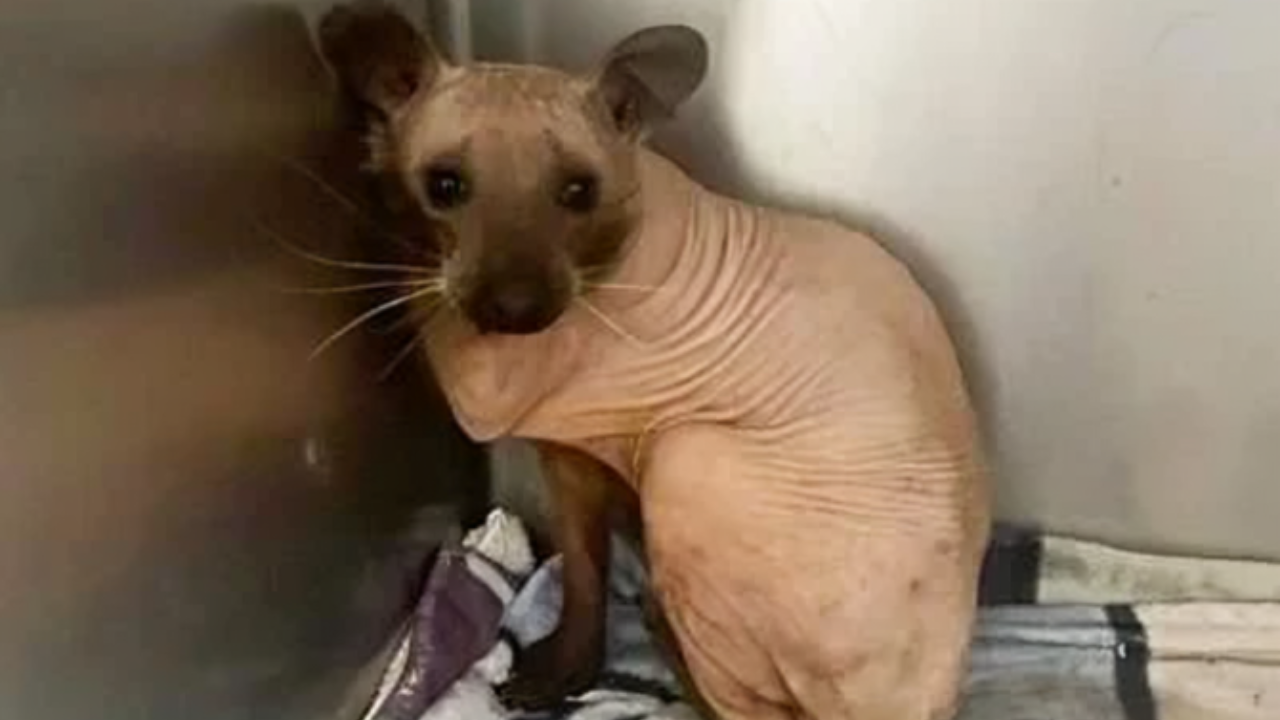
The Hope For Wildlife animal rescue centre in Seaforth, N.S., posted this picture of Rufus the hairless racoon to its Facebook page on Wednesday. THE CANADIAN PRESS/HO - Hope For Wildlife,
A unique bald raccoon has found herself under the care of a shelter in Nova Scotia, where caregivers are optimistic that she will eventually grow back her fur, including the distinctive black markings around her eyes.
Named Rufus after a character in the children's TV show "Kim Possible," the raccoon's discovery came after a couple in West Arichat spotted her shivering in their backyard. Concerned for her well-being, they took her to a local veterinary clinic in Cape Breton, where she received immediate attention before being transferred to the Hope for Wildlife shelter in Seaforth, N.S.
According to Hope Swinimer, the director of Hope for Wildlife, Rufus's hairless condition is likely due to a genetic issue rather than external factors like parasites. Despite her lack of fur, Rufus has shown signs of resilience and adaptability since her arrival at the shelter.
Initially described as "down and out," Rufus has since demonstrated her resourcefulness by navigating through the shelter's ductwork, prompting a mix of concern and amusement among the staff. Swinimer notes that Rufus's playful and spirited demeanor is reminiscent of her animated namesake, adding a touch of charm to her otherwise unusual condition.
While the ultimate goal is to rehabilitate Rufus and reintroduce her to the wild, the shelter is prepared to provide her with a permanent home if necessary. This could include an outdoor habitat equipped with essentials such as trees, mulch, and nesting boxes, as well as recreational amenities like hammocks.
Swinimer emphasizes the importance of fur and feathers for wild animals, highlighting their role in insulation and protection from the elements. In Rufus's case, her severe alopecia underscores the critical dependence on a healthy coat for survival in the wild.
Hope for Wildlife has a history of caring for animals with special needs, including permanent residents like Edward the bald eagle, who resides in a spacious enclosure with a view of the ocean. Additionally, the shelter houses a visually impaired fox in a specially designed outdoor habitat.
While Rufus's case may present unique challenges, Swinimer sees it as an opportunity for learning and understanding. If Rufus's fur regrows, it could indicate environmental factors contributing to her condition, prompting further investigation.
Ultimately, Swinimer stresses the shelter's commitment to providing care to injured or sick animals, regardless of their species or rarity. Amidst the ongoing environmental challenges faced by wildlife, Hope for Wildlife remains dedicated to its mission of rehabilitation and conservation.
In conclusion, Rufus's journey serves as a poignant reminder of the resilience of wildlife and the importance of compassion and stewardship in safeguarding their well-being.