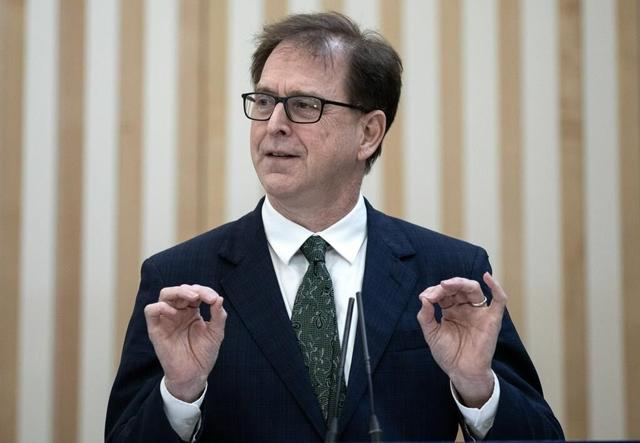
Dix speaks during an announcement at the Royal Inland Hospital in Kamloops, B.C., on Thursday, Feb. 8, 2023. THE CANADIAN PRESS/Marissa Tiel
The government of British Columbia is enhancing efforts to recruit and retain healthcare professionals while expanding incentives to rural areas. Health Minister Adrian Dix announced an allocation of $155.7 million, citing the growing population's demand for skilled healthcare staff, especially in remote regions.
The funding aims to support various health occupations, including audiologists, dietitians, lab technologists, and radiation therapists. Of the total, $73.1 million will be directed towards retaining health and clinical support workers in rural areas. This includes offering signing bonuses to fill high-priority health vacancies. Additionally, $60 million will be designated for professional development and mental health and wellness services for healthcare workers.
A portion of the funding, $15 million, will be allocated to peer support and mentorship programs for new healthcare graduates and internationally-trained professionals. Another $7.6 million will be used for training, bursaries, and covering licensing and exam fees.
The province also announced the expansion of its rural retention incentive program to 56 more locations, bringing the total number of communities covered to 74. This program provides up to $8,000 per year to healthcare workers in small communities and will be in effect until March 2025. Among the communities benefiting from the expanded program are Hope, Fernie, Golden, and Quesnel.
Norah Miner, representing the Health Sciences Association of BC, commended the initiative, stating that it will benefit approximately 20,000 specialized health professionals across 70 different disciplines in the province. She emphasized the critical need for more healthcare workers, particularly in light of challenges posed by the COVID-19 pandemic and the opioid crisis.
Miner highlighted the importance of addressing long-standing shortages in the healthcare system, emphasizing that these initiatives will have a positive impact, particularly in rural communities. She noted that neglecting specialized healthcare services over the years has exacerbated the shortages, and it will take time to rectify these issues. However, she expressed optimism that the government's efforts will move the healthcare system in the right direction.
In summary, British Columbia's government is investing significant funds to recruit and retain healthcare professionals, with a focus on addressing shortages in rural areas. The expansion of incentive programs and the allocation of funding for professional development and mental health support are expected to have a positive impact on the healthcare workforce in the province.