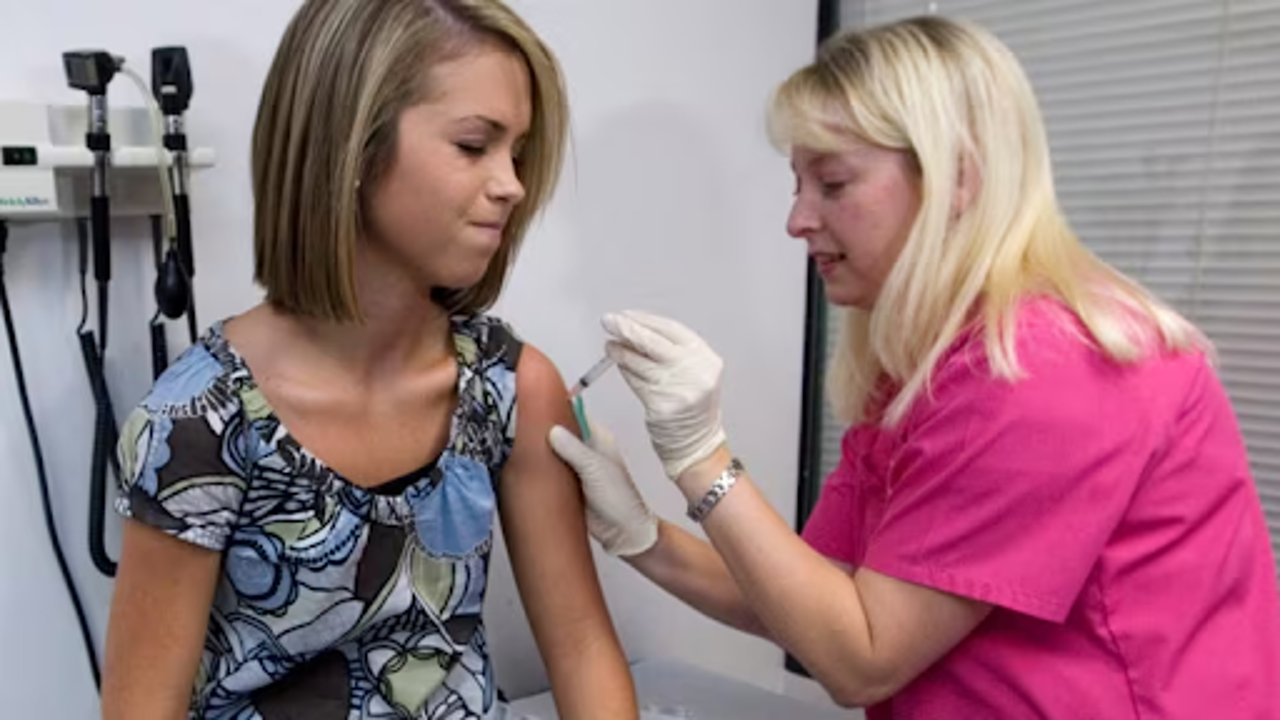
Canada's vaccine advisory board now recommends just one dose of the HPV vaccine for kids and teens. This update aligns with other countries that have also moved to a single-dose regimen for young people. (Associated Press)
Canada is now recommending a single dose of the HPV vaccine for children and young people, aligning with several other countries that have made similar adjustments. This new guideline from the National Advisory Committee on Immunization (NACI) suggests that individuals aged 9 to 20 should receive just one dose of the human papillomavirus (HPV) vaccine, rather than the previous two or three doses.
This change comes after extensive research showing that a single dose provides effective protection against HPV-related diseases and infections. NACI emphasized that the one-dose regimen offers protection comparable to multiple doses for females in this age group.
For those aged 21 to 26, NACI continues to recommend a two-dose series, while individuals who are immunocompromised or living with HIV should receive three doses. The committee also notes that people aged 27 and older who have not been vaccinated might still benefit from the vaccine, even at an older age.
The shift to a single-dose recommendation aligns Canada with other countries that have recently adopted this approach. For example, England, Scotland, Australia, and Ireland have all moved to a one-dose strategy, following the World Health Organization’s 2022 endorsement of single-dose efficacy. The WHO's stance is based on growing global evidence indicating that one dose provides substantial protection against HPV, comparable to the protection offered by multiple doses.
Studies and real-world evidence have shown that the HPV vaccine is highly effective at preventing cancers caused by high-risk HPV types. These include cancers of the cervical, oral, vaginal, vulvar, penile, and anal areas. NACI's updated recommendations reflect this evidence, reinforcing the vaccine's ability to prevent HPV-related cancers with just one dose.
Dr. Caroline Quach, a Quebec-based physician and former NACI chair, has stated that research supports the high effectiveness of a single dose. She explained that whether individuals receive one or two doses, the level of protection against HPV remains nearly the same.
Currently, the HPV vaccine in Canada is approved for individuals aged 9 to 45. Despite this, vaccination coverage rates among adolescents and young adults are below the national target of 90%. The updated guidance aims to simplify the vaccination process and improve coverage rates, making it easier for more people to get protected against HPV-related cancers.
As the vaccination landscape evolves, Canada’s adoption of a one-dose regimen reflects a broader trend towards more streamlined and efficient vaccination strategies worldwide. This move is expected to enhance public health outcomes by increasing vaccine accessibility and adherence.