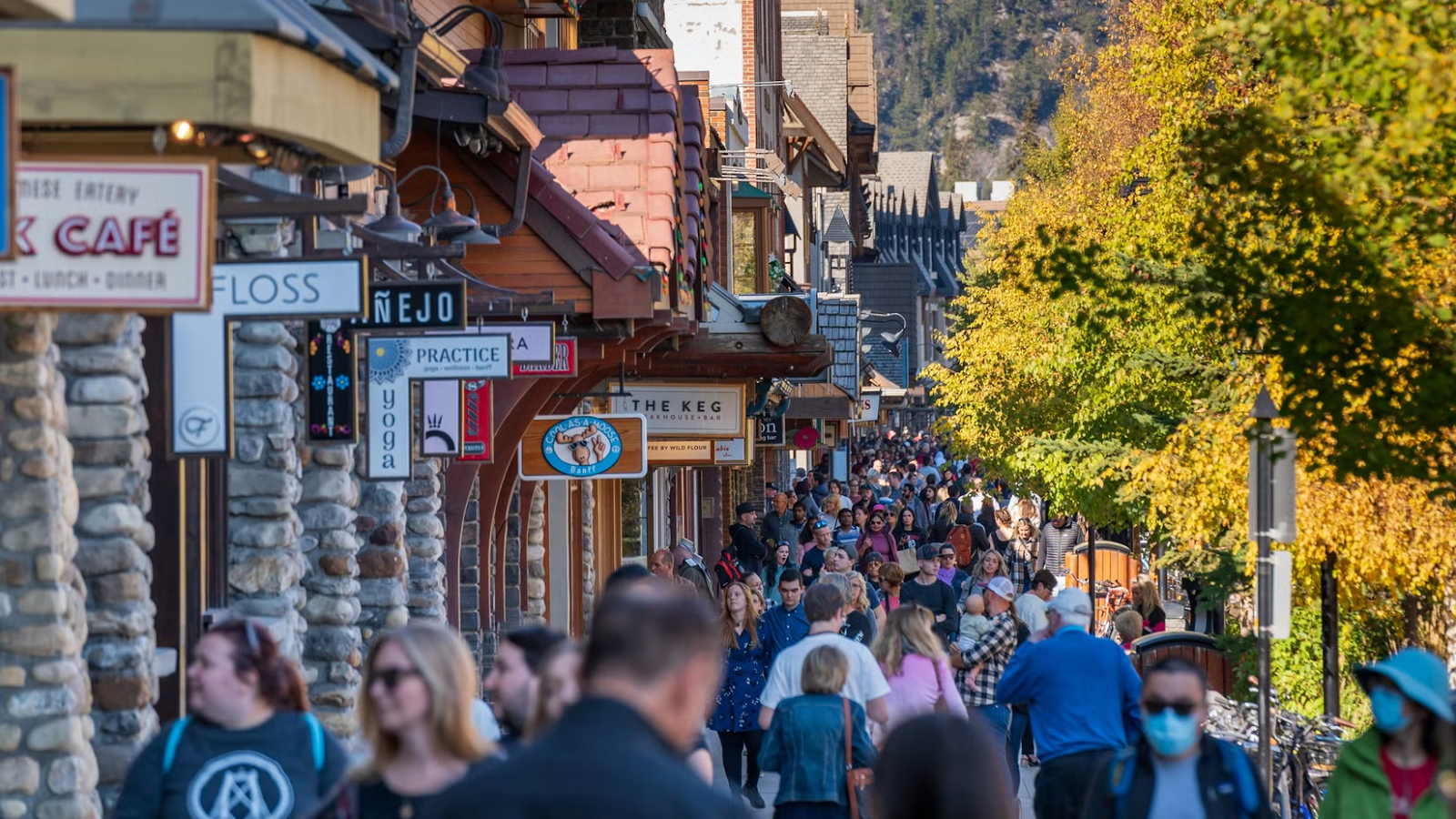
Large numbers of visitors gather along Banff Avenue in Banff, Alberta, as tourism activity picks up in the area. The Travel
Fewer Canadians now travel to the United States, and the drop has started to affect businesses on both sides of the border. Shop owners in American border towns have expressed frustration, saying “angry Canadians don't want to come.”
Many travellers in Canada now choose local trips instead of heading south. Rising travel costs, political tensions, and a growing desire to spend money at home have all played a role in this shift.
Domestic Travel Surges Across Canada
This change has led to a sharp rise in travel within Canada. Millions of Canadians have explored destinations across the country, giving a strong boost to local tourism.
Recent figures show that domestic travel jumped by nearly seven million trips during one quarter alone. International visitors have also increased, adding to the growth. Tourism revenue reached record levels last summer, bringing in close to $60 billion.
At first glance, this appears to be good news for Canada’s tourism industry. However, a deeper look shows growing pressure behind the scenes.
Labour Shortages Hit Tourist Areas
Many tourism businesses across Canada now struggle to find workers. Employers say they cannot fill open positions, even as demand rises.
“I’m desperate,” said Brande White of the Grizzly Paw Brewing Company in Canmore, Alberta. “We are trying to hire Canadians. Anybody that's looking for a job, please come see me. We just can't find enough.”
Employers point to several reasons for the shortage. High housing costs in tourist areas make it hard for workers to move there. Seasonal jobs also fail to attract many Canadians, who often look for stable, year-round work.
Industry Calls for More Support
Tourism leaders say many people misunderstand the industry. Darren Reeder from Alberta’s tourism association explained that Canadians often see these roles “as entry-level positions with no long-term career trajectory, but in reality, there are many levels of certification and professional training people can go through.”
Industry groups now push for solutions. They aim to build more affordable housing for workers and encourage students to consider careers in tourism.
Without enough staff, businesses may raise prices for hotels, food, and services, which could affect travellers this summer.
U.S. Tourism Feels the Impact
The decline in Canadian visitors has also hurt the U.S. tourism sector. In 2025, visits from Canada dropped sharply, leading to billions in lost spending.
Although domestic travel in the U.S. has helped offset some losses, overall international tourism numbers remain weak. Officials continue to watch the situation closely as travel patterns shift.
A Mixed Outcome for Canada
While Canada’s tourism sector enjoys record demand, it now faces serious challenges in keeping up. The rise in domestic travel has brought both growth and strain.
The shift away from U.S. travel has helped local businesses in some ways but has also exposed gaps in staffing and housing. As the busy summer season approaches, the industry must find ways to balance rising demand with limited resources.