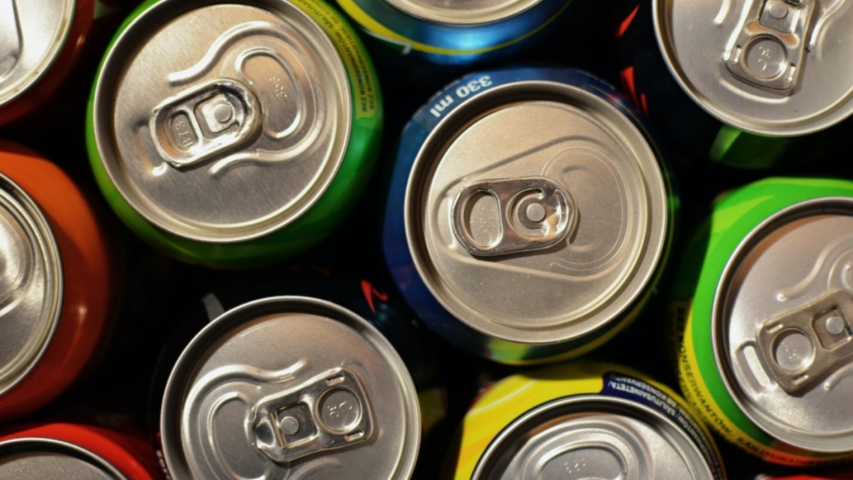
An undated photo shows a collection of soda cans. CTV News
In a recent move to protect public health, Health Canada has officially banned the use of brominated vegetable oil (BVO) in food products. This decision follows rising concerns about the potential health risks of BVO, which was previously allowed in small amounts.
Brominated vegetable oil, a chemical compound used mainly as an emulsifier, helps mix ingredients that typically don't blend well, such as oil and water. It was commonly found in soft drinks and sports beverages, especially those with citrus flavours. BVO keeps flavouring oils from separating and rising to the top.
Health Canada's action comes after the U.S. Food and Drug Administration (FDA) also banned BVO earlier this year. The Canadian ban took effect at the end of August 2024 and could impact a variety of food and beverage products currently available on store shelves.
The decision to ban BVO was based on a review of its safety profile. In May, Health Canada proposed the ban after considering laboratory studies that reported adverse effects on animals when exposed to high doses of BVO. Although these studies involved much higher doses than what humans typically consume, the findings raised enough concern to warrant action.
A study published in 2022 by the FDA and National Institutes of Health (NIH) showed similar negative effects in rats exposed to lower doses of BVO. Health Canada noted that because there was no established safe daily intake level for BVO, and given the potential risks identified in various studies, it was best to ban the additive entirely.
The Canadian health agency’s decision is part of a broader global trend. Countries like Australia, New Zealand, and the UK have already removed BVO from their food regulations.
Products likely to be affected by this ban include soft drinks and energy beverages that use BVO to stabilize citrus flavours. However, major beverage companies like PepsiCo and Coca-Cola have already phased out BVO from their products. PepsiCo confirmed that it does not use BVO in any of its drinks, including Mountain Dew and Gatorade, while Coca-Cola stated that BVO is on its restricted materials list.
Health Canada has provided a transition period to allow manufacturers time to adjust their formulations and update their labels. The one-year transition will end on August 30, 2025, during which current products containing BVO must still list it as an ingredient.
This move underscores Health Canada's commitment to ensuring the safety of food additives and aligns with ongoing efforts to address public health concerns related to food and beverage ingredients.