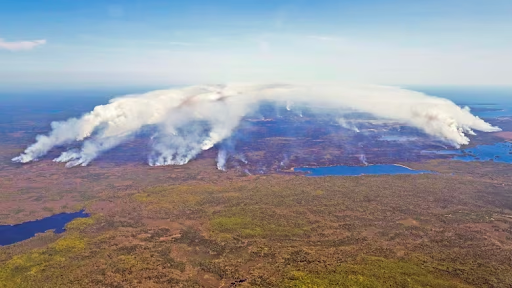
Photo from CBC News
In the wake of last year's severe heatwaves, devastating floods, and unprecedented wildfires, some scientists are calling on healthcare professionals in Canada to assist their patients in better preparing for extreme weather events and natural disasters linked to climate change.
Blair Feltmate, who leads the Intact Centre on Climate Adaptation at the University of Waterloo, addressed a national public health conference in Halifax, stressing the importance of implementing cost-effective measures to mitigate the impacts of climate-related disasters. Feltmate emphasized simple actions such as clearing gutters, installing backwater valves and blinds, which can significantly reduce the harm caused by floods, wildfires, and extreme heat.
He urged healthcare facilities to distribute informational materials created by his center, providing practical tips for coping with extreme weather events. These materials include illustrated guides tailored to specific scenarios, such as protecting homes from flooding, managing heatwaves in apartments, and safeguarding properties in wildfire-prone areas.
The suggested measures range from inexpensive to more substantial investments. Simple steps like removing combustible materials from around homes or checking for plumbing leaks can be undertaken at little to no cost. On the other hand, recommendations such as installing sump pumps or replacing wooden fencing with non-combustible alternatives may require more significant financial outlay.
According to Feltmate, implementing these fire safety measures can substantially reduce the likelihood of homes being destroyed during wildfires. He emphasized that proactive measures are essential as climate change is an ongoing phenomenon, with irreversible consequences. While efforts to mitigate greenhouse gas emissions are crucial, Feltmate stressed the urgency of addressing the immediate risks posed by climate change.
Dr. Theresa Tam, Canada's chief public health officer, echoed Feltmate's concerns at the conference, emphasizing the broad-ranging impacts of climate change on public health. Tam highlighted the diverse health challenges posed by climate change, including infectious diseases, respiratory issues, heat-related illnesses, and mental health concerns.
Feltmate underscored the importance of disseminating practical advice to protect individuals and communities from climate-related disasters, emphasizing that climate change is a reality that must be addressed. He acknowledged that while efforts to mitigate greenhouse gas emissions are vital, the focus should also be on implementing immediate measures to protect against the impacts of climate change.
The warnings come amidst forecasts indicating an elevated risk of wildfires across Canada due to persistent drought conditions and above-average temperatures. Last year's wildfire season was the worst on record, burning millions of hectares of land and displacing hundreds of thousands of people. The forecast for the coming months suggests a continued risk of wildfires, with conditions ripe for above-normal fire activity.
Federal ministers have highlighted the urgency of addressing climate change, given the forecasted risks of another devastating wildfire season. With above-normal temperatures and widespread drought already evident across many parts of the country, the need for proactive measures to mitigate the impacts of climate-related disasters is increasingly apparent.