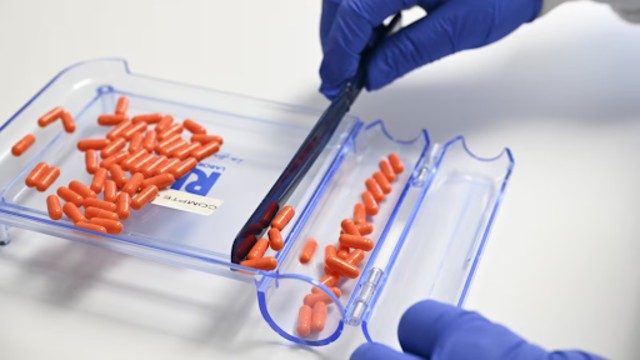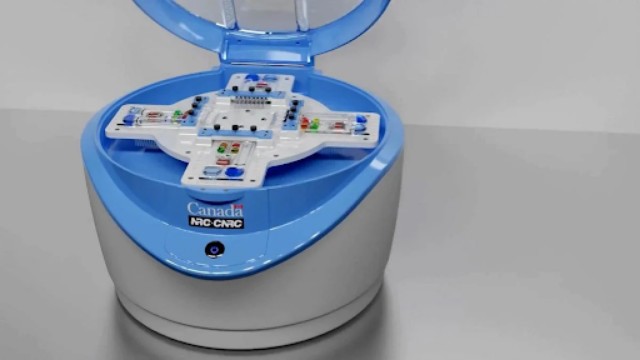
A group of researchers in Canada has developed a portable device named PowerBlade, which they say can quickly determine if someone is likely to develop sepsis. (National Research Council of Canada)
A group of Canadian scientists has developed a quick test that could help doctors predict if a patient is about to develop sepsis — a serious and sometimes deadly condition caused by the body’s immune system attacking its own organs after an infection.
Sepsis claims thousands of lives in Canada every year and affects nearly 50 million people worldwide. Dr. Claudia dos Santos, a critical care doctor at St. Michael’s Hospital in Toronto and the lead author of the study, explains that treating sepsis early is vital for survival.
“If treatment is delayed by just one hour, the risk of death increases by almost eight percent,” she said. Acting fast, ideally within six hours, makes a huge difference.
Right now, doctors struggle to predict who with an infection might develop sepsis. This is because sepsis symptoms like fever, fast heartbeat, or confusion often look like symptoms of the infection itself. Without a clear test, doctors rely mostly on gut feelings and observation.
Dr. dos Santos said, “We do our best in the critical early hours and hope for the best. But there must be a better way.”
Her team, including experts from the University of British Columbia and the National Research Council of Canada, believes they have found it — a blood test that can spot warning signs before sepsis develops.
Using artificial intelligence, the researchers identified six genes that become more active in patients who later develop sepsis. They called this group of genes “Sepset.”
Robert Hancock, director of UBC’s Center for Microbial Diseases, explained, “These six genes show higher activity before sepsis is obvious. This gives us a chance to act sooner.”
The team studied blood samples from 586 past patients and found that the gene activity predicted sepsis within 24 hours.
If doctors can detect this gene pattern early, they can start treatment right away — such as antibiotics, fluids to keep blood pressure steady, or prepare critical care support. This could save lives by stopping sepsis before it worsens.
To make the test practical, the National Research Council created a small device called Powerblade. It uses just a drop or two of blood and can deliver results in under three hours. When tested on 30 samples, the device correctly identified sepsis 92 percent of the time.
This test could be used right at the bedside in emergency rooms or even in remote areas, helping doctors quickly decide who needs urgent care or transfer to bigger hospitals.
One important note: the test hasn’t yet been tried in real-time with patients. Dr. dos Santos said the next step is a clinical trial planned for this year, funded by the Canadian Institutes of Health Research.
“We’re ready to test the device in real life and see if it truly improves patient outcomes,” she said.
If successful, this new test could change how sepsis is diagnosed and treated, giving doctors a valuable tool to save many lives.