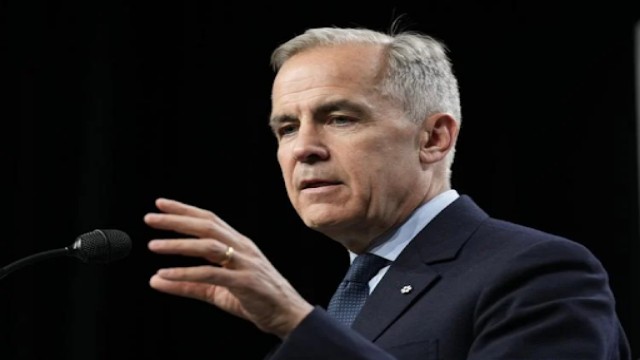
Prime Minister Mark Carney took part in the final press conference of the G7 Summit held in Kananaskis, Alberta, on Tuesday, June 17, 2025. (THE CANADIAN PRESS/Adrian Wyld)
Prime Minister Mark Carney’s recent announcement of a counter-tariff plan aimed at tackling U.S. trade restrictions has stirred disappointment among Canada’s steel industry leaders. The Canadian Steel Producers Association (CSPA) and the United Steelworkers Union have openly criticized the move, calling it inadequate in protecting Canadian jobs and the steel economy.
Their frustration came just hours after Carney revealed that retaliatory tariffs could be imposed in 30 days — depending on how trade talks with U.S. President Donald Trump unfold. But the joint statement from CSPA President Catherine Cobden and union leader Marty Warren made their stance clear: the plan lacks the urgency and strength the crisis demands.
“It falls short of what the industry needs at this most challenging time,” they said.
Instead of a firm stand, the government’s approach appears cautious. Carney suggested that Canada’s tariffs would adjust on July 21, based on the “progress” made in broader trade discussions with the United States. In a press conference, Carney stressed the importance of standing firm at home while negotiating abroad.
“We must safeguard Canadian workers and businesses from unjust U.S. tariffs,” he told reporters after a federal cabinet meeting.
The criticism from the steel sector came just before they were expected to hold their own press conference urging faster action. But they cancelled the event after Carney’s announcement, likely reflecting their frustration and disappointment.
Meanwhile, Jean Simard, who heads the Aluminum Association of Canada, offered a more measured response. He said the government’s strategy seemed balanced and aimed at supporting meaningful negotiations. However, he also warned that if no resolution comes within 30 days, swift and flexible government action will be crucial.
“We’ll need agility and speed if we hit the deadline without progress,” Simard said.
This growing tension stems from Trump’s decision in March to impose a 25% tariff on steel and aluminum imports. In response, Canada matched the move with its own 25% counter-tariffs. But when Trump doubled the U.S. tariff to 50% earlier this month, Ottawa didn’t follow suit.
This delay has sparked concerns of “dumping” — when foreign companies sell products in Canada at rock-bottom prices, undercutting local producers. With demand and prices plummeting, Canadian steel plants have started laying off workers, and the sector fears being pushed out of the U.S. market entirely.
In response to the worsening scenario, the federal government announced it would begin restricting steel and aluminum procurement to Canadian and trusted international sources starting June 30.
Additionally, Canada plans to introduce strict import quotas based on 2024 levels for steel products coming from countries without free trade deals.
Still, critics like NDP Leader Don Davies argue these steps are far too small. He slammed the Liberals for dragging their feet and demanded a comprehensive emergency plan to help the affected workforce.
“They’re moving in baby steps, and that’s going to cost jobs,” Davies said.
Even the industry’s early appeals didn’t speed things up. On June 4, after meeting with steel executives, Industry Minister Mélanie Joly said the government needed “a bit more time” to act. She acknowledged this week that the sector was facing a full-blown emergency.
To keep up with the evolving situation, Carney also announced two new task forces — one for steel and one for aluminum — to monitor developments and guide future decisions.