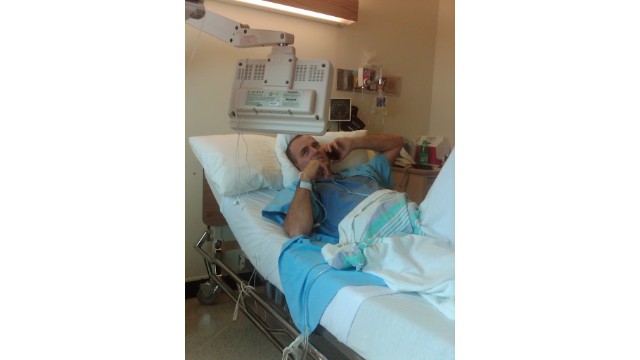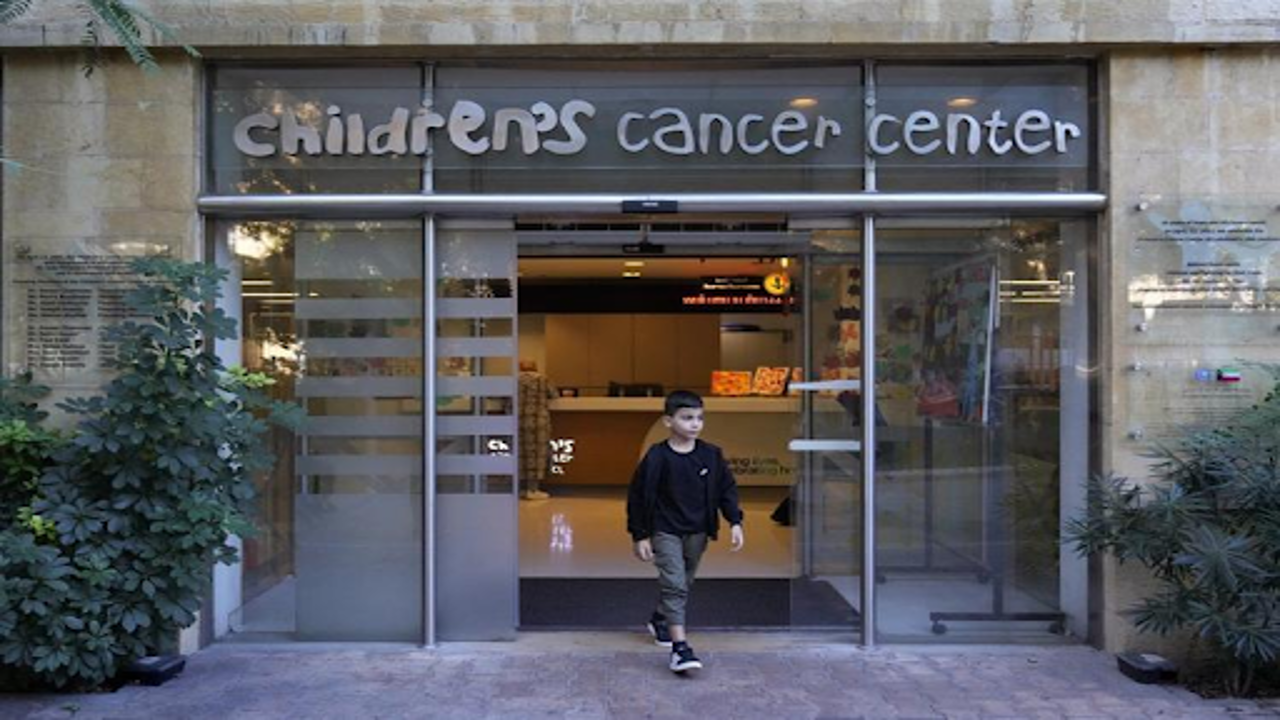
Mohammad Mousawi, 8, a displaced boy from the Southern Suburb of Beirut, who suffers from leukemia, in the image at Children’s Cancer Center in Lebanon, Friday, Nov 15, 2024. (AP Photo/ Hussein Malla)
BEIRUT (AP) — Carol Zeghayer clutched her IV as she rushed down the bright hallway of Beirut's Children's Cancer Center. The 9-year-old’s face lit up when she saw her friends from the oncology ward.
Diagnosed with cancer just before the conflict between Hezbollah and Israel began in October 2023, Carol relies on weekly visits to the center for her treatment. What used to be a 90-minute drive now takes up to three hours, as the family navigates mountainous roads to avoid the heavy bombardment in southern Lebanon. Even then, they remain vulnerable to Israeli airstrikes. They are not alone — many families across Lebanon are now facing the combined hardship of illness and war.
“She’s just a child. When the bombs hit, she asks, ‘Mama, was that far?’” said Carol’s mother, Sindus Hamra.
The family lives in Hasbaya, a province in southeastern Lebanon, where the sound of Israeli airstrikes has become a daily reality. Just 15 minutes away, the town of Khiam is a frontline zone, with fierce clashes between Israeli troops and Hezbollah fighters.
On a recent trip to Beirut, as they were leaving home, the family heard the roar of a rocket followed by a deafening explosion. Israeli airstrikes have also targeted vehicles on the Damascus-Beirut highway, which Carol and her mother have to cross.
Despite hopes for a ceasefire, the bombardment shows no signs of stopping.
More than the war itself, Hamra fears her daughter will miss chemotherapy.
“Her situation is delicate — the cancer could spread to her brain,” Hamra said, tearfully. Carol was first diagnosed with cancer of the lymph nodes and later leukemia. She has completed a third of her treatment, but still faces many months ahead.
While Carol’s family has stayed in their home, many others have been displaced by the intensified Israeli bombing that began in late September. Tens of thousands of people fled their homes in southern and eastern Lebanon, as well as Beirut’s southern suburbs. Among them were families with children undergoing cancer treatment.
The Children’s Cancer Center of Lebanon quickly identified the locations of its patients to ensure their treatment continued, sometimes relocating care to hospitals closer to their new homes, said Zeina El Chami, the center's fundraising executive.
In the early days of the conflict, some children were admitted to the center for emergency care, unable to return home due to the danger, said Dolly Noun, a pediatric hematologist and oncologist. “Some patients have been hospitalized due to panic attacks. It’s been very tough,” she added.
The war has compounded the challenges faced by young patients. Many doctors have had to relocate, Noun said. “I know doctors who haven’t seen their families for weeks because the roads are too dangerous,” she said.
Lebanon has been reeling from a series of crises since 2019, including an economic collapse, the Beirut port explosion in 2020, and now this ongoing war. This has made it difficult for institutions like the cancer center to secure the necessary funding to continue their work.
“Cancer waits for no one,” said El Chami. The ongoing crises have affected the center’s ability to raise funds, leaving it in urgent need of donations.
The center currently treats over 400 patients ranging in age from newborns to 18 years old, and serves around 60% of children with cancer in Lebanon.
For Carol, the war is often a topic of conversation with her friends at the center. Her mother listens as Carol recounts hearing the booms and feeling the tremors when the house shakes.
For others, the moments in the center's playroom offer a brief escape from the harsh reality outside.
Eight-year-old Mohammad Mousawi races around the playroom, laughing as he hides objects for his friend to find. He’s so focused on the game that he barely responds to questions before the nurse calls him for his weekly chemotherapy session.
Mohammad’s family once lived in Ghobeiry, a neighborhood in Beirut’s southern suburbs. Their home was marked for destruction by an Israeli evacuation warning weeks ago. “But so far, they haven’t hit it,” said his mother, Suzan Mousawi. “They’ve hit buildings nearby — two behind and two in front.”
The family has moved three times. Initially, they relocated to the mountains, but the cold worsened Mohammad’s already fragile immune system. Now they’ve settled in Ain el-Rummaneh, not far from their old home in southern Beirut. As Israeli bombardment spreads, some strikes have landed within 500 meters of their new home.
For Suzan, the war has turned everything upside down. “We’ve lived our whole lives in Dahiyeh until the war forced us to leave. My parents’ house was bombed. All our memories are gone.”
Mohammad has 15 weeks of treatment left, and his family is hoping for a positive outcome. But the war has stolen some of their dreams.
“When Mohammad got sick, we bought a house,” Suzan said. “It wasn’t big, but it was ours. I bought him an electric scooter and set up a pool, planning to take him there once his treatment was done.” Now, she fears they could lose it all.
For some families, this kind of conflict is all too familiar. Asinat Al Lahham, a 9-year-old patient at the center, is a refugee from Syria. “We escaped one war only to end up in another,” her mother, Fatima, said.
Weeks ago, as Asinat’s father drove home after a chemotherapy session, an airstrike went off nearby. He cranked up the music in an attempt to drown out the deafening sound. Asinat, clutching her favorite toy, sat quietly in the backseat. “I tried to distract her from the noise,” her father explained.
In the center’s medical ward, Asinat sat in a chair, hooked to an IV drip, bargaining with her doctor. “Just two or three small pinches,” she said, asking for flavoring for her noodles — a treat she’s not supposed to have.
“I don’t feel safe,” Asinat said. “Nowhere is safe — not Lebanon, not Syria, not Palestine.” Despite the fear, she flashed a mischievous grin as she added, “The noodles make it better.”
The family feels trapped in Lebanon, unable to return to Syria, where their home was destroyed. “We can’t leave here,” Fatima said. “With the war and her illness, it feels like there’s no escape.”