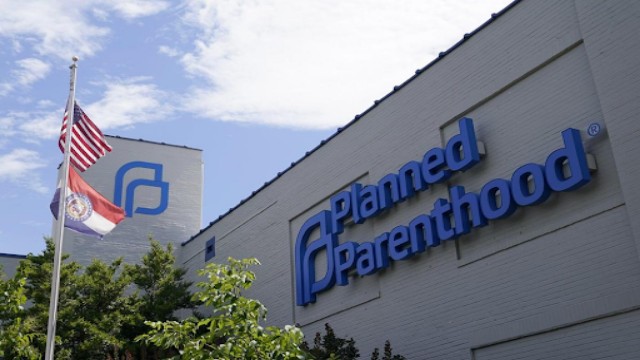
A Missouri state flag and the U.S. flag are seen flying outside the Planned Parenthood clinic in St. Louis. (AP Photo/Jeff Roberson, File)
Planned Parenthood has scored a partial legal win in its battle against the Trump administration over Medicaid funding cuts. The fight stems from a clause in Trump’s tax law that slashes Medicaid payments for abortion providers. While the law affects all such organizations that earned over $800,000 in Medicaid funds in 2023, the court’s latest move offers some relief.
On Monday, U.S. District Judge Indira Talwani in Boston granted a preliminary injunction that halts Medicaid cuts—but only for Planned Parenthood affiliates that either don’t provide abortions or earned less than $800,000 in Medicaid reimbursements last year. This decision provides temporary protection for some clinics, although many may still face funding losses.
At this point, it’s unclear how many Planned Parenthood clinics qualify for continued Medicaid support under the court’s order, and how many will still lose access to these crucial funds.
Planned Parenthood responded by thanking the court for recognizing the damage the law could cause. However, the organization also expressed disappointment that not all its clinics were protected. They warned of confusion, disruption in care, and potential harm for patients seeking essential reproductive health services.
“There will be nothing short of a public health crisis if Planned Parenthood members are allowed to be defunded,” the organization emphasized in a public statement.
The legal case, brought earlier this month by Planned Parenthood Federation of America and its affiliates in Massachusetts and Utah, targets U.S. Health and Human Services Secretary Robert F. Kennedy Jr. It challenges the provision in the tax law that bars Medicaid funding for major abortion providers, even if they offer a range of other services like contraception, pregnancy care, and STD screenings.
Planned Parenthood’s legal team argued that the measure would severely impact healthcare access across the country. In their words, the law is driven by “plain animus” and would block care for over one million patients. They also claimed that the policy is unconstitutional and would cause irreversible harm not just to the clinics, but to the public who depend on their services.
The government, on the other hand, stood by the legislation. Their lawyers framed it as a democratic decision to stop taxpayer money from going to what they called “Big Abortion.” According to the government’s response, the law reflects the will of the American people, and the courts should not overturn it based on differing policy opinions.
The court had already issued a temporary restraining order earlier this month, halting enforcement of the cuts. That order was set to expire Monday, but the new preliminary injunction now extends the pause—though only for a limited group of Planned Parenthood affiliates.
As the legal battle continues, Planned Parenthood and its supporters hope the court will eventually expand its protections to include all impacted clinics. For now, the fight over funding—and the future of reproductive healthcare access in many communities—remains uncertain.