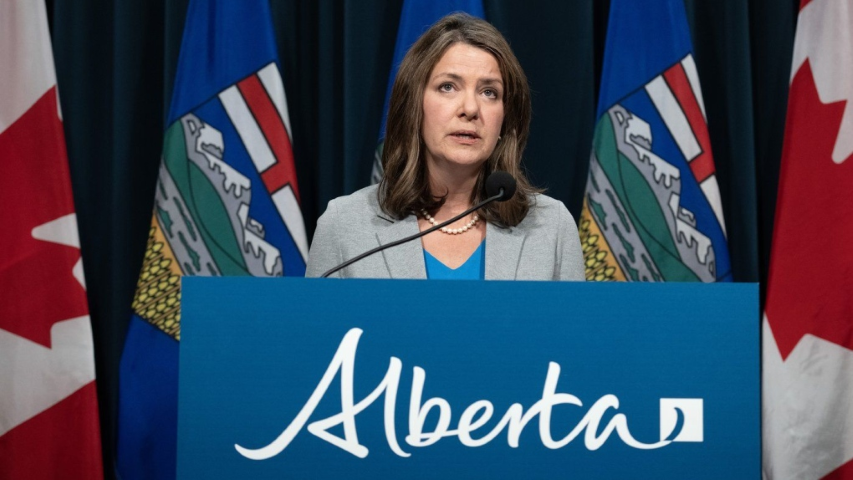
Puberty blocker debate intensifies as Alberta Premier Danielle Smith considers banning the medication for children under 15, except for those already undergoing treatment. Smith addresses queries at a press briefing in Calgary, Alberta, on Thursday, February 1, 2024. (Image source: THE CANADIAN PRESS/Todd Korol)
VANCOUVER - Controversy swirls around the use of puberty blockers as Alberta Premier Danielle Smith sparks debate by proposing a ban on the medication for children 15 and younger, except for those already on treatment. The issue has drawn divergent views, with Prime Minister Justin Trudeau criticizing the move, while federal Conservative Leader Pierre Poilievre supports it, advocating for a minimum age of 18 for accessing such treatments. Here's a deeper look into what health professionals say about puberty blockers and their significance.
Puberty blockers, administered via injection, serve youth grappling with gender dysphoria, a condition where one's gender identity doesn't align with their assigned sex at birth. These medications impede physical changes associated with puberty, such as breast development or deepening of the voice.
Dr. Daniel Metzger, a pediatric endocrinologist at BC Children's Hospital, highlighted that puberty blockers have been utilized since the 1990s to delay puberty in children showing early signs of sexual characteristics development. Originating from the Netherlands, these medications were first introduced in Canada approximately 26 years ago by the Vancouver Hospital.
The decision to administer puberty blockers hinges on various factors, including the age at which puberty typically starts, which is around 10 for individuals assigned female at birth and 11 for those assigned male. Metzger emphasized the importance of timely intervention, particularly as the mismatch between body and gender identity can cause distress, necessitating a multidimensional approach involving medical and mental health professionals.
Addressing concerns about the timing of puberty blocker initiation, Metzger stressed the potential harm of delaying treatment until age 18, citing irreversible bodily changes and emotional distress experienced by adolescents. He underscored the need for comprehensive assessments and informed consent processes, emphasizing the reversible nature of the medication's effects.
Despite their benefits, puberty blockers aren't without risks. Metzger highlighted potential side effects, including impacts on bone health and fertility. The interruption of puberty can affect bone mineral density, necessitating additional hormone therapies to mitigate these effects.
Elizabeth Saewyc, a professor at the University of British Columbia, emphasized the critical need for timely access to gender-affirming care, given the high prevalence of mental health challenges and suicide attempts among trans youth. Delays in accessing care could exacerbate emotional distress and further marginalize vulnerable populations.
As debates over puberty blockers continue, concerns arise regarding the politicization of medical care and its impact on marginalized communities. Misinformation and lack of understanding surrounding these treatments could further stigmatize and harm trans youth, underscoring the importance of evidence-based policymaking and support for marginalized communities.
In a landscape fraught with controversy and misinformation, the discussion surrounding puberty blockers underscores the need for informed, compassionate approaches to gender-affirming care.