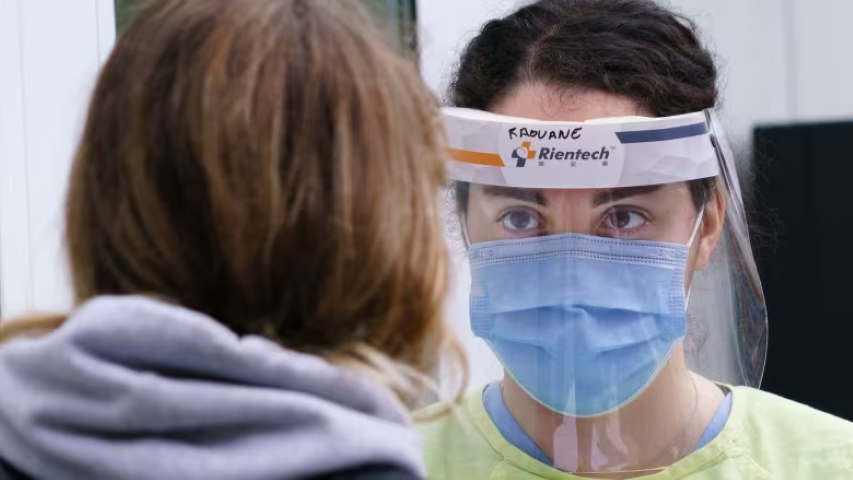
A walk-in clinic in Montreal. In a bid to increase the number of doctors and nurses practicing in rural and remote areas, the federal government announced Tuesday it would increase forgivable loans for some students. (Paul Chiasson/Canadian Press)
The Canadian government announced on Tuesday its decision to forgive up to $60,000 in student loans for doctors who choose to practice in rural and remote regions, aiming to address the pressing shortage of healthcare professionals in these areas.
Canada is grappling with a significant deficit of doctors and nurses, a crisis projected to worsen as the population expands and many physicians approach retirement age. Federal data indicates that by 2031, Canada will require approximately 48,900 more family doctors to meet demand. However, the number of medical residency positions has stagnated over the past decade, impeding the entry of new doctors into the field.
In addition to this challenge, internationally educated physicians encounter substantial bureaucratic hurdles before they can practice in Canada, a process that has prompted numerous Canadian-born doctors to seek opportunities in the United States.
Consequently, around 6.5 million Canadians lack regular access to a family physician or nurse practitioner, highlighting the urgency of attracting healthcare professionals to underserved regions.
To incentivize practitioners to work in these areas, Employment Minister Randy Boissonnault announced a 50 percent increase in forgivable loans for doctors and nurses serving in rural and remote communities. Under this initiative, up to $60,000 in loans will be forgiven for family physicians or residents, while up to $30,000 will be forgiven for nurses or nurse practitioners with Canada Student Loans.
Approximately 3,000 doctors and nurses are expected to benefit from the program in the current fiscal year. While this initiative was initially introduced in Budget 2022, its implementation has been slow, with applications only accepted since November of the previous year.
The Parliamentary Budget Officer has evaluated the program's potential costs, estimating that the increase in forgivable loans will amount to $19 million over five years, a relatively minor expense for the federal government.
Despite these efforts, some challenges remain unaddressed, such as the financial strain imposed by private loans on healthcare professionals. Moreover, the program's success hinges on its ability to increase access to healthcare in rural and remote communities, where emergency rooms often close due to staffing shortages.
While the loan forgiveness initiative aims to alleviate the strain on healthcare access, its efficacy will depend on effective implementation and collaboration between federal and provincial authorities. The program underscores the government's commitment to improving healthcare accessibility in underserved areas, although challenges persist in addressing systemic issues within the healthcare system.