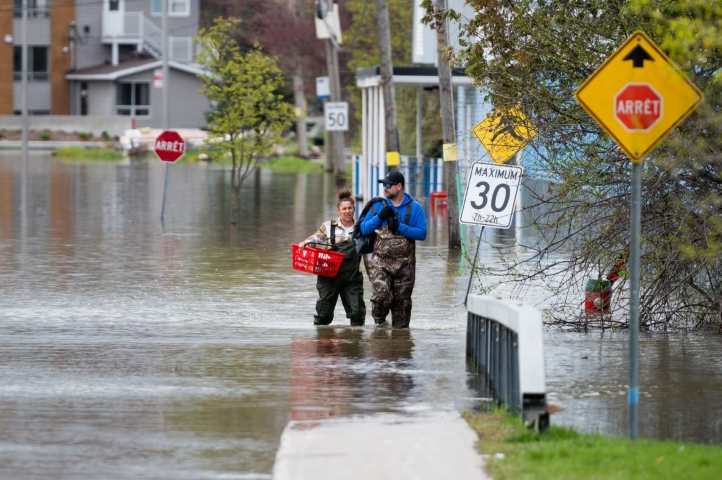
In May, residents navigate towards higher ground in Gatineau, Quebec. The Insurance Bureau of Canada has noted that flooding continues to be the most expensive weather-related cause of insurance claims in the country. The photograph was taken by Spencer Colby for The Canadian Press.
Humberto Pinochet, a resident of Baie-Saint-Paul, Quebec, faced a devastating loss last fall when floodwaters inundated his artist's studio and home following heavy rain in May. His story is emblematic of a broader trend outlined in a recent report by the Insurance Bureau of Canada, which revealed that 2023 witnessed the fourth-highest insurance claims from extreme weather events on record, totalling over $3 billion.
The report emphasized the escalating economic impact of climate change-induced disasters and the subsequent surge in insurance costs for homeowners. Notably, insured losses in Canada have exceeded $3 billion for the second consecutive year. The study highlighted the multifaceted nature of these losses, stemming from floods, wildfires, hail storms, hurricanes, and other weather-related events occurring across the country.
The wildfires in Shuswap and Okanagan, British Columbia, emerged as the costliest contributors to insurance claims, though a combination of storms, floods, and fires collectively led to the fourth most expensive year for insured losses. Craig Stewart, the Insurance Bureau of Canada's Vice President of Climate Change and Federal Issues, underscored the diverse range of events contributing to these losses, occurring from coast to coast.
A concerning trend revealed in the report is the increasing difficulty for homeowners to secure insurance coverage, particularly in flood-prone areas. Approximately 1.5 million homes across Canada currently lack affordable flood insurance, with insurance companies hesitant due to the high risk associated with these locations. Over the past five years, home and mortgage insurance costs have risen by an average of 33%, according to Statistics Canada.
The report also highlighted the need for a national flood insurance program, addressing the coverage gap in high-risk areas. While advocacy efforts by the Insurance Bureau of Canada have urged the federal government to implement such a program, no firm timeline has been established.
In response to the growing economic impact of extreme weather events, the federal government announced its first climate adaptation strategy in 2022. The aim is to enhance community resilience to weather disasters, but tangible results and widespread implementation remain to be seen.
One poignant example from the report is that of Humberto Pinochet, a renowned artist unable to secure flood insurance due to his home's location on a flood plain. Despite his loss, Pinochet received support from the municipality, which purchased his property as part of a disaster relief program.
As the need for federal intervention and climate adaptation measures becomes increasingly apparent, individuals are encouraged to take proactive steps to protect their properties. Anabela Bonada, a research associate at the University of Waterloo's Intact Centre on Climate Adaptation, emphasized the importance of homeowners in wildfire-prone areas maintaining vegetation and implementing protective measures. For flood-prone regions, installing backwater valves and sump pumps can significantly mitigate risks.
In conclusion, the rising trend of extreme weather insurance claims in Canada signals the urgent need for comprehensive government action, increased climate adaptation measures, and individual efforts to safeguard against the growing threat of climate change-induced disasters.