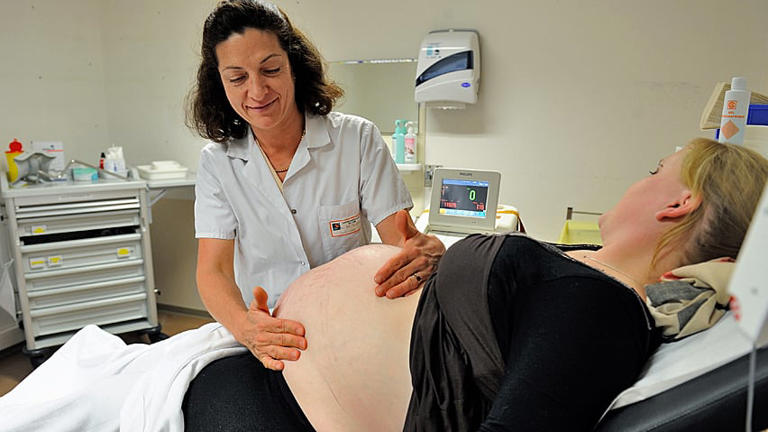
Babies born to people who smoke while pregnant, have low birth weight, increased risk of sudden infant death syndrome (SIDS) and are at a higher risk of obesity.© Philippe Huguen/AFP/Getty
Researchers at the University of Alberta have discovered a potential link between maternal smoking during pregnancy and child obesity. Led by pediatrics professor Anita Kozyrskyj, the study identified elevated levels of a specific type of gut bacteria, firmicutes, in infants born to mothers who smoked while pregnant. The findings, published in the March issue of the journal Gut Microbes, shed light on how maternal smoking may contribute to childhood obesity.
Previous research has established that maternal smoking increases the risk of children becoming overweight or obese. However, the mechanism underlying this association has remained unclear. Kozyrskyj's study aimed to investigate this relationship by examining the composition of gut bacteria in infants born to smoking mothers.
The study analyzed data from nearly 1,600 babies born between 2009 and 2012 in Edmonton, Vancouver, Winnipeg, and Toronto. Researchers collected fecal samples from these infants and assessed the abundance of various gut bacteria. They found significantly higher levels of firmicutes in the gut microbiota of babies born to mothers who smoked during pregnancy.
Firmicutes are a type of bacteria commonly found in the human gut. While all gut bacteria produce metabolites as byproducts of their metabolism, firmicutes produce a larger quantity of these metabolites. According to Kozyrskyj, this excess of firmicutes may trigger a chain reaction in the body, leading to rapid weight gain in infants.
The study's findings suggest that changes in gut bacteria composition during infancy may play a role in the development of obesity later in life. By identifying elevated levels of firmicutes in infants born to smoking mothers, the research provides valuable insights into the potential mechanisms linking maternal smoking to child obesity.
Maternal smoking during pregnancy is known to have various adverse effects on fetal development. Babies born to smoking mothers are at increased risk of low birth weight, sudden infant death syndrome (SIDS), and developmental issues affecting the brain and lungs. Additionally, maternal smoking has long been recognized as a risk factor for childhood obesity.
Childhood obesity is a growing public health concern worldwide, with significant implications for long-term health outcomes. According to the Public Health Agency of Canada, approximately 30% of children aged five to 17 in the country are overweight or obese. Obesity in childhood is associated with an elevated risk of chronic diseases such as asthma, heart disease, and type 2 diabetes.
The study also examined the impact of breastfeeding on the risk of obesity in infants born to smoking mothers. Interestingly, the researchers found that babies who were exclusively breastfed, even if their mothers smoked during pregnancy, did not have the same risk of obesity as formula-fed babies. This suggests that breastfeeding may have protective effects against obesity, counteracting the potential negative effects of maternal smoking.
Despite the significant findings, Kozyrskyj emphasized the need for further research to confirm the role of firmicutes as a causal factor in child obesity. While the study provides compelling evidence of a link between maternal smoking, gut bacteria, and childhood obesity, more extensive investigations are required to fully understand the underlying mechanisms and potential interventions.