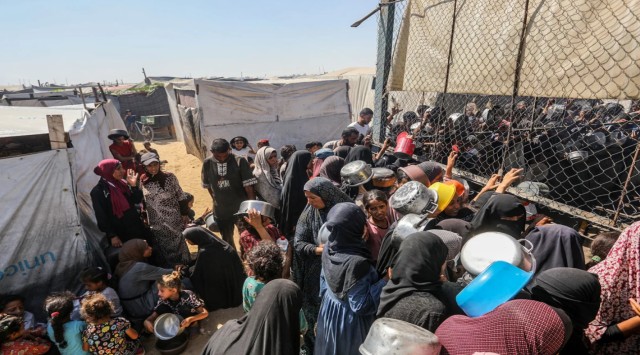
Palestinians gather to receive food on July 3, 2025, in Khan Younis, Gaza.
In a major development, Hamas has given a “positive response” to a new ceasefire proposal aimed at halting the months-long war in Gaza. The group’s statement on Friday marks a potential turning point in a conflict that has seen tens of thousands of lives lost and repeated diplomatic failures.
The 60-day ceasefire plan, which already had Israel’s approval, is now closer to reality. Both sides are expected to begin final negotiations to iron out the details and the implementation timeline.
Hamas Signals Readiness to Negotiate Ceasefire Mechanism
In its official statement, Hamas confirmed its readiness to move forward with the plan. The group stated it is “fully prepared to immediately enter into a round of negotiations regarding the mechanism for implementing this framework.”
This development follows earlier signs that Hamas was open to adjustments in the proposal. Bishara Bahbah, a Palestinian-American interlocutor who has directly communicated with Hamas, said the group introduced necessary amendments. He expressed optimism, suggesting that a formal ceasefire could be reached within the next week.
Israel Welcomes Response, Expects No Major Roadblocks
An Israeli source familiar with the proposal said that while some rewording was expected, the changes posed no threat to the overall agreement. “Israel anticipated a positive response,” the source said, indicating confidence in the progress made.
The proposed deal includes key points such as the release of hostages and a phased withdrawal of Israeli troops from parts of Gaza.
Hostage Deal: A Delicate Balancing Act
The proposed ceasefire outlines a carefully structured release of hostages. On the first day of the truce, Hamas is expected to release eight living Israeli hostages. In return, Israel will release an unspecified number of Palestinian prisoners. A total of 10 living hostages and 18 deceased are to be returned during the truce.
To avoid public displays, the proposal stipulates that Hamas must carry out the releases without any celebratory events.
Remaining hostages will be freed across four more specified dates.
U.S. Steps Up Role with Stronger Assurances
The ceasefire proposal, brokered with support from Qatar and the Trump administration, includes new guarantees. It emphasizes America’s commitment to keeping Israel at the negotiating table for a permanent truce, even beyond the initial 60-day ceasefire.
The revised deal also ensures that humanitarian aid will flow through traditional channels, sidelining the Israeli-backed Gaza Humanitarian Foundation, which had drawn criticism.
Trump Pushes Hamas to Accept Peace Deal
Former U.S. President Donald Trump, who played a key role in advancing the proposal, issued a direct message to Hamas. In a social media post, he warned that the deal on the table was the best they could hope for.
“I hope, for the good of the Middle East, that Hamas takes this deal, because it will not get better — IT WILL ONLY GET WORSE,” Trump wrote, thanking Qatar and Egypt for their diplomatic efforts.
Momentum Builds as Proximity Talks Near
With both sides onboard, negotiators are preparing for proximity talks — indirect discussions conducted in the same building.
These talks are expected to move quickly, with messages passed back and forth to finalize the deal.
A central point of discussion will be the timeline for Israeli troop withdrawal from Gaza during the ceasefire.
A Second Chance After the March Collapse
The new proposal is a revised version of a previous U.S.-backed plan that collapsed in March. Hamas rejected that draft due to a lack of assurances regarding a permanent end to the conflict.
The updated plan addresses this issue, offering stronger commitments for long-term peace.
Netanyahu’s Changing Stance Amid Political Pressure
Prime Minister Benjamin Netanyahu, long opposed to a full ceasefire without the dismantling of Hamas, has shown a shift in tone. Following Israel’s military actions in Iran, he acknowledged “many opportunities” had opened up, including the return of hostages.
He is set to meet Trump in Washington next week. Ahead of his trip, Netanyahu will meet his full cabinet to discuss the proposal. Although some far-right factions oppose the deal, centrist parties have pledged their support to move forward with the ceasefire.
Path to Peace Still Fragile, But More Likely Than Ever
With both Hamas and Israel responding positively to the proposal, and strong U.S.-Qatar backing in place, a breakthrough may finally be within reach. The coming days will be crucial in determining whether this truce can end one of the region’s deadliest conflicts in recent memory.