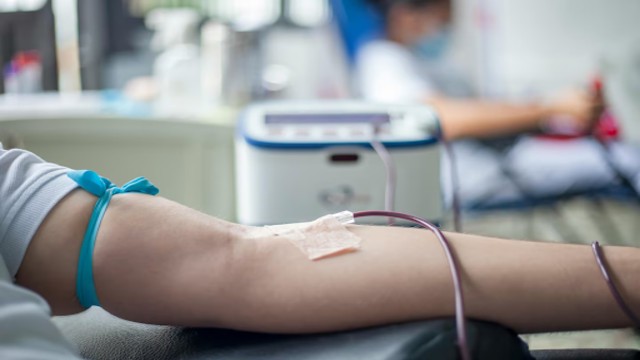
Canadian Blood Services calls for blood donations as holiday season approaches. (CTVNews)
Canadian Blood Services is urging Canadians to donate blood and plasma in the final weeks of December, warning that holiday routines are creating a seasonal shortage while hospital demand remains steady.
The organization says donations typically fall during the year-end period as people travel, take time off work, and adjust their schedules. At the same time, patients continue to rely on blood products that cannot be stored long-term.
Demand Does Not Pause for The Holidays
“This is the time of year when people change a lot of their habits,” said Ron Vezina, vice-president of public affairs at Canadian Blood Services. “But the need for blood, plasma, and platelets continues.”
Vezina noted that many patients, including those undergoing cancer treatment or major surgeries, remain hospitalized throughout the holidays and depend on regular transfusions.
The weeks between Christmas and New Year’s are historically among the most difficult for maintaining adequate supply.
Added Strain From Flu Season And Weather
This year’s challenge is compounded by other factors. A strong flu season has sidelined some potential donors, while winter storms can disrupt travel to donation centres.
Because blood products are perishable, Canadian Blood Services cannot build reserves far in advance. That makes consistent donations essential, especially during periods of disruption.
Encouraging Group Donations
To boost turnout, the organization is encouraging people to donate together with friends, family members, or coworkers.
Many first-time donors are more likely to give when accompanied by someone they know, Vezina said. Group donations can also turn holiday gatherings into meaningful shared experiences.
Donation centres remain open throughout the holiday period.
Different Ways To Give
Canadian Blood Services emphasized that not all donations are the same. Depending on eligibility and blood type, donors may be better suited to give whole blood, plasma, or platelets.
“The best way is to come down and try a donation for your first time,” Vezina said. “We’ll guide you on what’s best.”
The organization operates nationally, except in Quebec, and runs thousands of fixed-site and mobile donation clinics each year.
A Small Time Commitment, A Big Impact
Vezina said the process is designed to be efficient, with most appointments taking about an hour.
“When you think about that in the context of helping and saving lives, it’s a pretty meaningful use of time,” he said.
Many donors also report personal benefits, including a sense of community and fulfillment.
Eligibility Remains High, Participation Low
Canadian Blood Services estimates that about half of Canadians could be eligible to donate. However, only about one in 75 currently do.
Donors generally must be at least 17 years old, weigh more than 110 pounds, and be in good health. Some medical conditions and medications may affect eligibility.
Beyond Blood Donations
In addition to managing blood and plasma supplies, the organization also runs Canada’s stem cell registry. The program focuses on people aged 17 to 35, who provide the best outcomes for patients needing transplants.
“It’s a one-to-one donation, and it can absolutely save a life,” Vezina said.
Canadians can book appointments through blood.ca, the GiveBlood app, or by calling 1-888-236-6283.