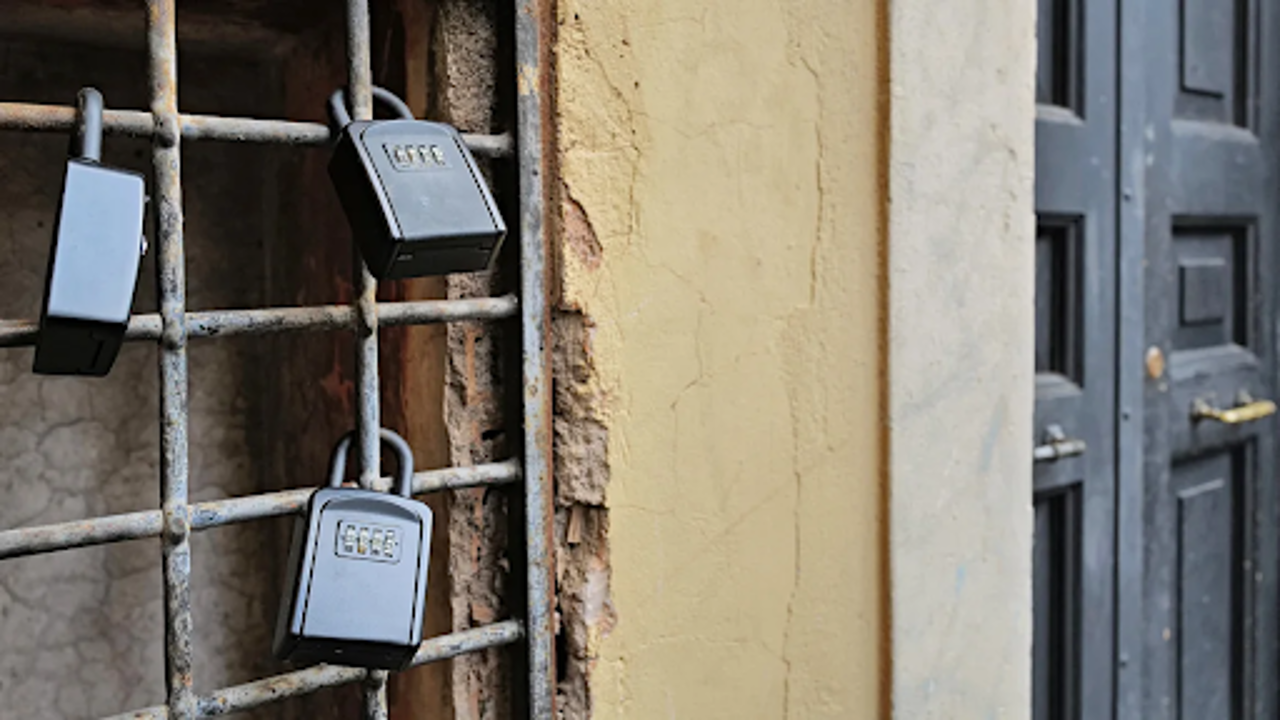
Numerical code-protected key boxes are seen outside an apartment door in Rome's Trastevere district. Getty Images
Italy has implemented a ban on self-check-ins for Airbnb and similar rentals, requiring property managers to conduct in-person check-ins for all guests. The decision, aimed at tightening security and combating potential threats, has been described as a step toward preventing risks related to public safety and terrorism.
The new law comes with stricter requirements for registering renters. Previously, property managers could send photos or photocopies of guests' IDs via messaging services to comply with registration laws. Now, they must physically verify guest identities and register them at local police stations.
Italy’s Interior Ministry announced that law enforcement officers would oversee the removal of key boxes and keypads, commonly used for self-check-ins. The ministry emphasized the need for stringent measures to prevent the accommodation of individuals linked to criminal or terrorist activities.
This regulation coincides with preparations for major events in Italy, including the Vatican’s Holy Jubilee in 2025 and the Winter Olympics in Cortina in 2026. Both events are expected to draw millions of tourists, increasing the demand for short-term rentals.
Local governments have shown strong support for the new rule. Rome’s Mayor Roberto Gualtieri praised the ban, calling it “good news for everyone” and highlighting its role in enhancing security and preserving the city's aesthetic appeal. “Padlocks and keyboxes disfigure our streets,” he noted, adding that the regulation would help prevent abuse and ensure fair competition among property owners.
Similarly, Italy’s Tourism Minister Daniela Santanché described the move as essential for creating a safe and enjoyable experience for tourists. The measure aligns with ongoing efforts to address overtourism and improve the overall quality of Italy’s tourism sector.
The ban follows a similar decision made earlier by the Tuscan city of Florence, which outlawed keyboxes in November to combat overtourism and preserve its cultural heritage. These actions reflect a broader trend in Italy toward managing the growing influx of tourists while maintaining safety and community values.
While some have welcomed the ban as a necessary step, Airbnb has defended self-check-ins as a flexible and convenient option for hosts and guests. In a statement, the company expressed its commitment to responsible hosting and ensuring guest safety while offering its willingness to collaborate with the Italian government on finding balanced solutions. Airbnb acknowledged the concerns around illegal keyboxes but maintained that self-check-ins remain a vital part of its platform for smooth guest experiences.
As Italy prepares for a surge in tourism, this new regulation marks a significant shift in how short-term rentals will be managed, focusing on security and accountability. Whether it will achieve its goals or lead to broader implications for the hospitality industry remains to be seen.