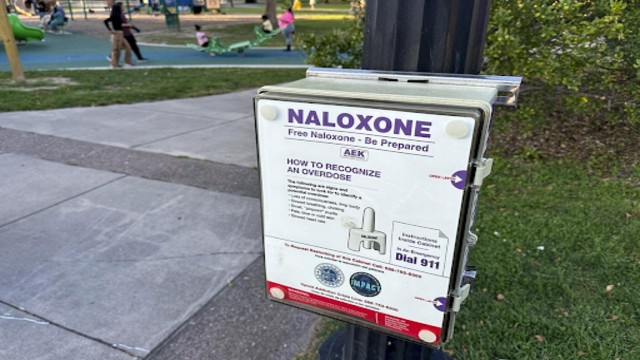
A box containing free doses of naloxone, a nasal spray medication to reverse drug overdoses, is installed at Ontario Beach Park in Rochester, N.Y., on Monday, Sept. 2, 2024. (AP Photo)
A major shakeup in the U.S. Department of Health and Human Services (HHS) could lead to the weakening—or even elimination—of a crucial agency that funds mental health and addiction services. The Substance Abuse and Mental Health Services Administration (SAMHSA), responsible for programs like the 988 crisis line and naloxone distribution, may soon be absorbed into a newly proposed department.
A New Federal Agency
Under Health Secretary Robert F. Kennedy Jr.’s plan, SAMHSA would merge with four other agencies into a new entity called the Administration for a Healthy America (AHA). This move is part of Kennedy’s broader "Make America Healthy Again" initiative.
According to an HHS statement, the restructuring aims to increase efficiency by eliminating divisions between similar programs. However, critics argue that this shift could undermine essential services and disrupt addiction treatment efforts.
Concerns from Experts
Many public health experts fear that dissolving SAMHSA could slow progress in addressing the nation's overdose crisis. The agency plays a key role in funding addiction prevention, regulating methadone clinics, and supporting mental health initiatives.
- Dr. Ruth Potee, medical director of seven methadone clinics in Massachusetts, expressed shock at the decision.
"SAMHSA has been doing its job so well. My jaw drops at this news." - Keith Humphreys, a Stanford addiction researcher, warned that placing SAMHSA within a larger bureaucratic structure could weaken its impact.
"Burying the agency in an administrative blob with no clear purpose is not the way to address the problem."
Kennedy’s Personal Connection to Addiction
During his confirmation hearings, Kennedy shared his personal history of overcoming heroin addiction, stating that he has been in recovery for 42 years. He acknowledged the importance of medication-assisted treatments like Suboxone and methadone but emphasized 12-step programs as the ideal approach.
As part of his presidential campaign, Kennedy proposed creating “healing farms”, where individuals could work while recovering from addiction. Critics worry that this philosophy might lead to reduced support for evidence-based medical treatments.
A Step Back in the Fight Against Overdoses?
SAMHSA has played a crucial role in the decline of overdose deaths in recent years. Former White House drug czar Dr. Rahul Gupta noted that drug overdose deaths dropped by 24% in a recent 12-month period, thanks in part to SAMHSA’s initiatives.
"A worsening overdose crisis is the last thing our nation needs," Gupta said, expressing concern about the potential disruption.
Uncertainty and Fear in the Health Sector
The announcement comes after weeks of job dismissals and grant terminations, creating uncertainty among federal health workers and researchers.
Brendan Saloner, an addiction researcher at Johns Hopkins, acknowledged that government overhauls can sometimes lead to better services, but he criticized the lack of transparency in this case.
"The chaos and uncertainty are driving talented professionals out of the federal workforce."
As the debate continues, experts worry that absorbing SAMHSA into a larger bureaucracy could undo years of progress in mental health and addiction treatment—leaving millions of Americans at risk.