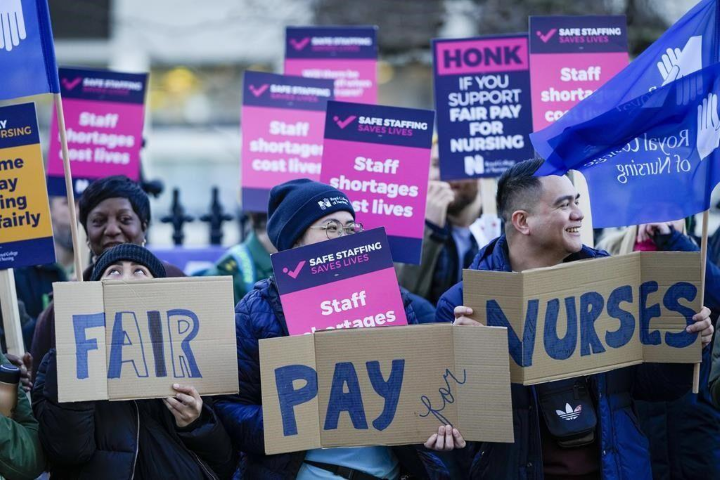
Demonstrators hold up placards in support of a strike by nurses outside St Thomas' Hospital in London, Tuesday, Dec. 20, 2022. Waiting times to diagnose and treat cancer across the U.K. have worsened in recent years and are at near record highs.(AP Photo/Alastair Grant, File)
London– Anna Gittins faced a critical juncture in her battle against colorectal cancer. Discovering she had advanced-stage cancer in 2022, she urgently sought medical attention. However, her local hospital's overwhelmed system left her with a three-month waiting period before she could receive treatment, a timeframe that could have been fatal.
With access to private healthcare, Gittins underwent surgery and chemotherapy, considering herself fortunate amidst a flawed system that fails many. Her experience mirrors the plight of numerous cancer patients across the United Kingdom, where the National Health Service (NHS), once highly regarded, now grapples with chronic underfunding and staff shortages, resulting in critical delays in cancer diagnosis and treatment.
Recent attention on King Charles III's cancer diagnosis has drawn widespread awareness to the challenges faced by ordinary citizens in accessing timely cancer care. While the King received swift treatment, most patients encounter prolonged waits within the public healthcare system. NHS guidelines aiming for prompt cancer diagnosis and treatment have largely gone unmet since 2015, exacerbating disparities in healthcare access, especially in regions like Northern Ireland.
Data from independent organizations reveal concerning statistics, with one in three UK patients waiting more than two months to commence cancer treatment post-urgent referral. These delays, compounded by inadequate chemotherapy and radiotherapy provision compared to peer nations, underscore systemic failures in cancer care infrastructure and resource allocation.
Naser Turabi of Cancer Research UK highlights the critical shortage of diagnostic equipment and specialized staff, ranking the UK poorly in comparison to similar healthcare systems. The absence of government commitments to address these deficiencies exacerbates concerns about the NHS's ability to meet growing healthcare demands, particularly with an aging population.
Kathy McAllister's journey as a cancer survivor turned advocate illustrates the human toll of systemic inefficiencies within the NHS. Her experience of prolonged waits for treatment underscores the stark reality facing patients navigating a strained healthcare system.
The NHS's challenges extend beyond cancer care, with widespread difficulties in accessing primary care and emergency services, aggravated by the COVID-19 pandemic and longstanding budget constraints. While NHS England emphasizes increased cancer screenings, critics argue that such measures fail to address underlying systemic deficiencies.
Prime Minister Rishi Sunak's commitment to reducing waiting times clashes with ongoing strikes by doctors and nurses, protesting inadequate working conditions and stagnant wages. The prolonged strikes signal deep-seated discontent among healthcare workers and underscore the urgency of addressing systemic issues within the NHS.
As the UK braces for upcoming elections, calls for a comprehensive cancer care plan gain momentum, propelled by survivors like McAllister advocating for prioritized healthcare reform. With cancer care relegated to statistical metrics, there is a growing demand for substantive government action to ensure equitable access to timely and quality healthcare services.
The plight of cancer patients like Gittins and McAllister serves as a stark reminder of the human cost of systemic healthcare failures and underscores the need for urgent and comprehensive reform within the NHS.