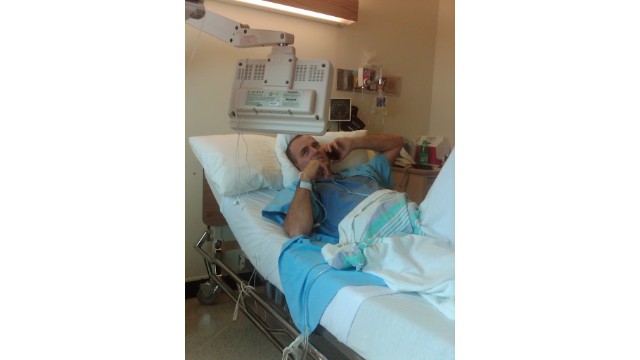
A man who was injured in the explosion of one of the handheld devices, lies inside an operation room ahead of an eye surgery at the Eye Specialist hospital, in Beirut, Lebanon, Friday, Sept. 20, 2024. (AP Photo/Hussein Malla)
For nearly a week, ophthalmologist Elias Jaradeh has been working tirelessly to treat a surge of patients with eye injuries after pagers and walkie-talkies exploded across Lebanon. The devices, which detonated in large numbers, left Jaradeh performing countless surgeries in multiple hospitals, often surviving on just two hours of sleep before moving to the next case. While he has managed to restore some patients’ vision, many others will be left permanently blind.
“The tragedy is overwhelming,” Jaradeh shared with The Associated Press at a hospital in Beirut, his voice heavy with emotion. "Seeing so many people, especially young men, children, and women, arriving with eye injuries all at once is devastating."
Lebanese hospitals have been flooded since the explosions occurred last Tuesday and Wednesday, when thousands of handheld devices linked to the Hezbollah militant group detonated simultaneously. At least 39 people lost their lives, and around 3,000 more were injured, many with life-altering wounds. Although Israel is suspected of being behind the attack, it has not confirmed or denied involvement.
While the devices may have been aimed at Hezbollah fighters, many of the victims were civilians. Most of those injured had been looking at the devices as they exploded, suffering serious damage to their hands, faces, and especially their eyes. The exact number of people who lost their sight remains unknown.
Experienced Lebanese eye doctors, who have treated injuries from numerous wars and conflicts, say they have never encountered a situation like this.
Jaradeh, who also serves as a lawmaker for southern Lebanon, noted that many of the patients he treated had severe injuries, including shrapnel embedded in their eyes. His hospital, specializing in ophthalmology, was inundated with young patients bearing life-changing wounds.
This explosion follows the devastating blast that rocked Beirut’s port four years ago, killing over 200 people and injuring more than 6,000. While that disaster, caused by the unsafe storage of ammonium nitrate, also resulted in widespread eye injuries, Jaradeh said the scale of the current crisis is even more intense due to the overwhelming number of patients with eye trauma.
“After the Beirut port explosion, we were able to begin processing the shock within 48 hours," Jaradeh said. "But now, we haven't even reached that point yet."
Jaradeh added that, despite his training as a doctor, separating his emotions from his work in the operating room has been nearly impossible. "No matter what you learn in medical school about keeping distance, it’s incredibly difficult in situations like this, where you're faced with the sheer number of wounded. This isn’t just a war on Lebanon, it’s a war on humanity,” he said.